Over the past few years there has been a dramatic increase in websites publishing content written with AI who monetize their sites with online ads, and AI recipe websites have likely been one of the fastest growing niches. These sites have been diverting advertiser budgets from many legacy publishers and wasting ad spends. In this report alone we found ads from brands including Adobe, HBO Max, Siemens, Subaru, The Wall Street Journal, Capital One, Sam’s Club, LinkedIn, Google Workspace, Tumi, Pepsi, Anker and VRBO running on these sites.
It’s also become common knowledge that publishers in certain niches are being openly deceptive about their owners and authors, using AI photos and fake back stories on their sites. Many of these sites are also aggressively spreading their AI slop on social media sites like Pinterest with the hopes of attracting new readers.
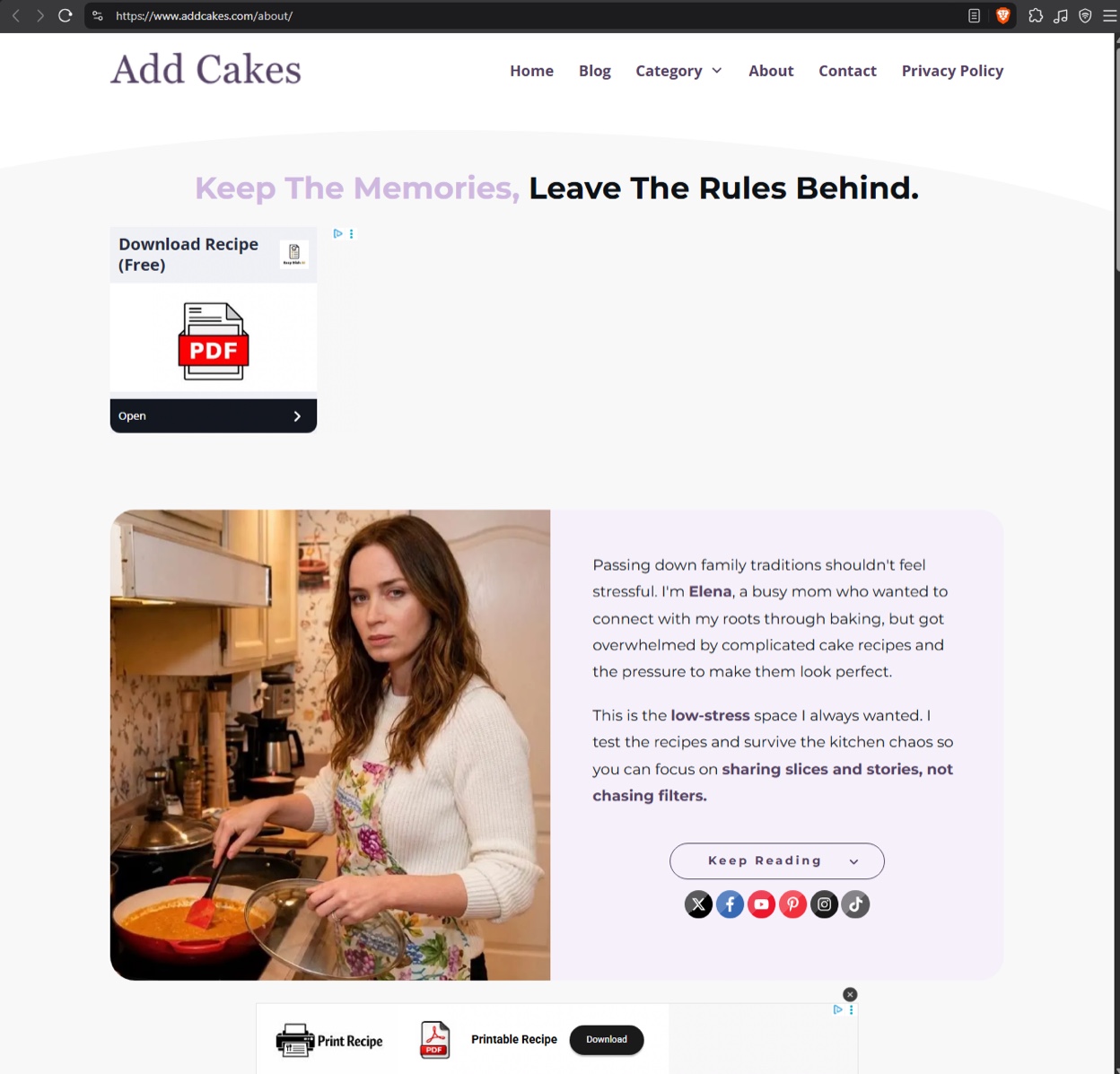
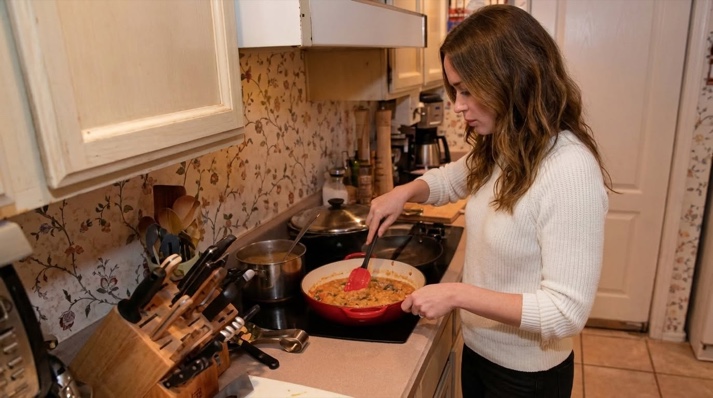
Some sites are more aggressive, like a likely AI recipe website addcakes[.]com who appears to use AI generated photos of actor Emily Blunt on their website and social media profiles, claiming it’s a person named “Elena” who is “a busy mom who wanted to connect with my roots through baking, but got overwhelmed by complicated cake recipes and the pressure to make them look perfect.”

Some of the most consistent growth in AI slop spreading across the internet has come from AI recipe websites. Many of these are being promoted via aggressive social media accounts and there have been numerous articles about the consumer risks from the sites and solid industry research highlighting the risks to advertisers’ budgets.
The “Frankenstein recipes” found on these AI recipe websites are typically being created by people not testing their recipes, so reporters investigating AI recipe slop have found recipes like “Hot Cocoa Buffalo Chicken Gingerbread Dip with Marshmallow Topping,” which we don’t encourage anyone to actually try.
AI recipe creators have proven to not only be wasting people’s time and advertisers’ money, they can also be dangerous. A classic example was from 2023 when a New Zealand supermarket AI app was adversarially tested and provided a recipe for chlorine gas which was described as: “the perfect nonalcoholic beverage to quench your thirst and refresh your senses.” Needless to say, that is both dangerous and ill-advised advice.
Over the past few months, the research team here at DecryptAds has been looking into how we can find AI recipe websites listed on any of the nearly 300 ad tech companies we classify as having geographic risk, or “geo-risk” relationships (Russia, China, corporate secrecy jurisdictions) within their ads.txt files. Our platform makes it easy to find the publishers authorizing these geo-risk-associated ad systems to monetize their websites. Working from that base, our team then filtered down for potential AI recipe websites based on food and cooking keywords, alongside various other programmatic advertising data-based clustering techniques and technical fingerprints to cohort these sites and try to understand their ownership clusters. Once we had all that, our team was able to dive deeper into manual analysis of these sites to better understand them, their social media practices, and their ownership claims.
After manually confirming owners associated with these AI recipe websites, our team was able to build over 190 technical fingerprints using the DecryptAds Feed Builder tool, allowing us to track new sites being launched by these operators in real time. Our technical fingerprints are based on a range of criteria, including: ads.txt / app-ads.txt accountIDs, data collected when scanning page content, on-page accountIDs, seller names and domains, DNS data, WHOIS Registrar data, and in-house clustering built across a combination of other data points.
The DecryptAds team has an extensive background in cybersecurity, allowing us to bring otherwise-missed context into these types of research hunts in a way that provides numerous benefits, as seen in this research. Our decision to continuously layer new data types onto the underlying ads.txt / app-ads.txt / sellers.json programmatic data our core service was built on definitely helped to expand the true positives and clusters we were able to identify in this research.
Starting from our initial pool of approximately 400 true positive AI recipe websites, our team was able to expand into over 2,100 “Made-for-advertising”, or “MFA” domains owned by a wide range of sellers, many with ties to Morocco and Algeria, which are further detailed later in this report. For this research, a site was counted as a true positive AI recipe website when it showed both AI author photos and AI text indicators, confirmed by manual review of at least three pages per site. The analysis was conducted between July and October 2026.
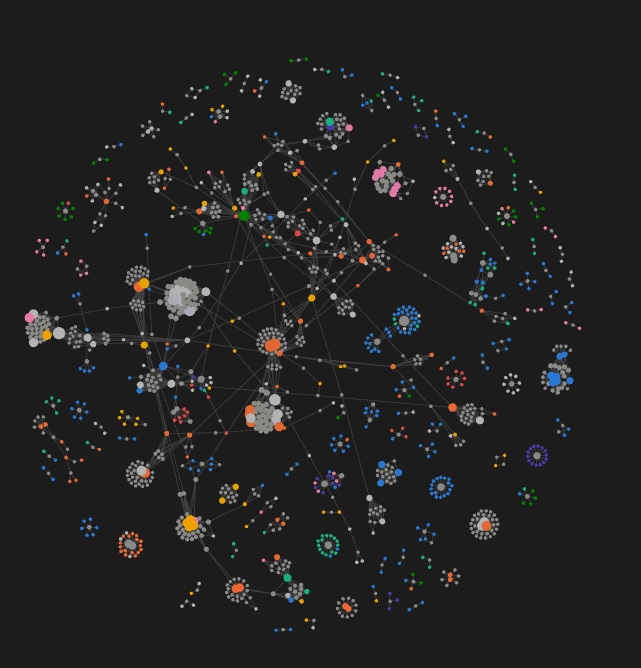
A rough, yet almost cheerfully colorful map of the publishers we initially investigated can be seen below, grouped by ads.txt accountID seller names in a way that helped our team to more easily identify potential ownership clusters.
As we developed an understanding of the ecosystem of AI recipe websites being monetized with Russian and Chinese ad tech partners, our team realized that many of these sites appeared to have their ads.txt files being managed by 3rd parties, essentially SSPs or sales houses who help publishers monetize their sites. This is a totally normal process, and generally speaking, companies who help publishers with this deserve credit as it’s not easy work and the ecosystem is ripe with challenging fraud efforts constantly emerging from sophisticated actors.
Many of the SSP / sales houses who help manage ads.txt files for publishers however, have long lists of ad system partners they work with, and occasionally some of those partners are based in Russia, China, and in other regions which appear on our risky geo list rankings. Even so, they still add those ad systems and accountIDs to all their client sites.
This is a somewhat common outsourcing setup, but it often means the publishers themselves don’t always know the ad systems they are working with. These publishers are typically paid by the 3rd party SSPs, and not directly by the ad systems.
Oftentimes the SSPs who support these publisher outsourcing setups have minimal oversight into their clients content or publishing processes. They may conduct some Know Your Customer (KYC) processes when the clients sign up, may monitor the keywords being published on the pages through automated processes, but could just as well be largely “checked out” otherwise.
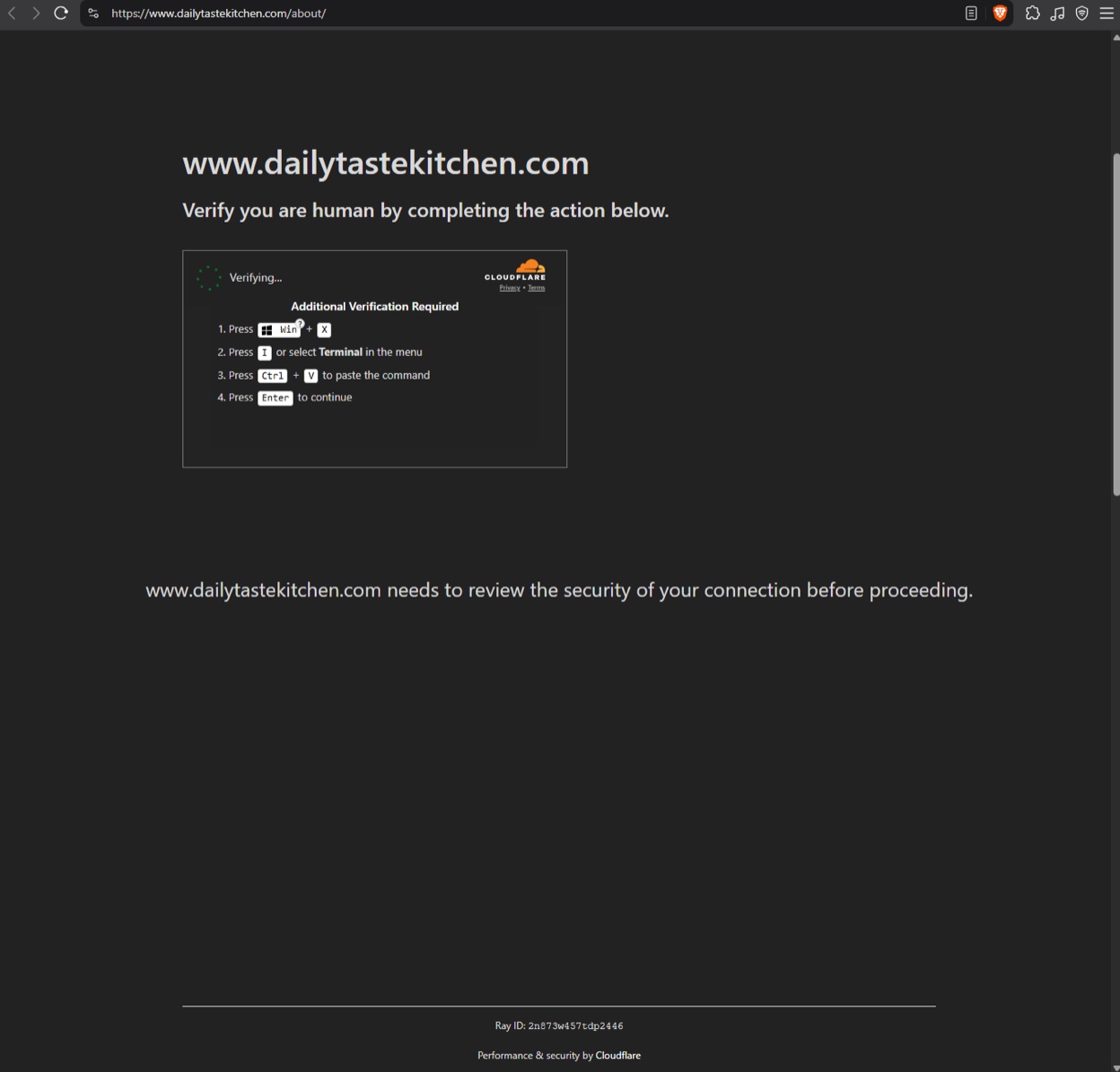
It also appears like some of the owners of these AI recipe networks may even not be paying attention to their own sites. One site analyzed during this research was seen promoting malware via a ClickFix-style “paste this command to fix this problem” phishing lure, essentially attempting to get visitors to compromise their own devices.
It eventually became clear that some of the sites online at the time of writing, which were collecting money from advertisers and time from regular people, were stepping into a grey area, while others went well beyond that.
- One AI recipe publisher (addcakes[.]com) appears to have been using AI generated images of actor Emily Blunt in author photos and social media pictures.
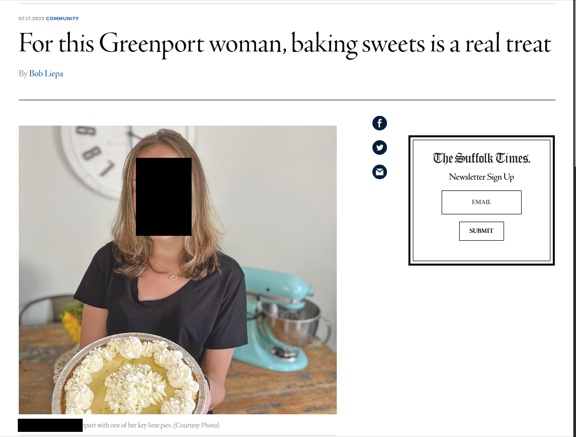
- Another AI recipe publisher (recipemaestro[.]com) appears to have taken a photo of a real chef holding one of their pies which was published in a local newspaper, and appears to have used AI to change the individual’s face while keeping the body and all other details from the real person “as-is”.
- Numerous other AI recipe websites appear to be using stock photos while writing oft-complex back stories about those people and their families.
- It’s common for some AI recipe websites to have what appears to be entirely fake teams of multiple “chefs” with obscure backstories and clearly AI-generated photos.
As we looked into the social media accounts connected to many of these AI recipe websites, we realized that location transparency tools from X (formerly Twitter) and Facebook provided a likely set of real locations for the owners and authors of these sites. These platform location disclosures are inferred by X and Facebook rather than verified, and can be skewed by VPNs, travel or accounts changing hands, so we treat them as indicative rather than conclusive. For site after site, each had different owners and seller names in their programmatic ads.txt files, and were connected to many individuals based in Algeria and Morocco. This wasn’t the case with all of them, but there were enough sites with connections to these countries to document it here and mark those connections as potentially indicative of a network of inauthentic coordinated behavior, or potentially an indication that someone may have attended a training course on how to run these types of websites, which might explain the purchase patterns for the region. Or maybe it’s simply an inexplicable coincidence. We will endeavor to update this report if/when we can definitively learn more.
The most common 3rd party SSPs seen appearing to monetize AI recipe websites and sites connected to those publishers:
- hbagency[.]it: 1,631 websites (77.1% of the 2,100+ websites we are tracking)
- ezoic[.]ai: 407 websites (19.2%)
- cultureg[.]eu: 34 websites (1.6%)
- monetizemore[.]com: 11 websites (0.5%)
- journeymv[.]com: 8 websites (0.4%)
- monumetric[.]com: 5 websites (0.2%)
- adpushup[.]com: 2 websites (0.1%)
- No manager domain declared: 18 websites (0.9%)
A handful of sites in this pool declare two manager domains in the same ads.txt file, and a few list accountIDs for both hbagency[.]it and ezoic[.]ai while naming only one as the manager. The ads.txt 1.1 guide indicates buyers should treat conflicting manager declarations as if no manager was declared at all, but it also leaves interpretation up to each buyer, so it's unclear what the practical impact is for those sites. Our data counts them under each manager they name.
We would be remiss not to mention that anonymity and pseudonymity matter online and plenty of political and sensitive-topic publishers can’t publish under real names. But many AI slop operators appear to be aggressively exploiting that grey area.
We know that these types of investigations are complex, and it’s always possible that some portion(s) of this report could be inaccurate or in need of clarifying information/commentary. If your company or publisher’s website is mentioned in this report and you’d like to include a comment, we are happy to provide space here for that. Please reach out at <a href="mailto:contact@decryptads.com">contact@decryptads.com</a> with sufficient evidentiary information to support your claim(s) and we’ll take such into consideration for potential correction(s).
What Happens When You Visit AI Slop Recipe and Cooking Websites That Authorize Chinese and Russian Ad Tech Companies?
When you load a website with the programmatic advertising discussed in this report, if you aren’t blocking ads, as soon as the site loads your data could be shared with numerous ad systems across the globe in mere milliseconds. This data might, and typically does, include your IP address, the type of device and browser you have (i.e. your “user agent” string), the page or app you're using, and then potentially additional details about the content itself. It’s also common for 3rd party cookies saved in your browser to be sent to ad tech companies, a process which makes it possible for advertisers to track a user’s journey across different websites, and for that information to be paired with other technical fingerprinting processes and/or metadata that makes it possible for these companies to effectively track billions of people across the internet each day with online ads.
The programmatic advertising auction process is complex (here’s a good primer on the topic from the Irish Council for Civil Liberties (ICCL)) and trying to parse which companies get data when a site loads is not often straightforward. This is because the vast majority of programmatic advertising data transfers occur “server-side” and are essentially invisible to someone viewing the website. Thus even the most sophisticated technical client-side auditor can’t magically see all the companies who get data from these auctions, at least not with any certainty. Ad tech companies often get this server-side data, but as it’s not shown to end-users, this has spurred public advocacy efforts into exposing the Demand Chain Object (DCO) / buyers.json files as well as the Supply Chain Object (SCO) to fix this transparency hole.
But the simplest way to try and determine which ad tech companies get data via a website’s programmatic auctions by default is by reviewing their ads.txt file. For mobile apps there is also an app-ads.txt file with nearly identical standards. Some organizations like the New York Times even have a nice and simple file you can view @ https://nytimes.com/ads.txt, for example, their file lists 30 partners and accounts they all claim to directly control.
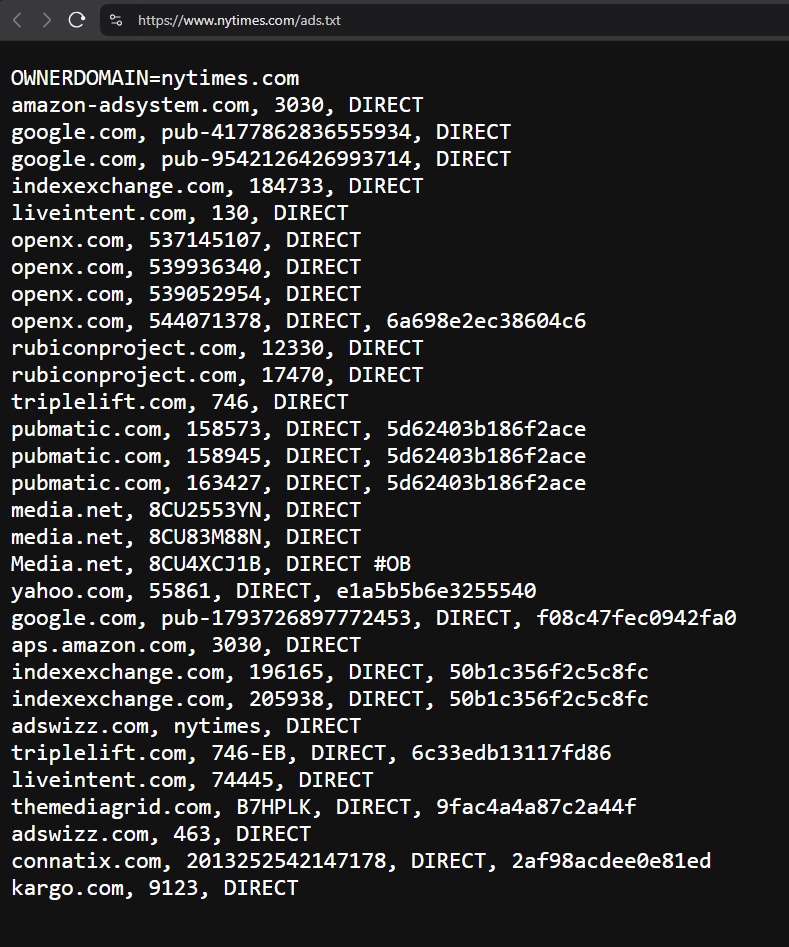
When viewing this file you’ll see ad system domains, followed by an accountID, and then a label indicating the type of ownership of the account. To confirm that one of these accounts is still valid, labeled correctly and authorized by that ad system, you can open up the sellers.json file for each of those ad system domains, located at a URL like openx.com/sellers.json. In the screenshot below you can see the NYTimes accountIDs are still authorized in this file, confirming that the accounts are still (theoretically) authorized.
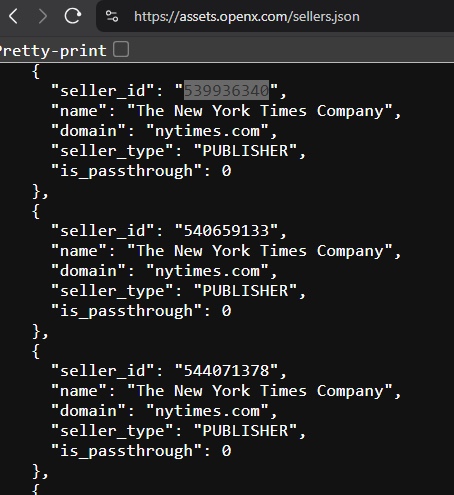
So when you see the NYTimes ads.txt file and their 30 DIRECT accounts spread across ~20 unique ad system partners, this is essentially the list of ad tech companies who are “authorized to sell the advertising inventory for the NYTimes website” and are likely getting data with every page load/visit from those not blocking ads.
One complexity here is that an ad tech company can be listed in the ads.txt / app-ads.txt files and appear to be authorized, but the publisher could have turned off sending data to that ad system on their back end / server side tools and merely forgotten to update their ads.txt file.
But when the ad tech company is both listed within this file and authorized on their backend for the country where a visitor is from, then they will get data from each visitor and an opportunity to show them ads from their clients. Most ad tech companies are authorized in every country for a publisher but occasionally there are regional deals (sometimes even labeled within their ads.txt files) which are only usually known publicly if a publisher or ad system is forced to explain that setup.
In the end, what this amounts to is that there are more than 75,000 websites with programmatic ads which authorize ad tech companies, even those apparently based in China and/or Russia, to sell their inventory, resulting in the apparent transfer of user data to those companies. Companies based in those, and other, countries are also often legally compelled to comply with what some would deem “extremely invasive” governmental data sharing requirements, which can create unexpected risks for people who visit the websites those companies are monetizing.
If a publisher is working with ad systems based in Russia and China, this can sometimes be a publisher who has directly reached out to those ad systems, but more often it’s due to them outsourcing this to a partner.
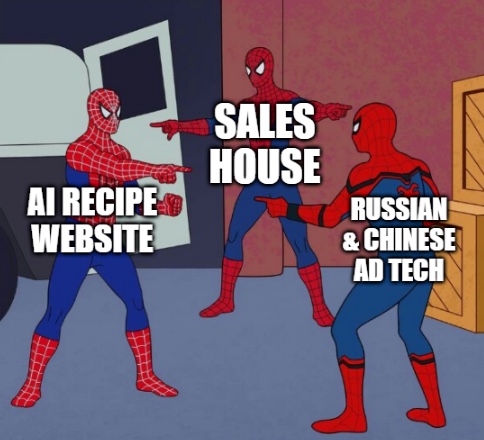
Essentially every example we have in this report is from a suspected AI recipe publisher who outsourced their ad systems partners to a specific SSP / Sales House who is appearing to help manage their programmatic ads.
So, as you read this report, please take into consideration that made-for-advertising websites are oftentimes outsourcing to one company who partners with another, and everyone seemingly making money here appears to be by ignoring the problems and risks created by their partners.
Our AI recipe research started by focusing on only those website publishers who had within their ads.txt files at least one of the ad tech systems we classify as being from a risky jurisdiction.
Anyone with an account on DecryptAds can see our Geo Risk page which includes details on the 81 ad systems we track from Russia, 85 ad systems from China, 26 in secrecy havens like Cyprus, and 104 ad tech companies in elevated risk countries like the UAE, Turkey, Pakistan, Nigeria and Ukraine.
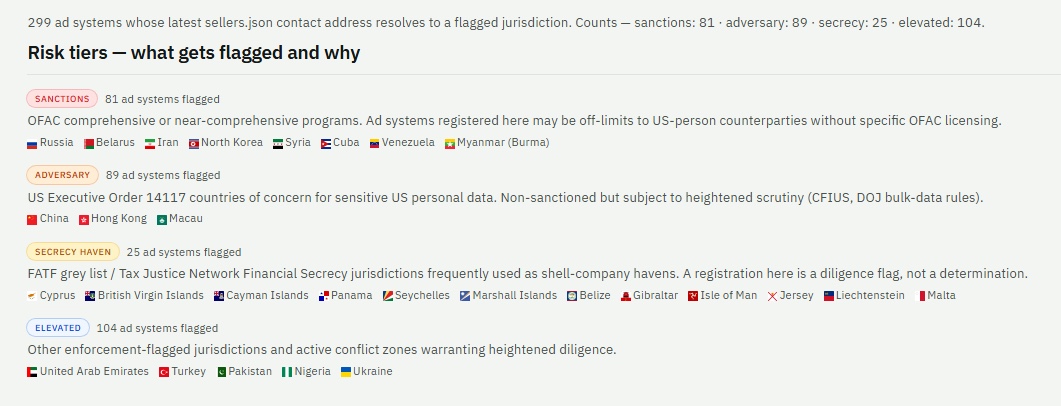
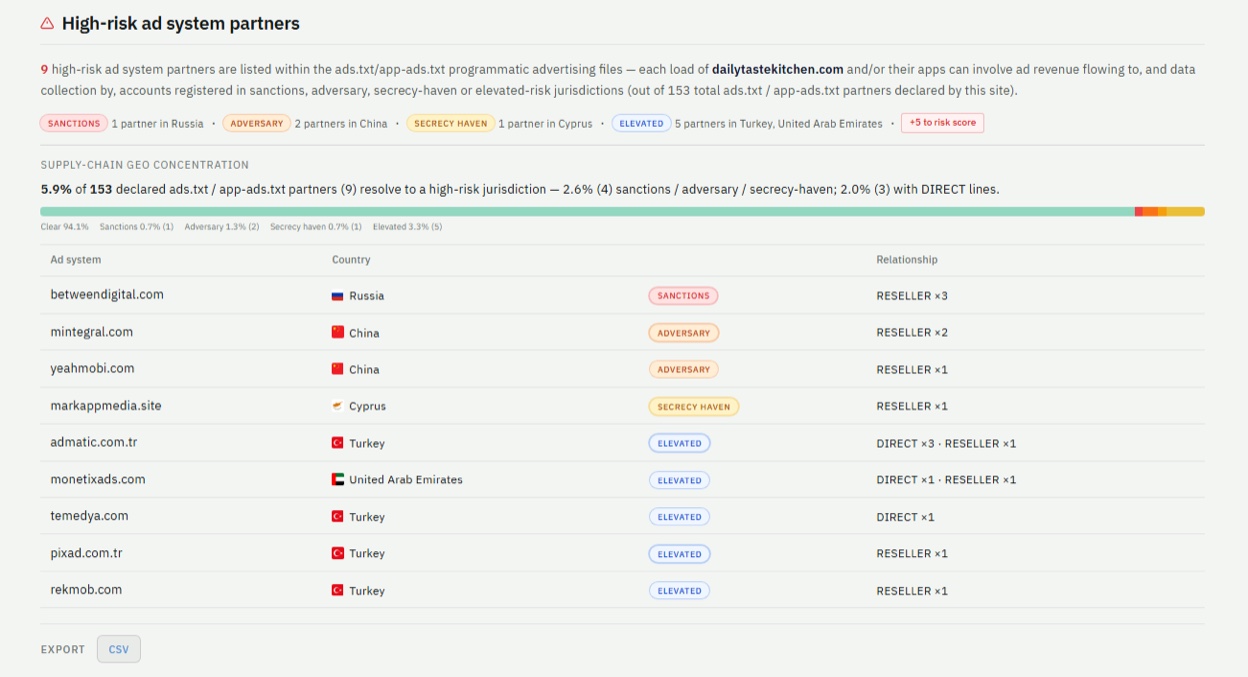
Any website in this report can be quickly reviewed by opening their publisher page on DecryptAds and clicking over to the “Risk-Geo” section, where you’ll get a quick breakdown of the percentage of accounts from each country, and then a list of exactly which ad tech companies that publisher is working with that we’re classifying as being from a risky geography.
One example is dailytastekitchen[.]com, a publisher with AI author photos who outsources their ads.txt file and monetization support to hbagency[.]it, an Italian company who provides ad tech publisher support for over 4,500 publishers and appears to work with ~150 ad tech companies based on the accountIDs they list within client websites. It’s important to note that the “managerdomain” field which declares HBagency in a publisher ads.txt file doesn’t guarantee that all of the accountIDs within the file are owned or managed by this sales house. It’s common for a publisher to add a few accountIDs that they directly control into these files, but when we see consistent accountIDs across seemingly unrelated publishers which all share the same managerdomain field, in this instance HBagency[.]it, we assume that the accountIDs listed within the files are in some way controlled by that sales house. Each situation is unique and we’ll update this report if/when we learn new information about the ownership of these accountIDs associated with these risky geo ad systems. Within the much larger list of ~150 ad tech partners associated with HBagency-managed publishers there are nine ad tech companies on our risky geo list:
| Tier | Ad system | Country |
|---|---|---|
| Sanctions | betweendigital[.]com | Russia |
| Adversary | mintegral[.]com | China |
| Adversary | yeahmobi[.]com | China |
| Secrecy haven | markappmedia[.]site | Cyprus |
| Elevated | admatic[.]com[.]tr | Turkey |
| Elevated | monetixads[.]com | United Arab Emirates |
| Elevated | temedya[.]com | Turkey |
| Elevated | pixad[.]com[.]tr | Turkey |
| Elevated | rekmob[.]com | Turkey |
Now that it’s hopefully a little more clear what happens with your user data when you load up one of these websites, and how we narrowed down which publisher websites to focus on with our risky geo ad tech list, we’ll now explain some of the significant red flags seen with websites in this network.
We’ll leave what this means legally, ethically and politically to folks smarter than us, but our instinct is that there are significant red flags here. Also, we believe that these types of websites with AI author photos and fake back stories, particularly those with ties to foreign ad tech partners, deserve greater attention.
AI Recipe Websites, Each More Ridiculous Than the Last
As we get into examples from this report, it’s important to appreciate that many of the AI recipe authors likely are moving as quickly as they possibly can. Some spin up one website after another, clearly trying to scale up their work. These folks appear to automate large portions of the publishing, or potentially all of the process.
Some of these sites are also more aggressive than others, creating more complex back stories about their owners and authors, and thus some sites appear to act more deceptive than others.
We believe that all websites using AI personas / AI authors / AI owner photos should be required to disclose that usage in some transparent fashion, on their website. We also believe that SSP’s / sales houses who help to monetize these websites could easily change their rules to require this simple disclosure on publisher websites, so that proper due consideration could be given to their content by visitors. Unless noted otherwise, every author and owner photo in the examples below appears to be AI-generated, AI-edited, or a stock photo presented as a real person. We say “likely” in places because we can’t prove how any one image was made, only that it shows the artifacts, reuse patterns and stock-photo matches typical of these sites.
ClickFix Malware on an AI Author Recipe Site
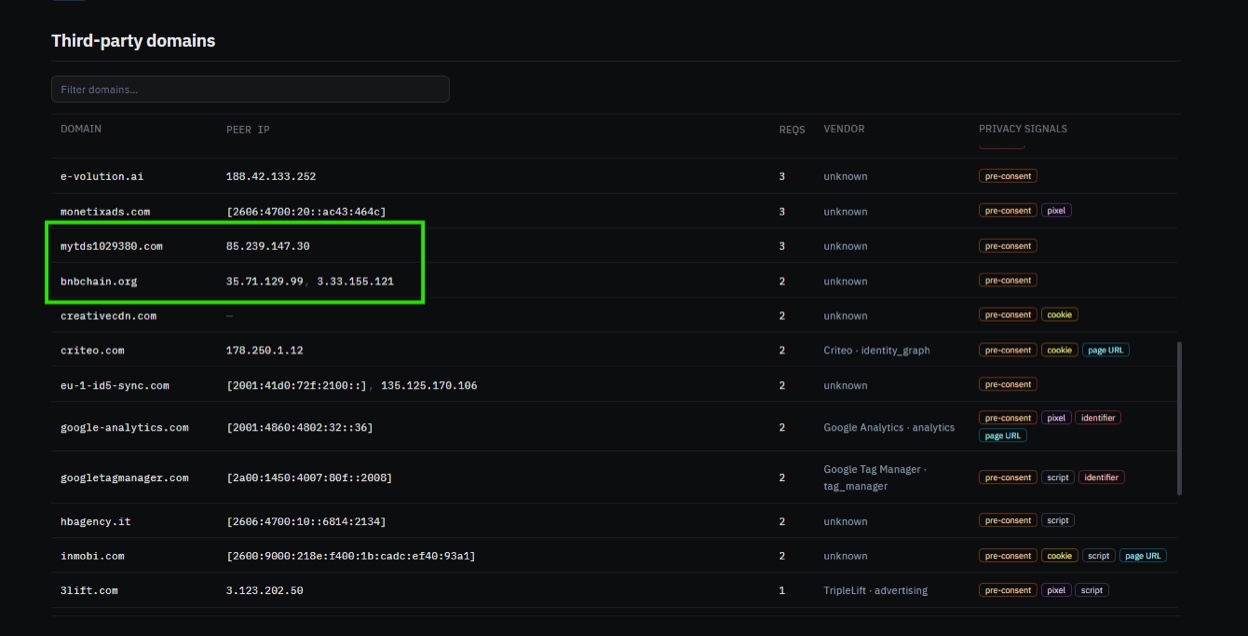
While manually reviewing websites for this report, one of the sites that we had been investigating was found to be likely compromised, and appeared to stay compromised for over a week. The site compromise appeared similar to the way a campaign described as “EtherHiding” works, which stores its C2 commands and domains in a smart contract on the BNB Smart Chain and retrieves them when the page loads (hence the bnbchain[.]org call in our scan data in Figure 11). That particular campaign has compromised thousands of WordPress sites to spread their malware.
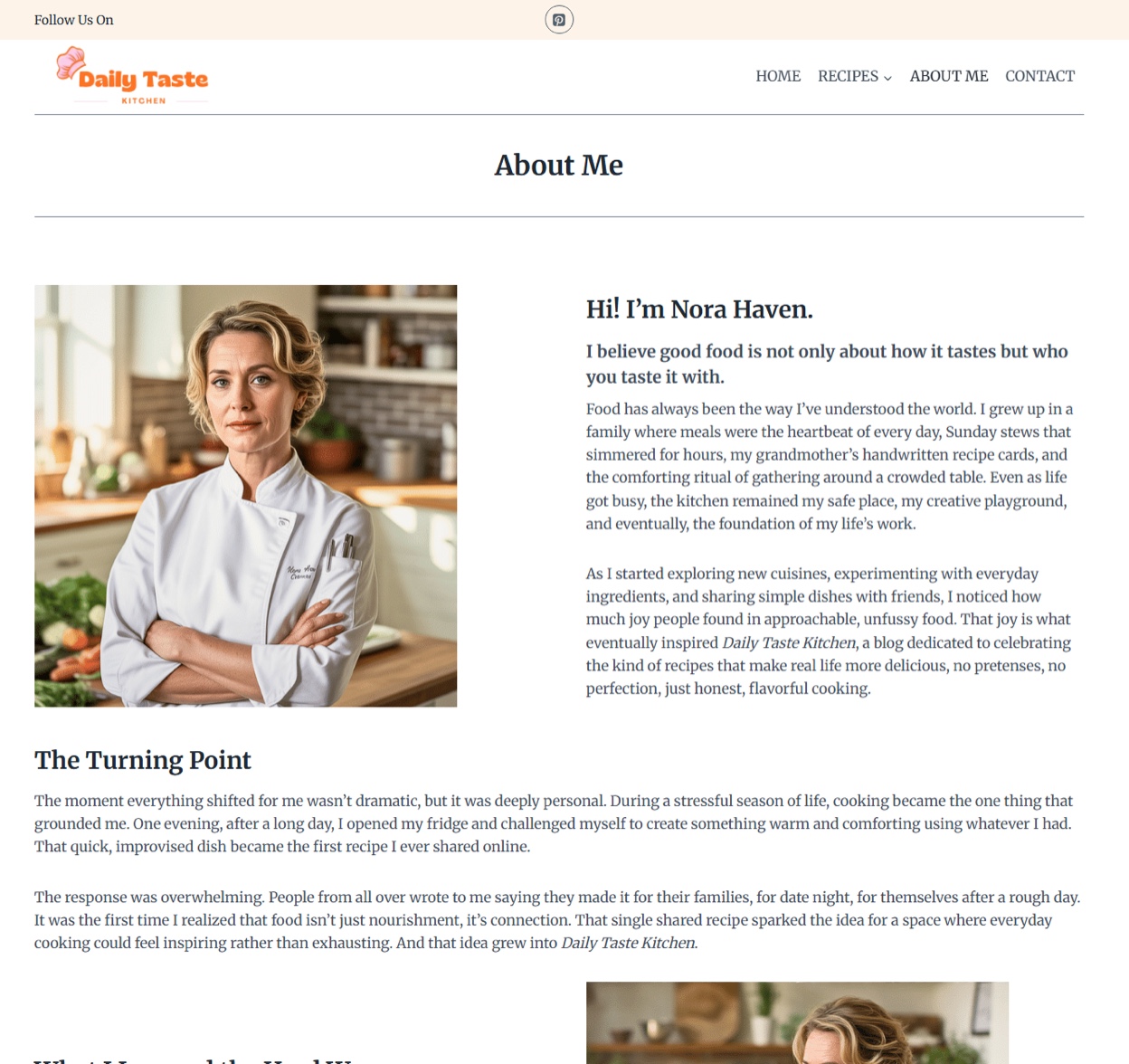
The site “Daily Taste Kitchen” (dailytastekitchen[.]com) is one which features a likely AI author photo of someone named “Nora Haven” and when you load essentially any page on the website, at the time we inspected it, a visitor could expect to be prompted with a ClickFix payload which served up a serious side dish of malware.
The ClickFix payload seen below on dailytastekitchen[.]com appears to mimic a Cloudflare captcha, providing simple instructions to open up your “Terminal” and then paste the malicious command.
An initial domain triggering the ClickFix payloads is requested via mytds1029380[.]com, which has 16 malicious detections on VirusTotal as of September 22, 2026.
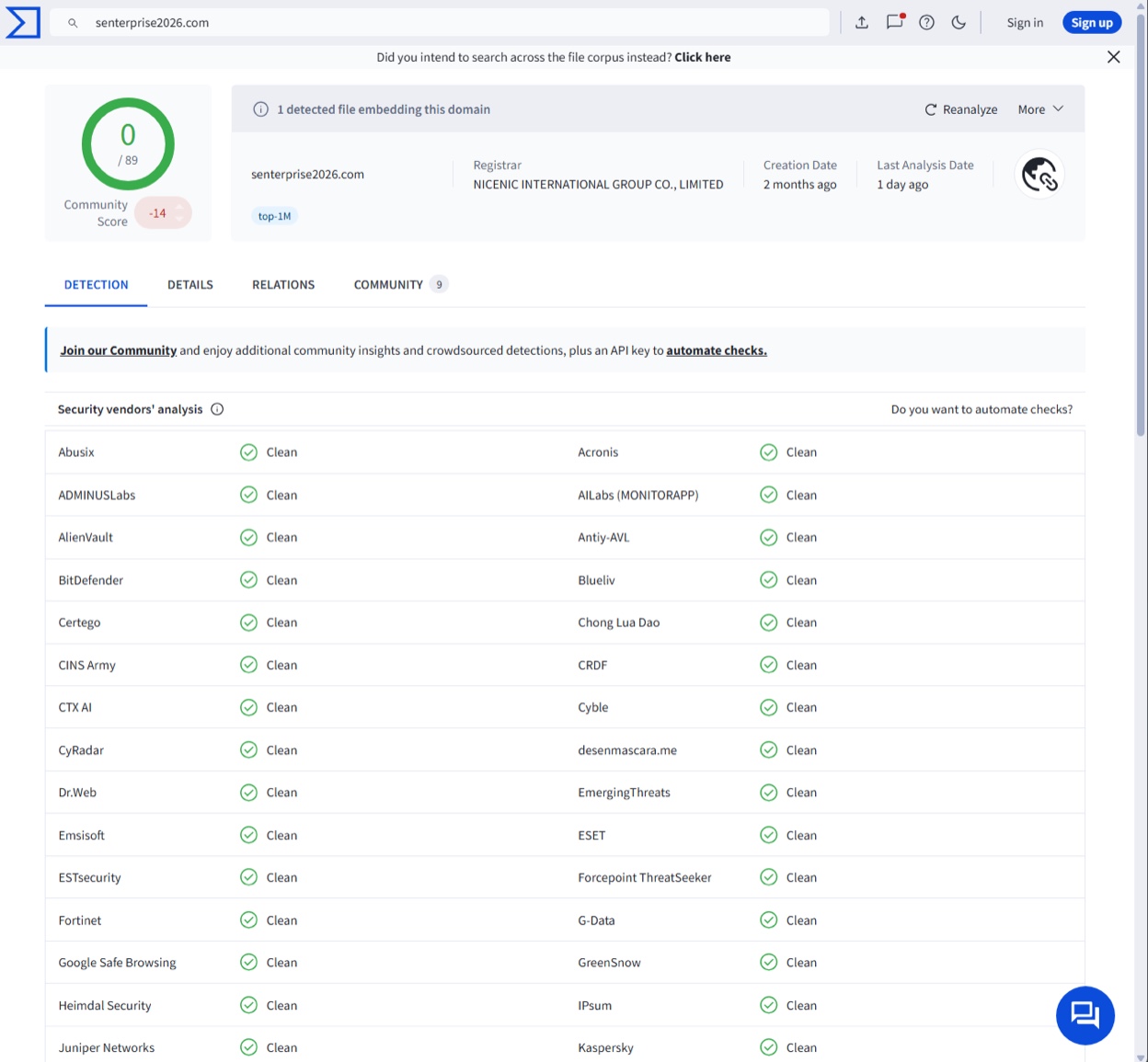
The malicious script is then injected into the page via the host “senterprise2026[.]com” which had zero detections on VirusTotal when first found September 10, 2026 (as seen below), but 10 days later on September 22nd it was detected by 20 vendors as malicious.
Then an additional malicious domain “cloudeliveryenterprise[.]com” was seen used in the ClickFix lure which at the time was detected by 16 vendors on VirusTotal as malicious, at least as of September 22, 2026.
The “mytds1029380[.]com” domain initiating the ClickFix injection was also found by our DecryptAds scanner which is visible in our ad and privacy metrics, specifically our mobile scan picked up this malicious domain. This third-party domain data is available in our web UI/UX for easy access as well as our API and MCP.
Emily Blunt is likely not running an AI recipe slop website from Morocco
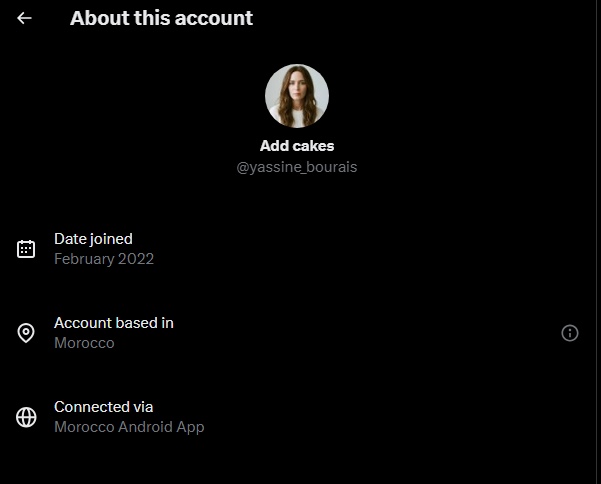
Some of the AI recipe websites use photos of real people, like the site “Add Cakes” (addcakes[.]com) website seen below with an owner / author named “Elena” who looks suspiciously like award winning actor Emily Blunt. The owner of the site has social media disclosures indicating they are based in Morocco.
The site and social media accounts use five unique photos of Emily Blunt, and exact copies of the images don’t appear to exist publicly, so it appears the owner took a photo of her and used an AI tool to make a new version (or versions) with her cooking / in other settings.
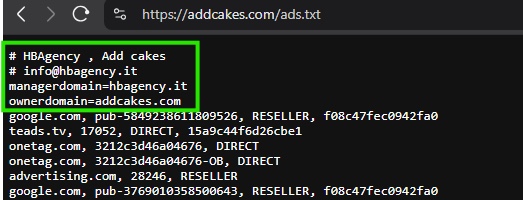
Notably, the addcakes[.]com ads.txt file is managed by hbagency[.]it.
The Addcakes[.]com footer links to the X account @yassine_bourais (named "Add cakes"), which shows "Account based in Morocco", joined in February 2022 and is connected via the “Morocco Android app”. The X profile and banner photos on the account also appear to be photos of the same actor.


Algerian Key Lime Face Off: AI Recipe Website “Recipe Maestro” Face Swaps with Real New York Chef’s Photo
“Recipe Maestro” (recipemaestro[.]com/about-me/) also took a photo of a real person and turned it into an AI photo. The site appears to have taken a photo published in The Suffolk Times in July 2022 of a chef and then only changed the face for their website, while keeping all the other details in the original photo.
This site was connected to 18 other AI recipe websites by our team through various technical fingerprints, and its ads.txt files are managed by ezoic[.]ai.
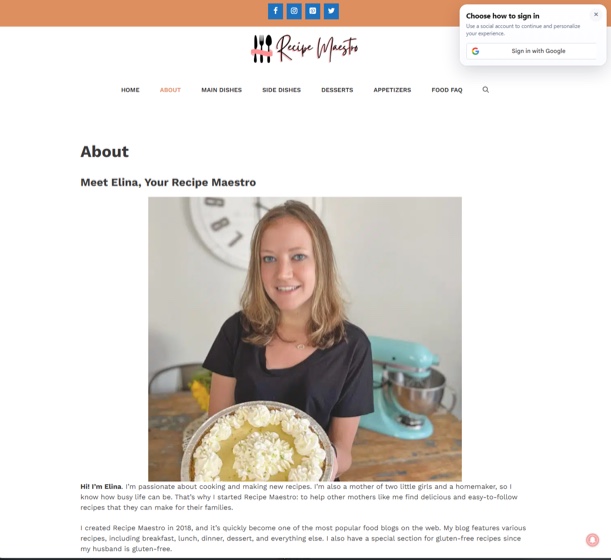
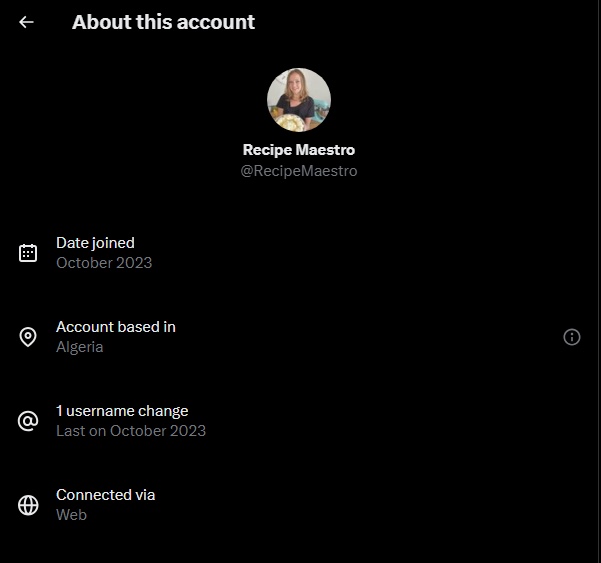
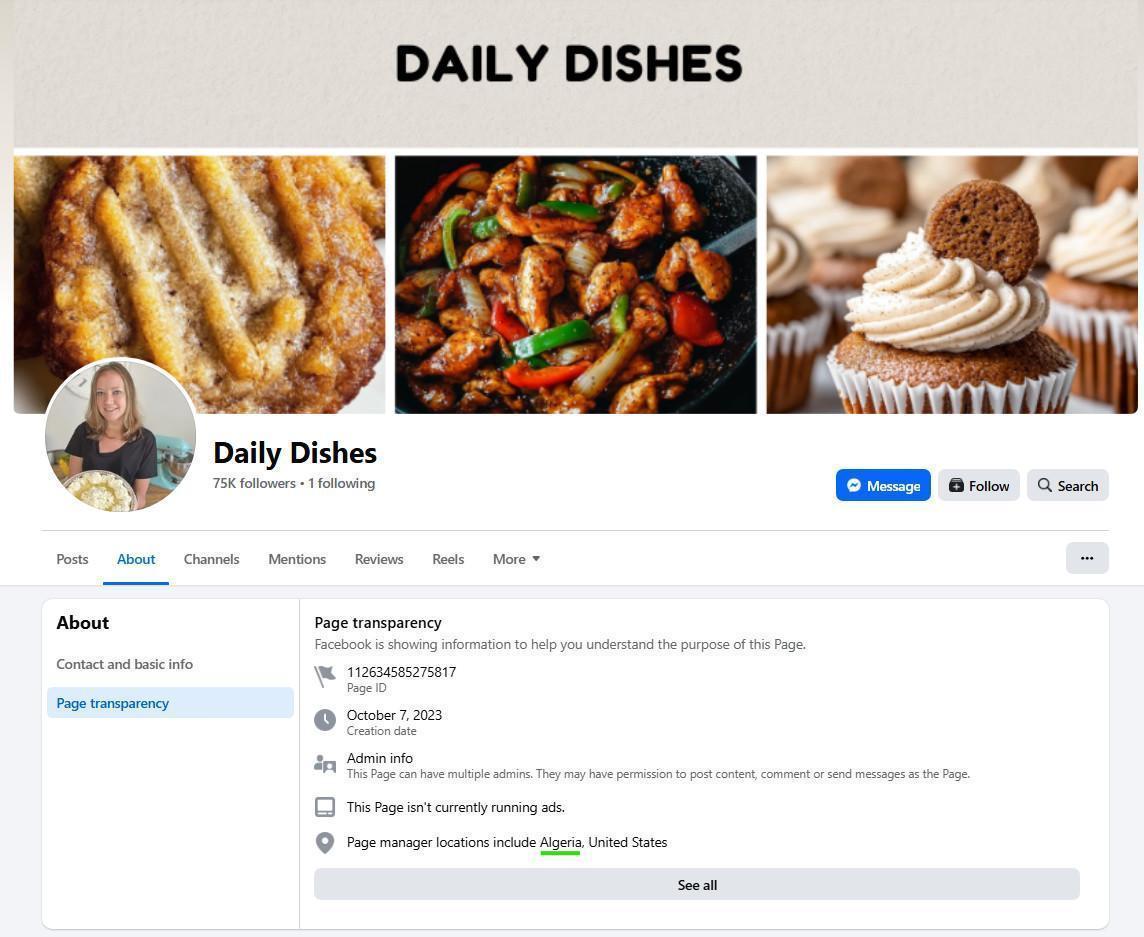
Recipemaestro[.]com links to the X account @RecipeMaestro, which shows "Account based in Algeria" and joined in October 2023. The site also links to a Facebook page named "Daily Dishes" (75K followers, created October 7, 2023) which lists page manager locations of Algeria and the United States.
AI Recipe Websites Appear to Love Stock Photos of Owners and Authors
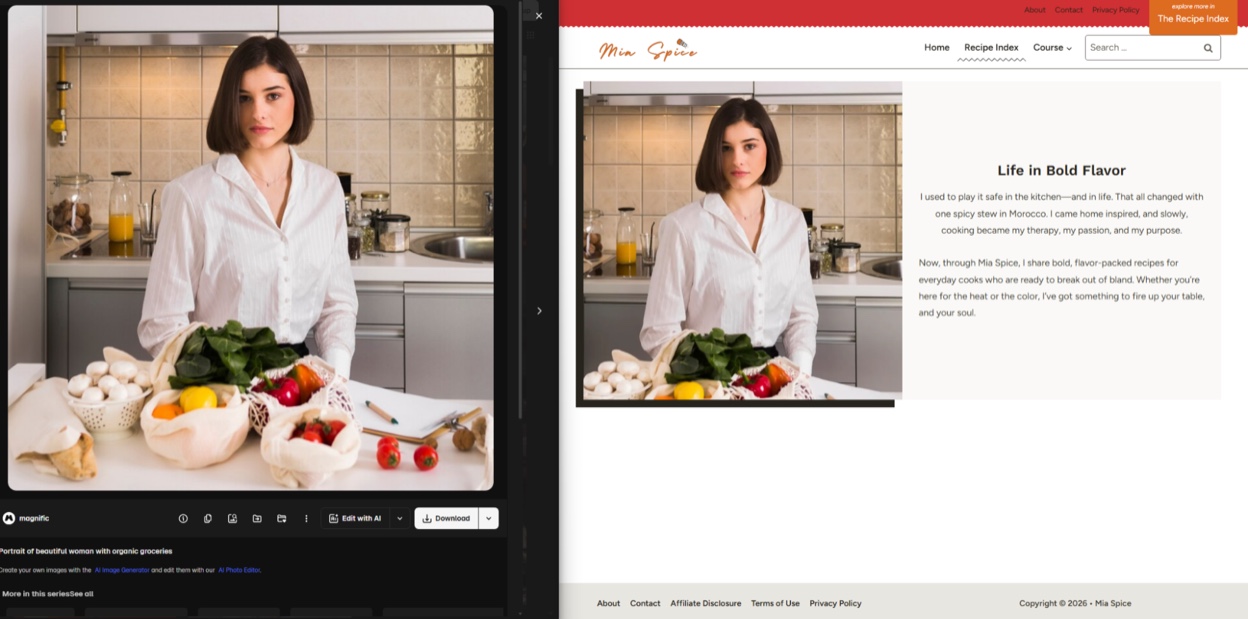
“Mia Spice” (miaspice[.]com/about) uses a stock photo for its owner, with the same stock photo available on Magnific here. This site is connected to half a dozen similar sites likely owned by the same operator, which makes the simple back stories on the sites less believable, like the bio on Mia Spice: “I used to play it safe in the kitchen—and in life. That all changed with one spicy stew in Morocco. I came home inspired, and slowly, cooking became my therapy, my passion, and my purpose.”
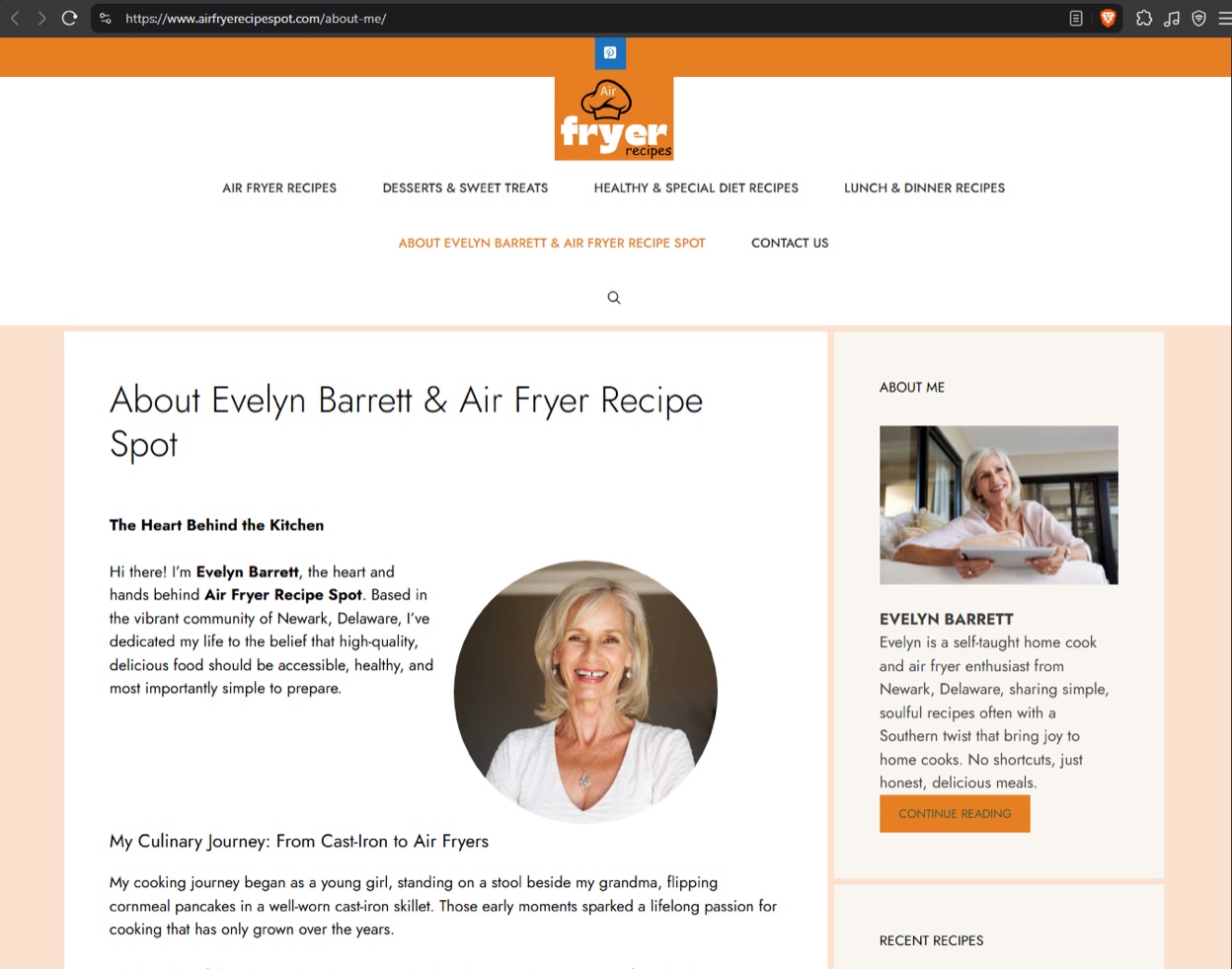
“Air Fryer Recipes” (airfryerecipespot[.]com/about-me/) also uses a stock photo for its owner, and that photo is available on Magnific here.
This site is connected to another recipe website ritzyrecipes[.]com through a technical fingerprint, and both have their ads.txt managed by hbagency[.]it.
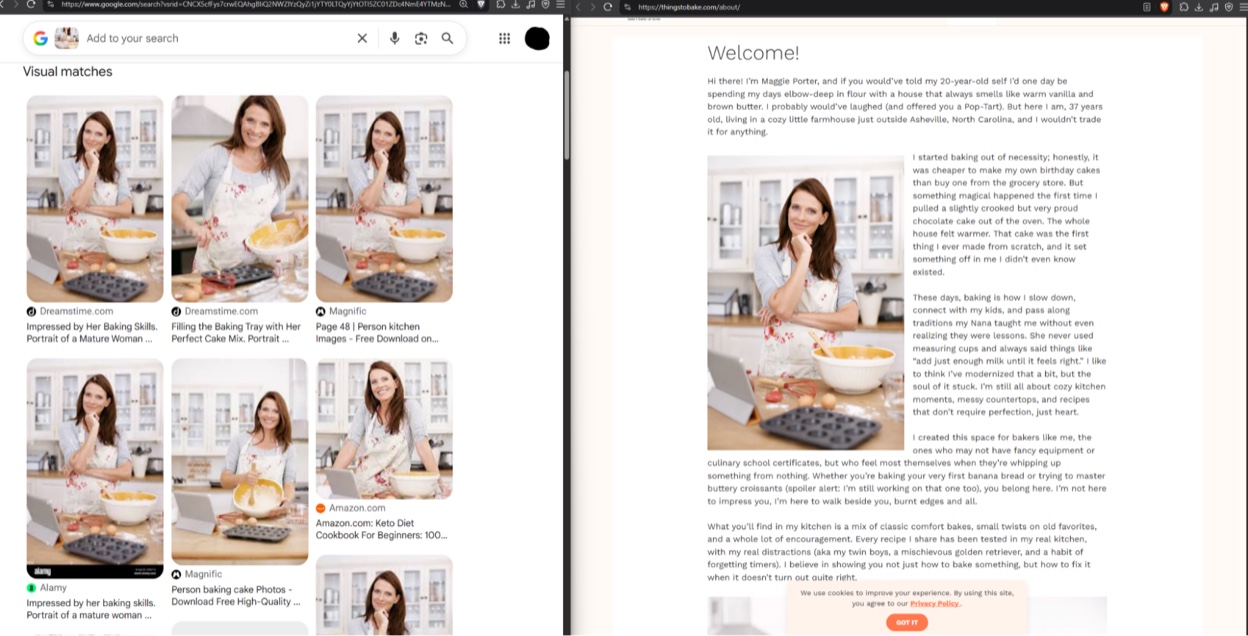
While more rare, some AI recipe sites like thingstobake[.]com/about/ use stock photos which can be found across countless other websites. This example gives a significant back story with details such as: “Hi there! I’m Maggie Porter, and if you would’ve told my 20-year-old self I’d one day be spending my days elbow-deep in flour with a house that always smells like warm vanilla and brown butter. I probably would’ve laughed (and offered you a Pop-Tart). But here I am, 37 years old, living in a cozy little farmhouse just outside Asheville, North Carolina, and I wouldn’t trade it for anything.”
The thingstobake[.]com site is also connected to firststeprecipes[.]com through a technical fingerprint, with both sites having their ads.txt managed by hbagency[.]it.
On some AI recipe websites like yumfamilyrecipes[.]com/about/ they appear to be using people’s pictures found on other sites, like this example with eduelle[.]com (both appear to be stock photos from a currently unknown source).
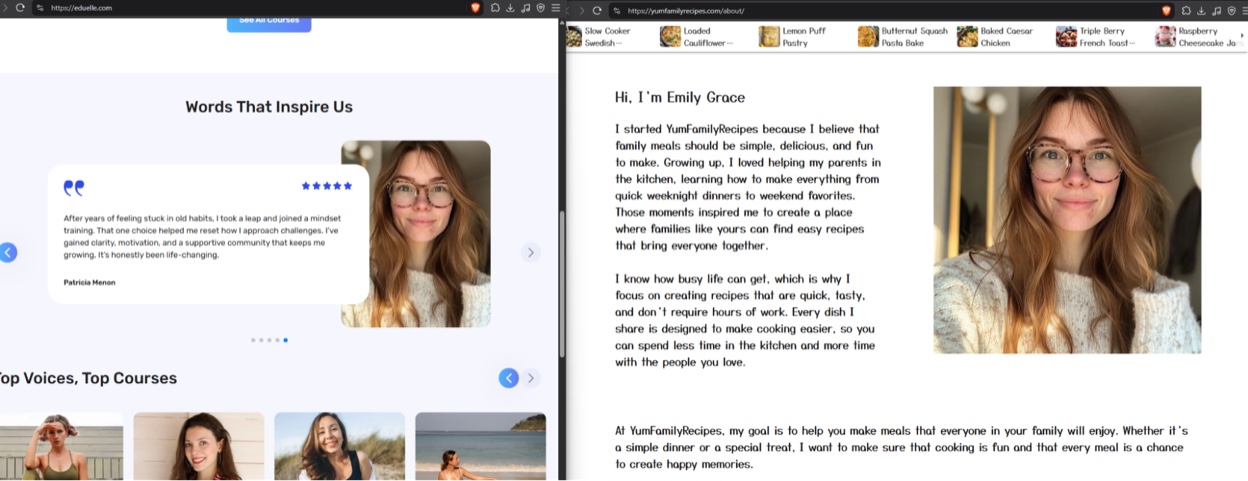
This yumfamilyrecipes[.]com website is also associated with recipessmile[.]com and 59 other AI recipe websites through technical fingerprints, and their ads.txt files are also managed by ezoic[.]ai.
AI Chef as Part of an AI Recipe Cluster
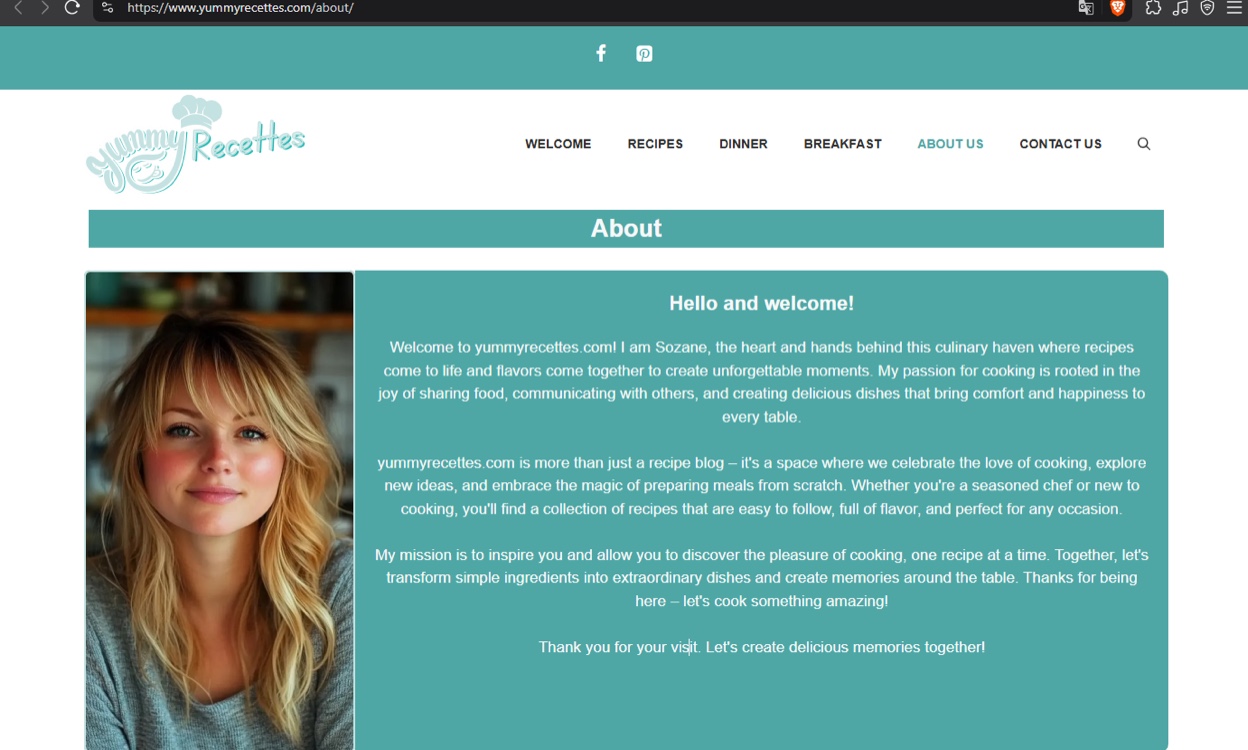
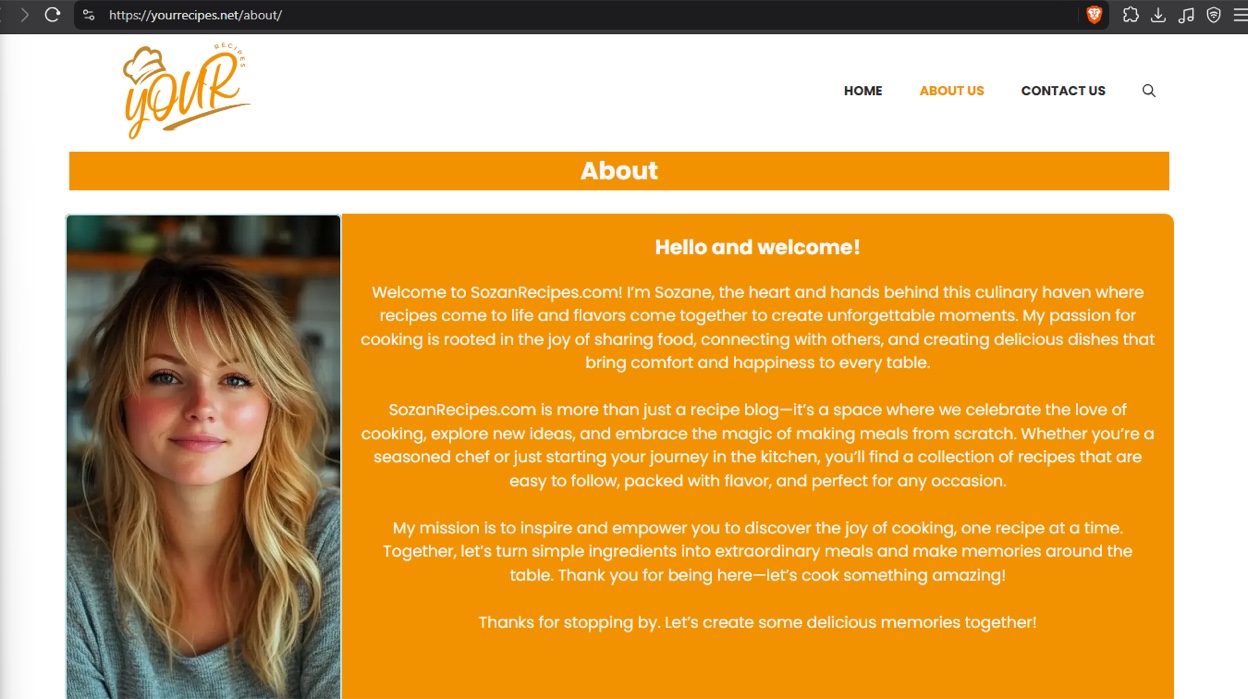
This AI photo of “Sozane” (also spelled “Sozan”) can be found on multiple AI recipe websites which is part of a larger cluster of about 20 AI recipe websites connected through technical fingerprints. Two of these sites have their ads.txt managed by hbagency[.]it, while sozanrecipes[.]com is managed by ezoic[.]ai.
- yummyrecettes[.]com/about/
- yourrecipes[.]net/about/
- sozanrecipes[.]com/about/

With AI, Are There Ever Too Many Cooks In The Virtual Kitchen?
Some sites are going all-in on attempting to create the illusion of a “Culinary Team” with multiple AI chef photos and detailed backstories.
One example is the site Tasty Flavor Hub (tastyflavorhub[.]com) which has six AI photos of chefs on their team, each with details about each of their alleged cooking specialties.
This AI website is also connected to 40 other AI recipe websites through various technical fingerprints, the sites have their ads.txt managed by hbagency[.]it.






“Spiced & Baked” (spicedandbaked[.]com) has its own “team,” featuring three very similar looking AI photos of women.
The site’s ads.txt is also managed by ezoic[.]ai and is connected to 6 other AI cooking websites through various technical fingerprints.

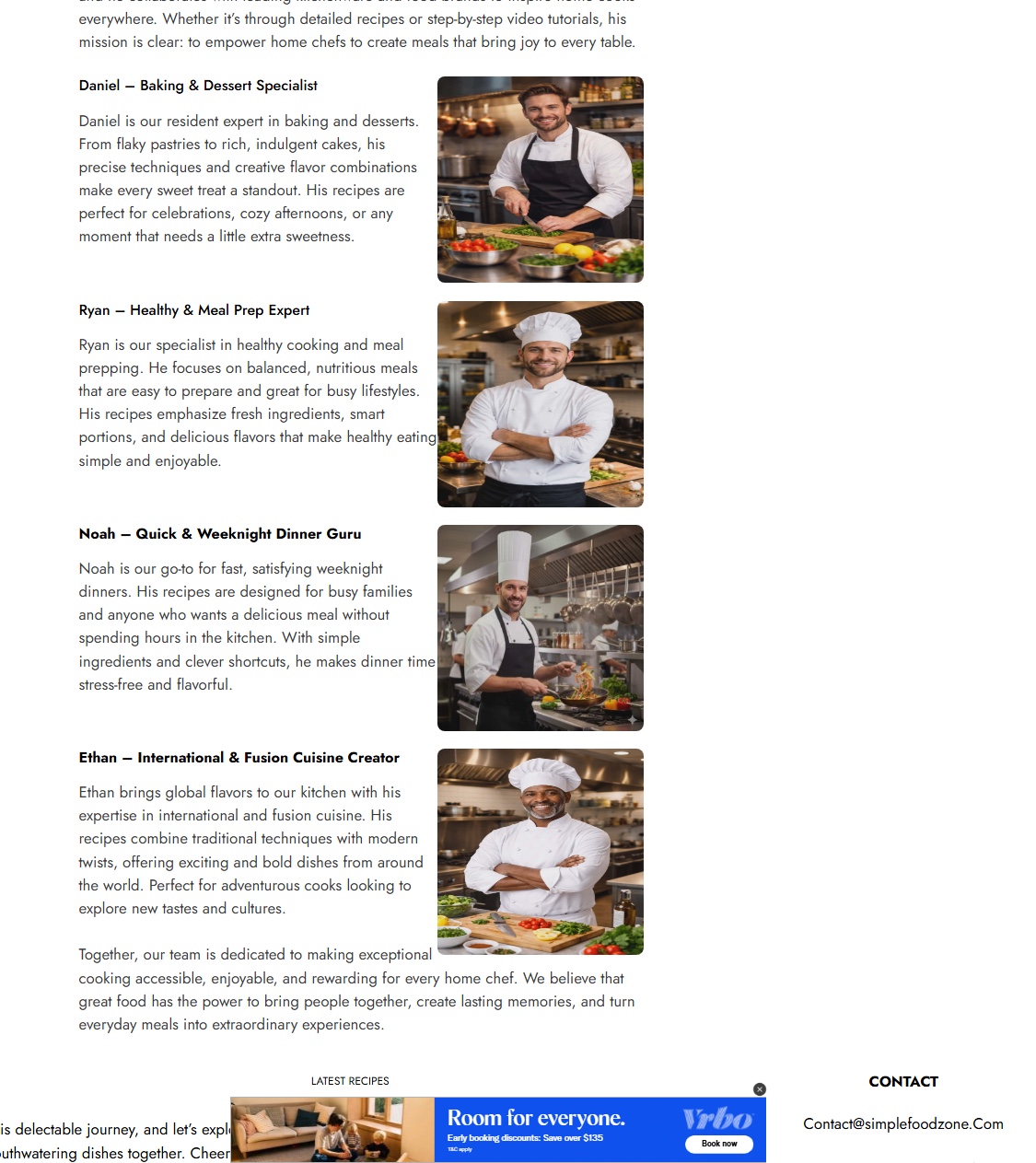
One site, “Simple Food Zone” (simplefoodzone[.]com/about-me/), with likely AI photos of their chefs claims to be a “diverse team of culinary experts.”
This site is connected to 34 other AI recipe websites through technical fingerprints, the sites have their ads.txt managed by hbagency[.]it.
You can see VRBO ads on this site in the screenshot below.

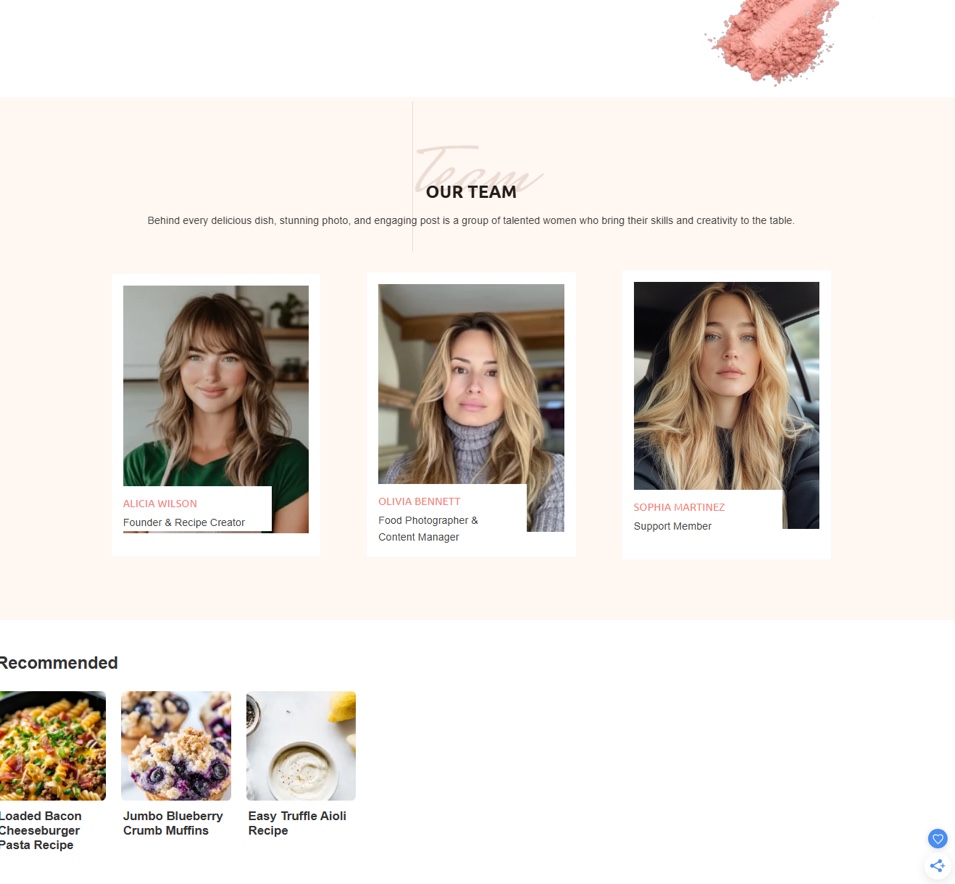
“Easy Dine Recipes” (easydinerecipes[.]com/about) claims to have three team members, writing: “behind every delicious dish, stunning photo, and engaging post is a group of talented women who bring their skills and creativity to the table.”
All three team member photos appear to be AI generated.
Easydinerecipes[.]com is also connected to 6 other AI recipe websites through various technical fingerprints, with their ads.txt files again managed by ezoic[.]ai.
“Chef YoYo” (chefyoyo[.]com/about/) features four chefs, all with awkward personal quotes about the number of recipes they have on the site.
Chef YoYo is connected to a dozen other recipe websites through technical fingerprints, including tastedessert[.]com below, and the sites have their ads.txt managed by hbagency[.]it.


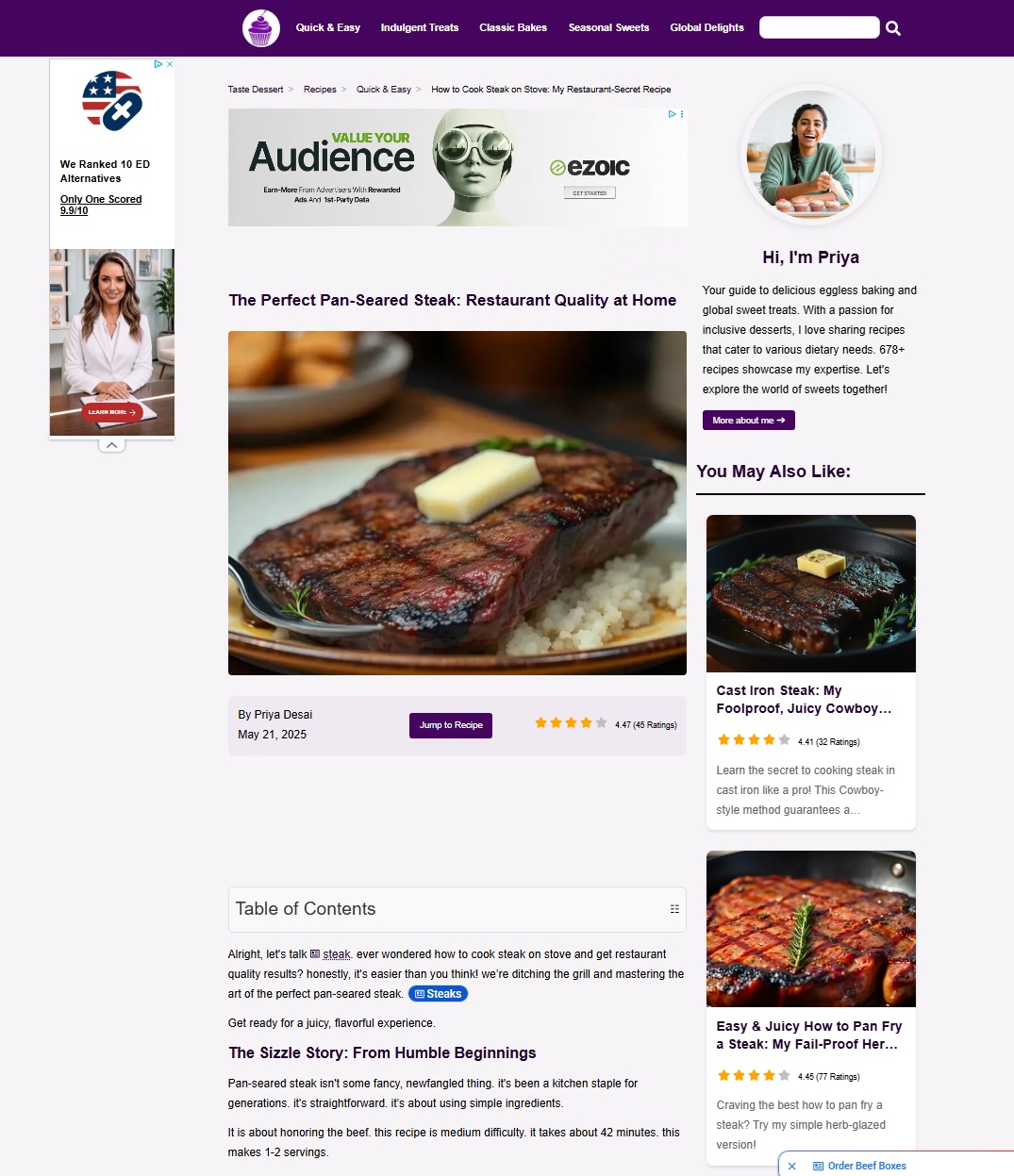
“Taste Dessert” (tastedessert[.]com) has a group of chefs all using AI photos and features numerous non-dessert recipes, with an author who claims to have written over “678+ recipes.”
This site is part of the same cluster as chefyoyo[.]com, with ads.txt managed by hbagency[.]it.



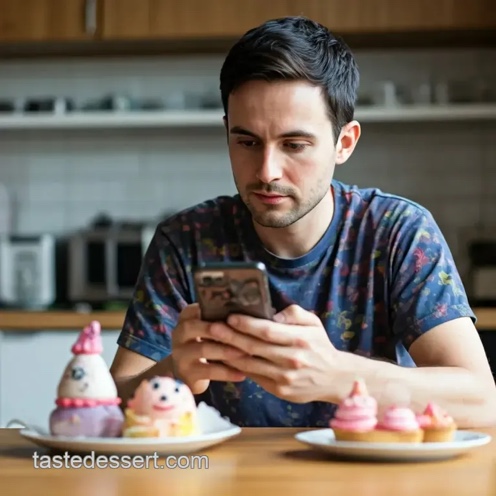
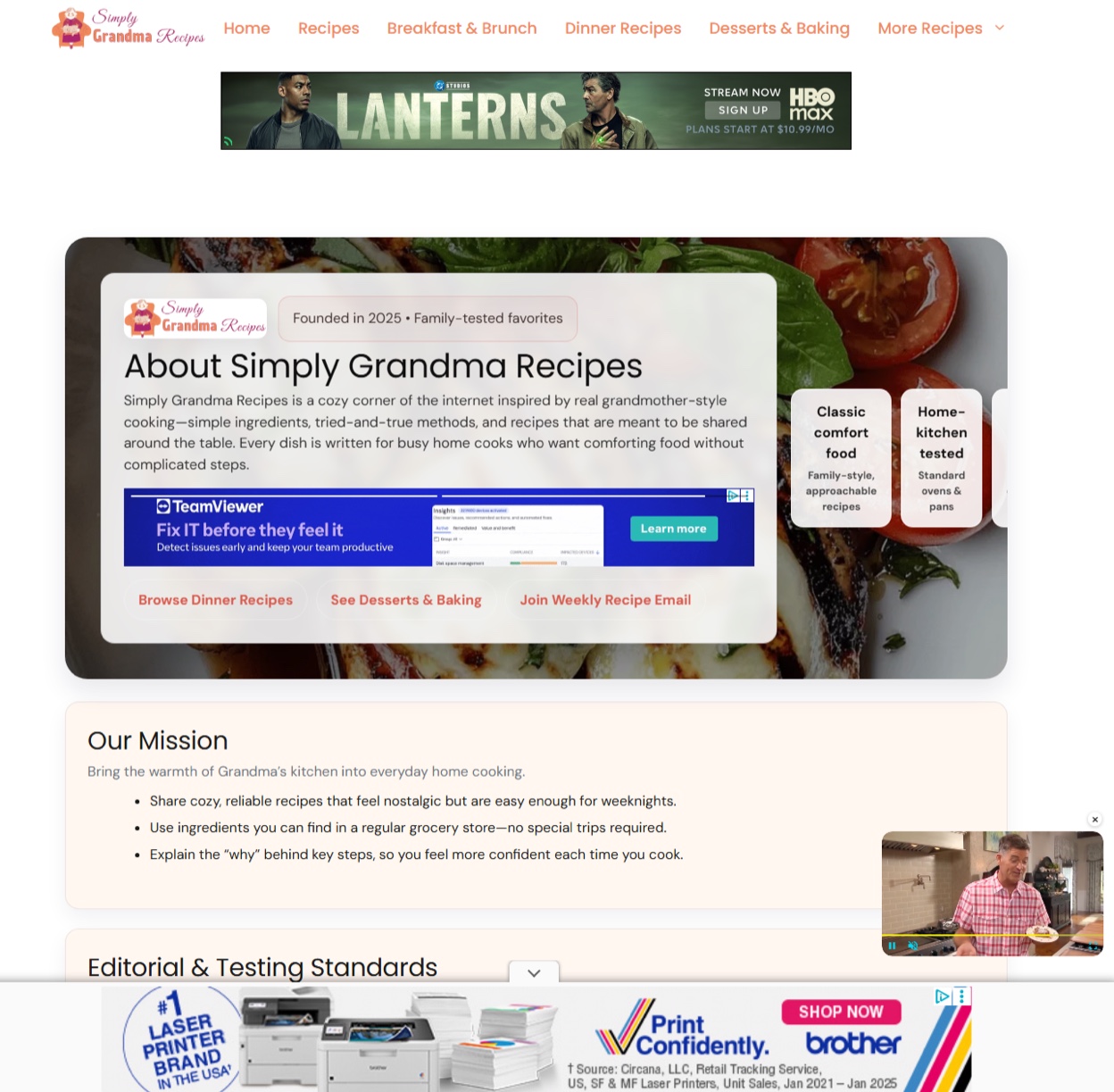
One site called “Simply Grandma Recipes” (simplygrandmarecipes[.]com/about-me/) features multiple likely AI author photos.
The site is connected to 62 other AI recipe websites through technical fingerprints, with the ads.txt files managed by ezoic[.]ai.


Fake back stories and credentials?
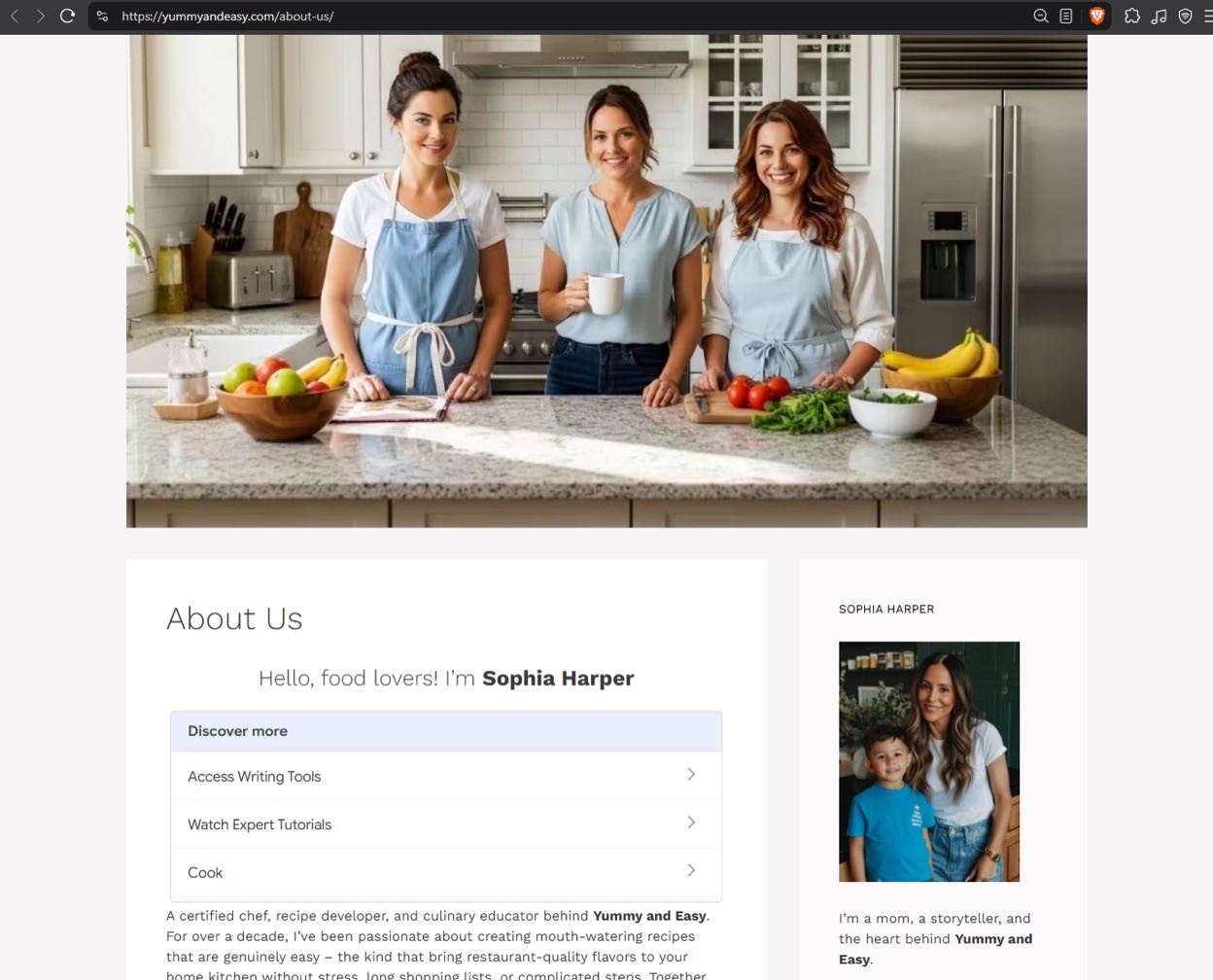
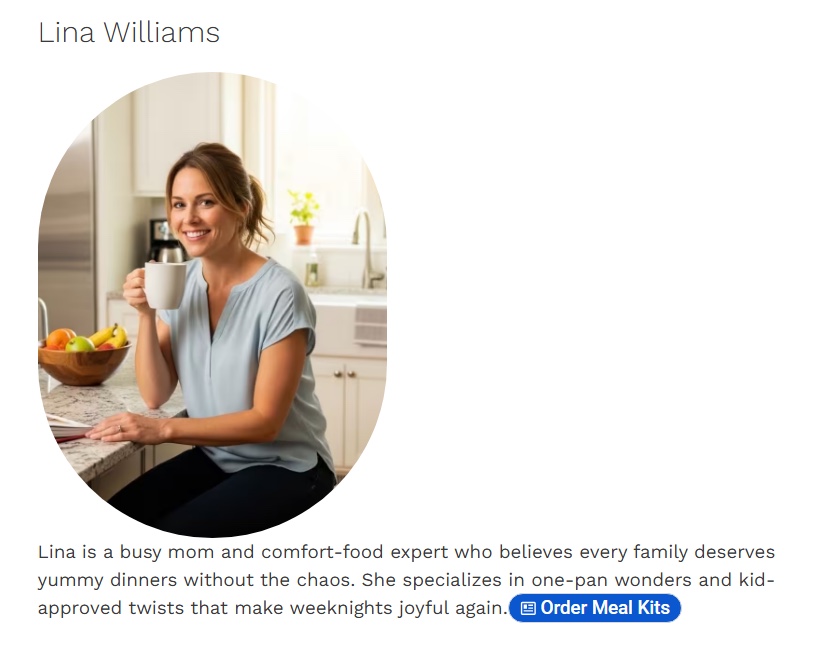
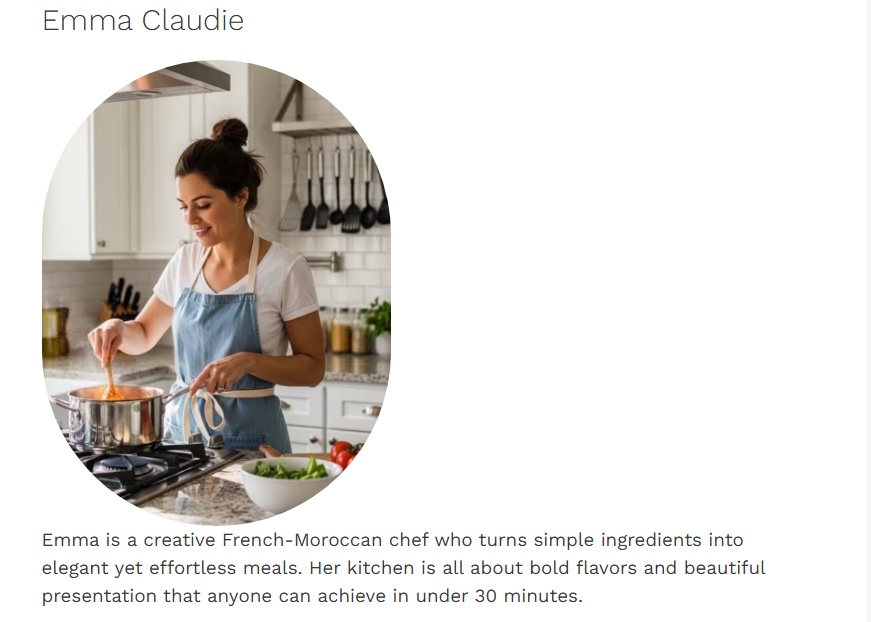
Some sites can’t even appear to keep their AI author photos/stories straight and will have clearly different people noted as the owner, like with the site yummyandeasy[.]com/about-us/, which presents three different named owners (“Sophia Harper”, “Lina Williams” and “Emma Claudie”).
This site is connected to one other recipe website, tasty15minute[.]com, through a technical fingerprint and both have their ads.txt managed by hbagency[.]it.
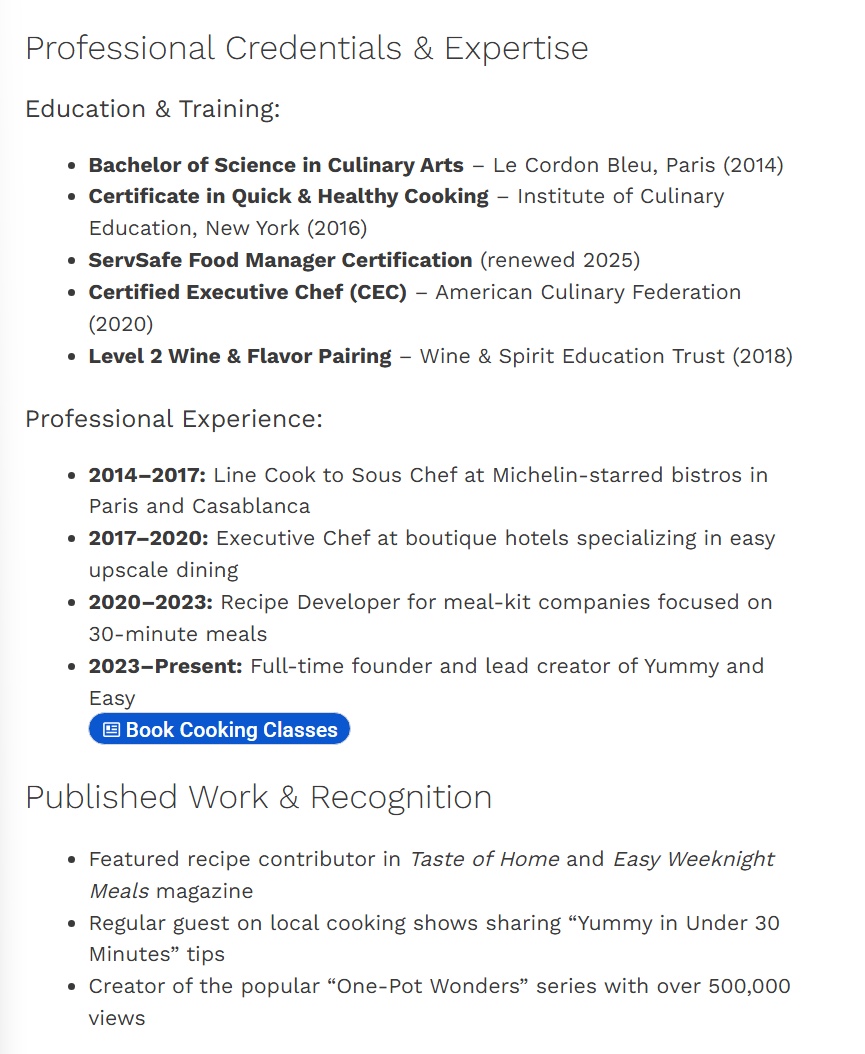
This same “yummyandeasy[.]com” domain has a full on resume for the supposed owner, but leaves off the actual Michelin-starred restaurants and boutique hotels that they claim to have worked at, instead offering generic details:
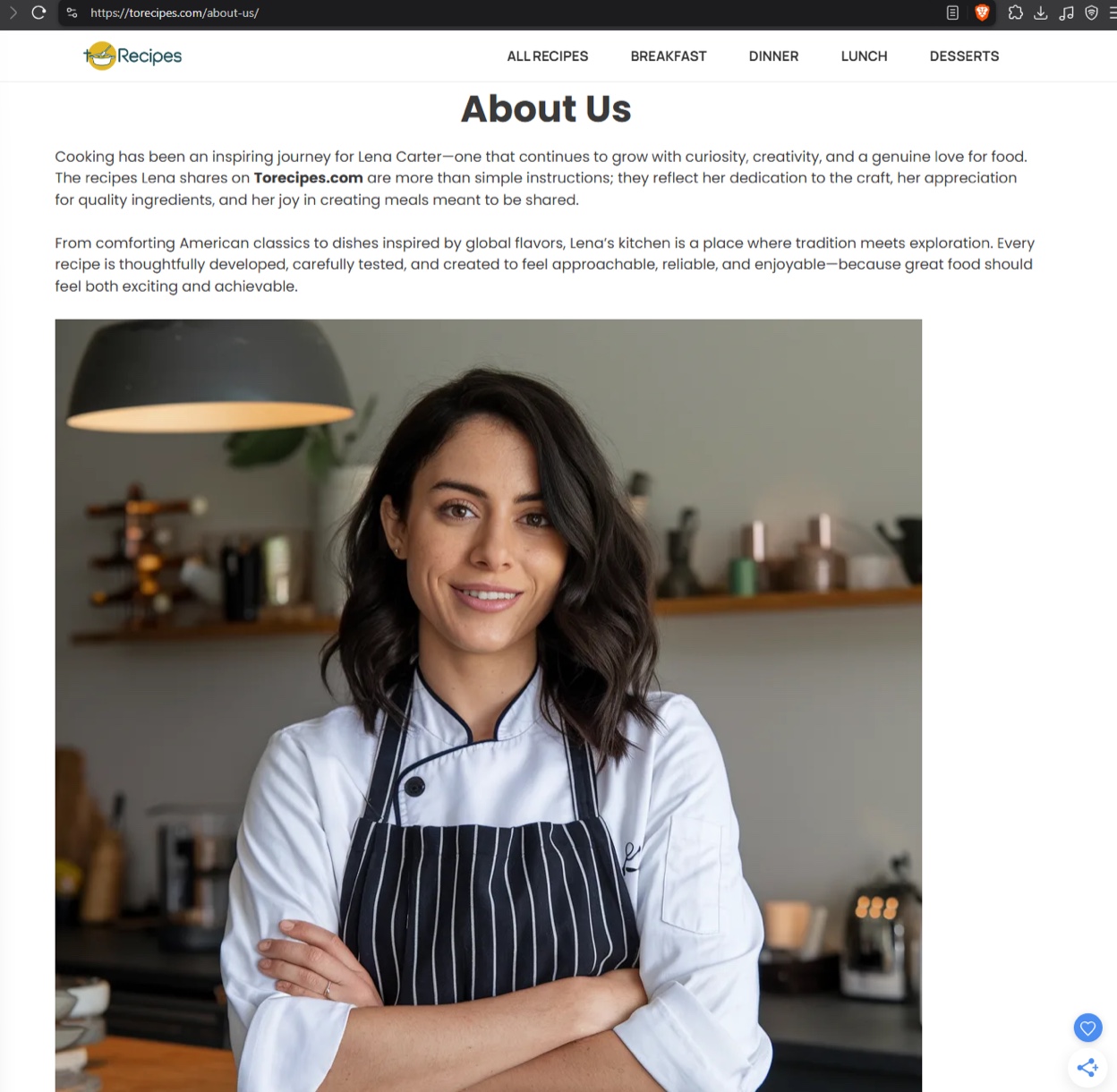
The site torecipes[.]com/about-us/, with a likely AI photo and likely fake author named “Lena Carter”, claims on the about page they have experience including “Kitchen Experience: 8+ years of hands-on cooking and recipe development” and “Education: Culinary Institute of America (CIA) & University of California, Berkeley”
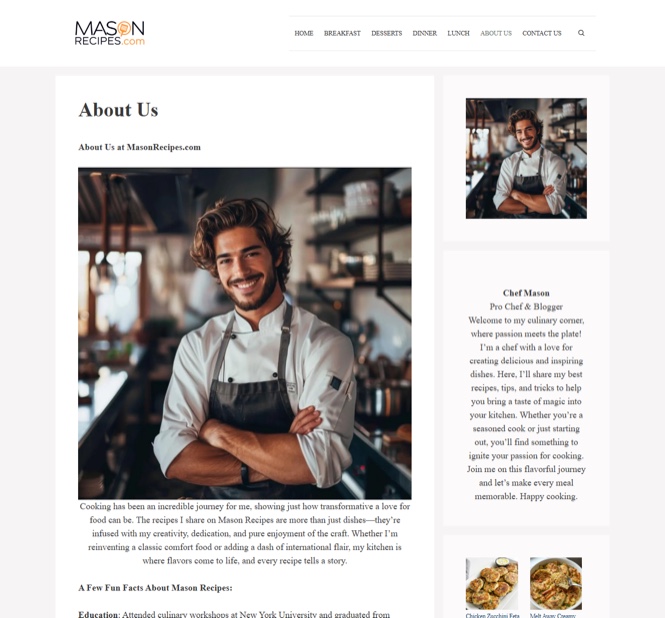
Torecipes[.]com is connected to 19 other AI recipe websites through technical fingerprints, including masonrecipes[.]com below, and the ads.txt files are managed by ezoic[.]ai.
“Mason Recipes” (masonrecipes[.]com/about-us) has a more obvious AI photo of its owner, a “Pro Chef” who claims to have: “Attended culinary workshops at New York University and graduated from University of California, Berkeley.”
This site is in the same cluster of 20 websites as torecipes[.]com, with ads.txt managed by ezoic[.]ai.
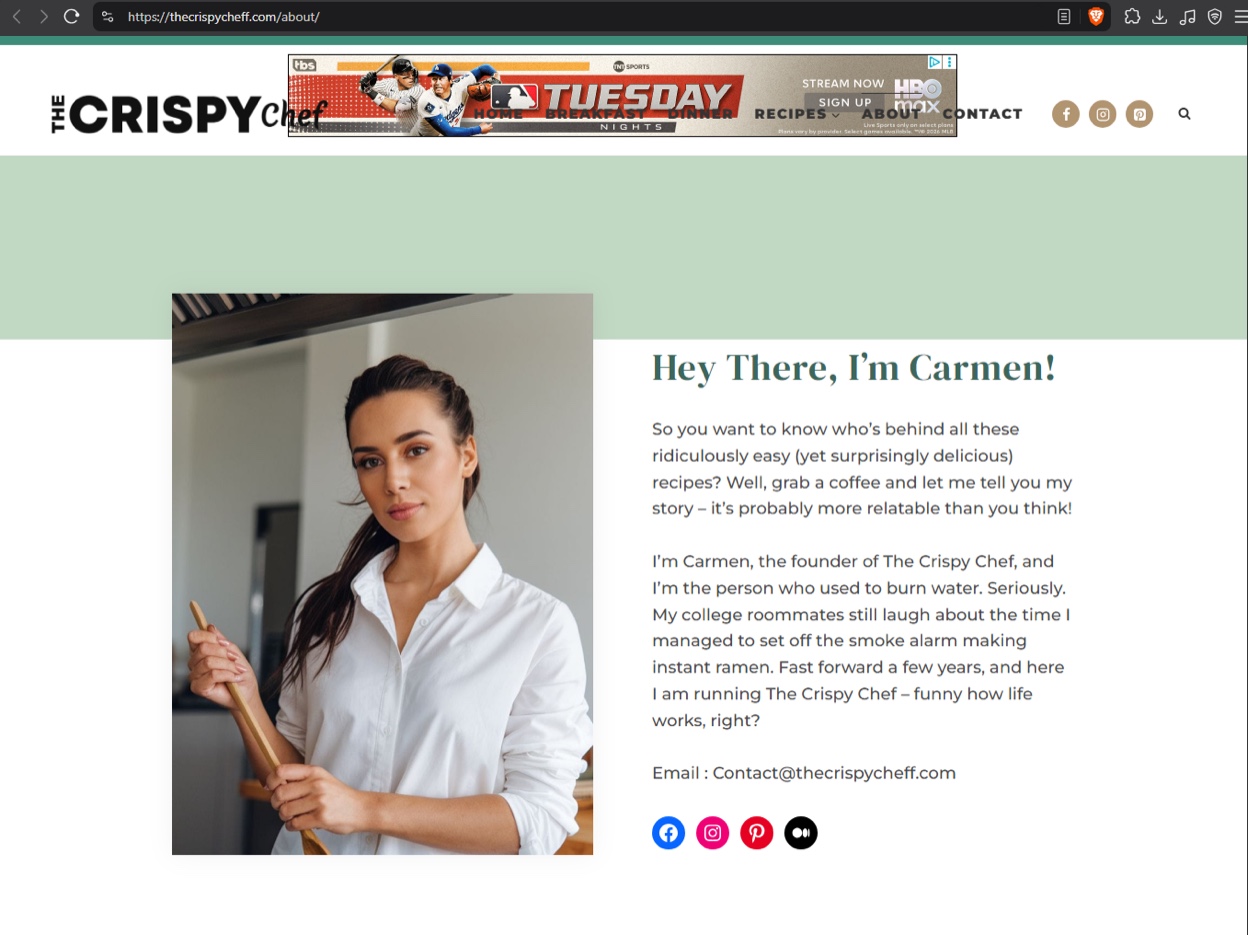
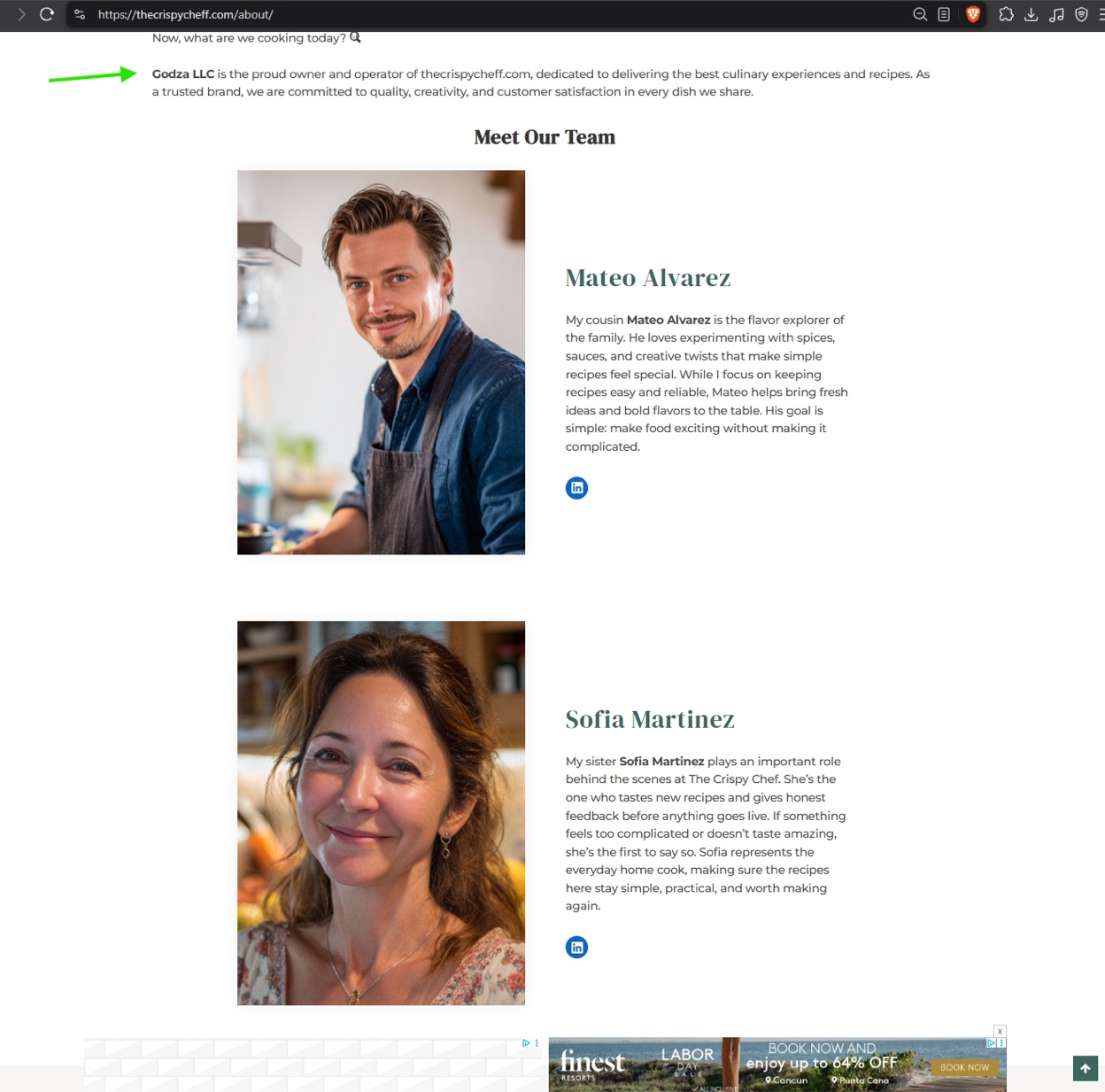
One site with likely AI recipe photos (thecrispycheff[.]com/about/) includes three likely AI photos of owners and authors and the site claims it’s owned by a company called “Godza LLC” writing “Godza LLC is the proud owner and operator of thecrispycheff.com, dedicated to delivering the best culinary experiences and recipes. As a trusted brand, we are committed to quality, creativity, and customer satisfaction in every dish we share.”
We haven’t been able to find any indication that “Godza LLC” is an actual registered business.
The site is connected to one other website, thecrispychef[.]com, through technical fingerprints, and its ads.txt is managed by monumetric[.]com.
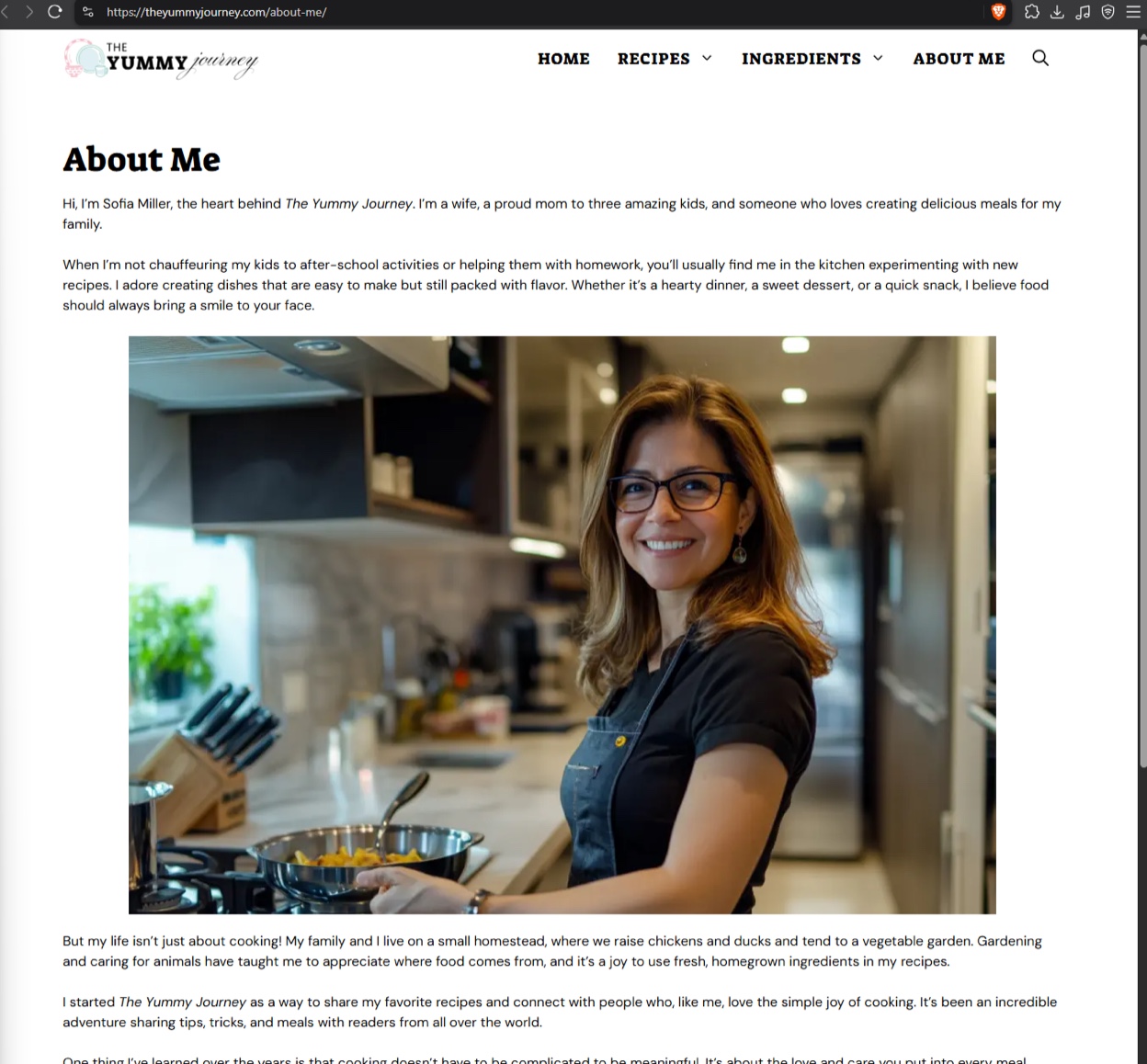
The site theyummyjourney[.]com/about-me/ leans into a seemingly fake back story, claiming: “But my life isn’t just about cooking! My family and I live on a small homestead, where we raise chickens and ducks and tend to a vegetable garden. Gardening and caring for animals have taught me to appreciate where food comes from, and it’s a joy to use fresh, homegrown ingredients in my recipes.”
This site is connected to 62 other AI recipe websites through various technical fingerprints, and its ads.txt files are managed by ezoic[.]ai.
The author photo on thedailycooking[.]com/about-me/ comes with a mostly generic back story, including: “Some of my favorite memories revolve around sharing meals lovingly made from scratch. I started TheDailyCooking to pass along the recipes that have brought so much joy to my life and to inspire you to create your own unforgettable kitchen memories. Every recipe you’ll find here is crafted with love, creativity, and a passion for good, honest food.”
The site is connected to 17 other AI recipe websites through technical fingerprints and has its ads.txt managed by ezoic[.]ai.

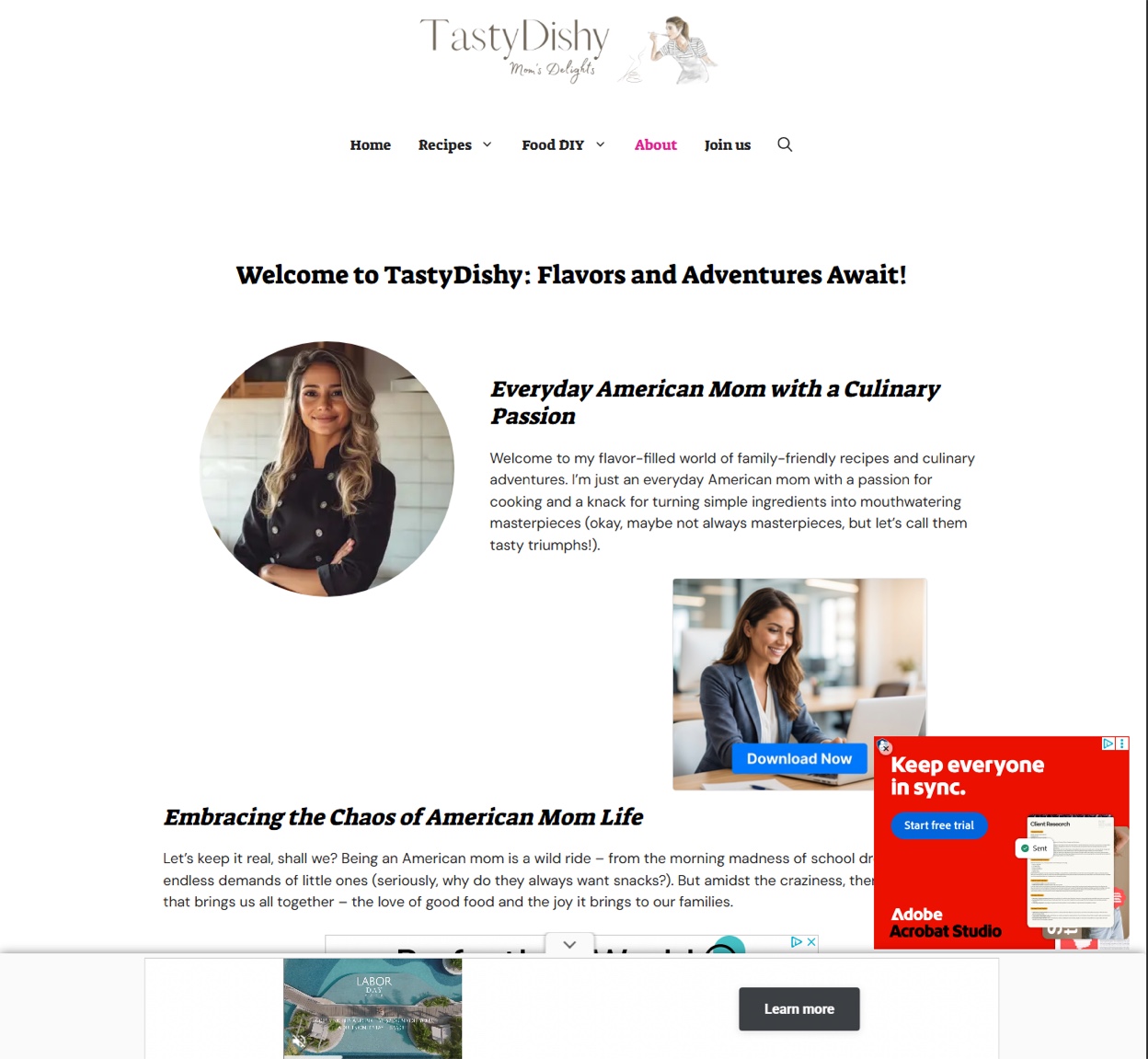
Many of the sites with likely AI authors, including TastyDishy (tastydishy[.]com) have elaborate back stories, with this one claiming to be: “... just an everyday American mom with a passion for cooking...That’s why I’m here to lend a helping hand and share my favorite recipes, tricks, and hacks that have saved me from many dinner disasters.”
TastyDishy is connected to 48 other AI recipe websites through technical fingerprints, with ads.txt managed by ezoic[.]ai.
Sites sharing the same template
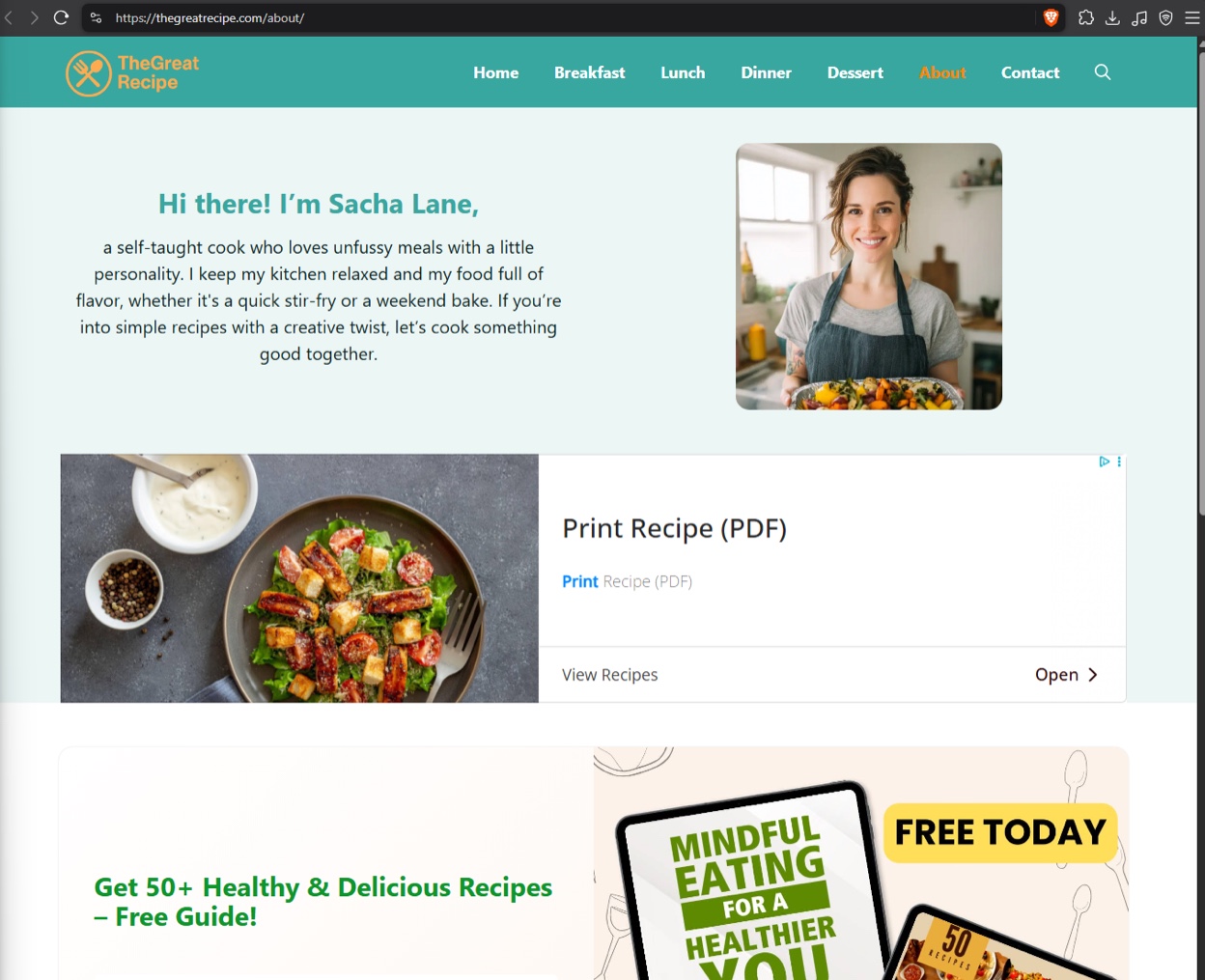
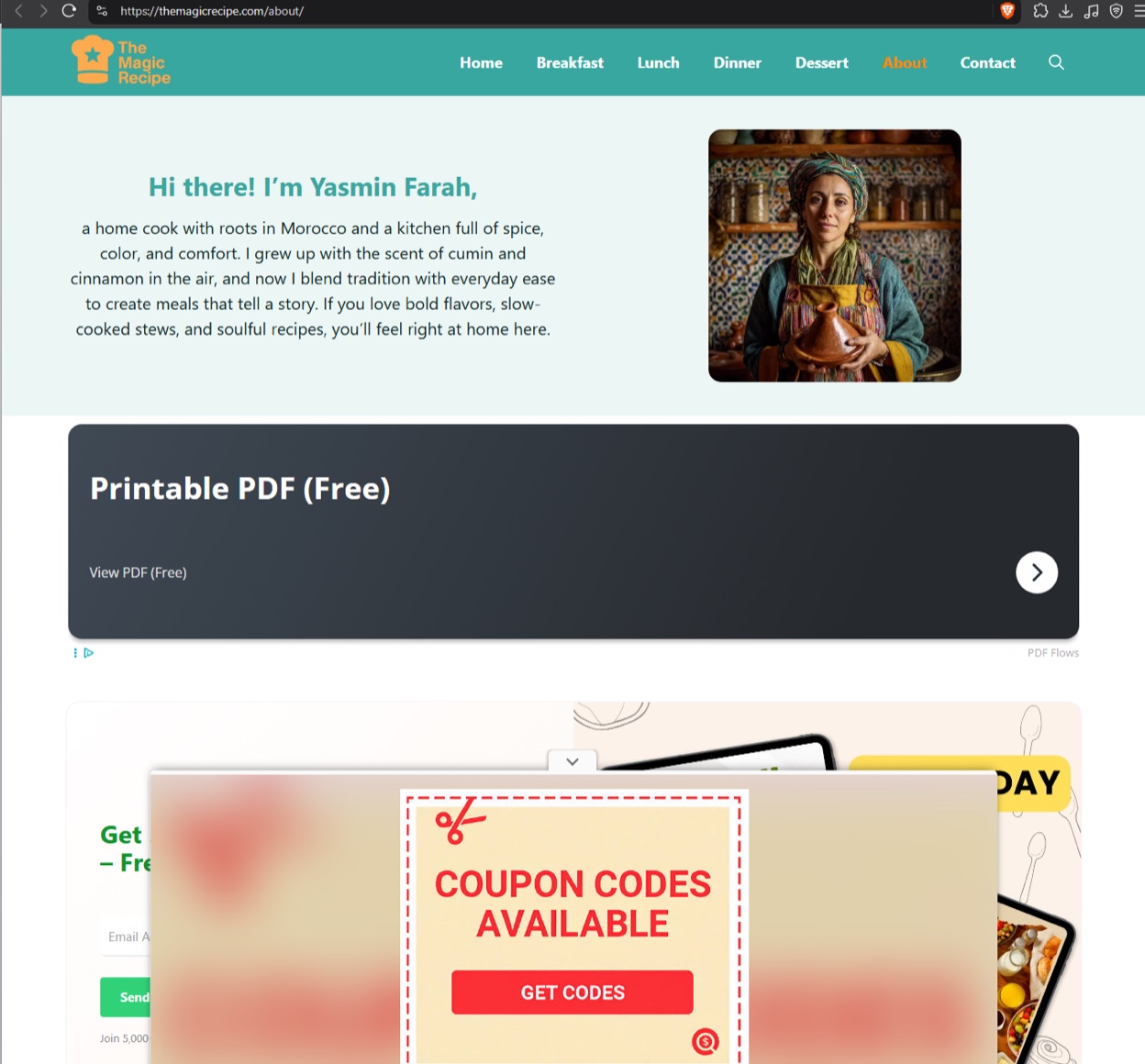
Some of the sites with likely AI author photos are part of small networks with nearly identical site templates like the two seen below (thegreatrecipe[.]com/about/ and themagicrecipe[.]com).
Both sites are connected to 68 other AI recipe websites through technical fingerprints and have their ads.txt managed by hbagency[.]it.
AI artifacts in author photos?
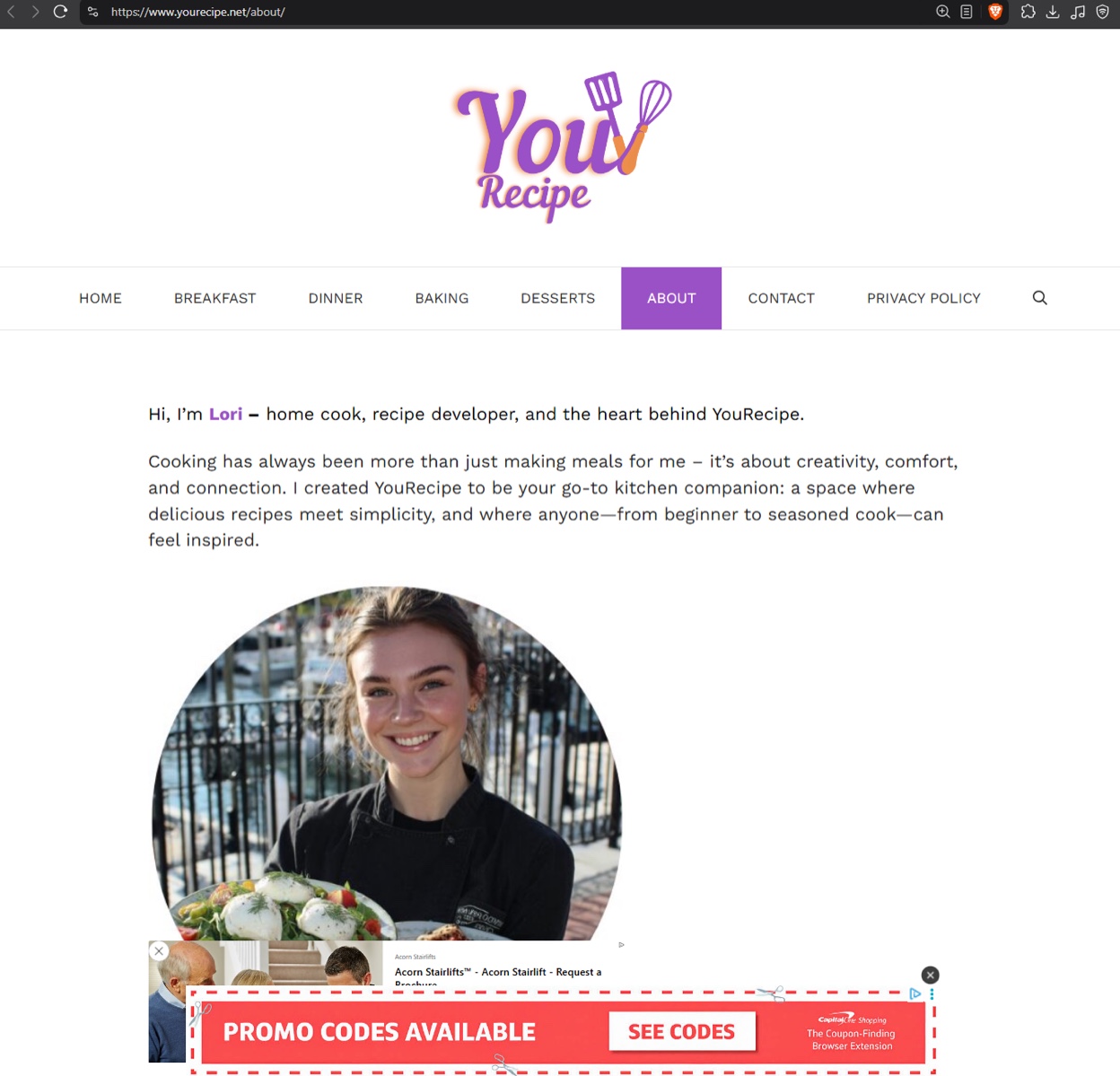
This site “You Recipe” (yourecipe[.]net/about/) features an author photo with clear AI text on her shirt and other indications that the author “Lori” likely doesn’t exist.
This site is connected to 28 other AI recipe websites through technical fingerprints, the ads.txt files are managed by hbagency[.]it.
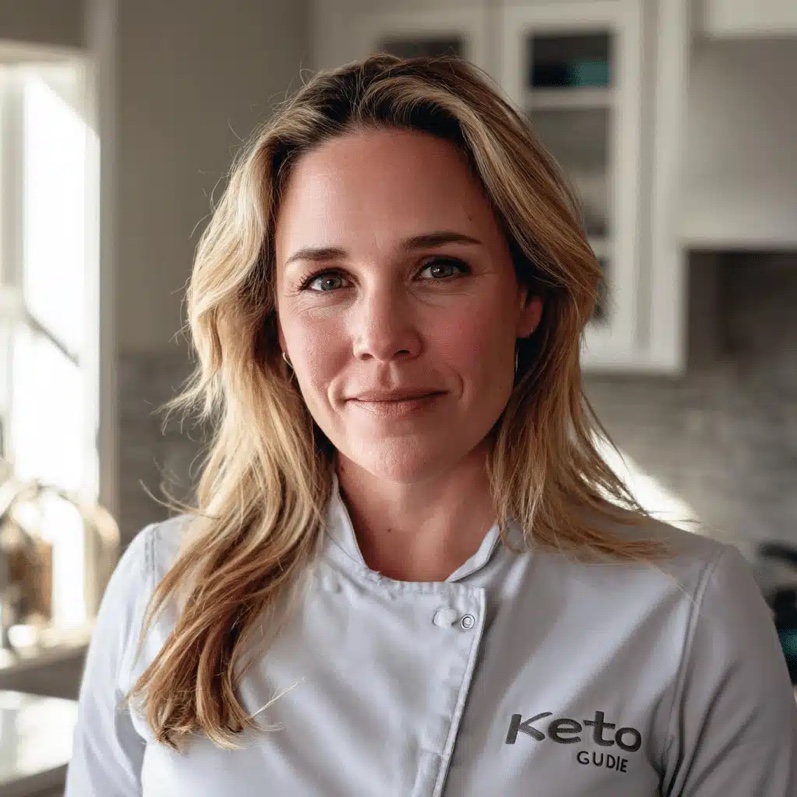
“Keto Diet Guide” (ketodietguide[.]net/about-us) has a more elaborate back story about “the creator behind Keto Diet Guide and a 38-year-old self-taught cook based in Austin, Texas” whose shirt in the photo features the brand name “Keto Gudie”, a misspelling with obvious indicators of AI text.
Keto Diet Guide is connected to six other recipe websites through a technical fingerprint, including tastyflavorhub[.]com from earlier in this report and three German language sites, and the sites have their ads.txt managed by hbagency[.]it.
“Jennifer Recipes” (jenniferrecipes[.]com/about), seen below, has an owner photo that is obvious both in the image itself and in the gibberish text on the shirt.
This site is connected to 11 sites in the “Sozane” cluster described earlier, its ads.txt is managed by ezoic[.]ai.

“Foodie Fiber” (foodiefiber[.]com/about/) has a unique author photo, which shows the alleged owner taking a photo of themselves in front of a mirror that doesn’t show their reflection. Whether AI or a sign of the supernatural, in this case our team believes the former is more likely.
Foodie Fiber is connected to 62 other AI recipe websites through technical fingerprints, with ads.txt managed by ezoic[.]ai.

Some websites with likely AI photos do such a sloppy job with their image selection that they both include multiple likely AI photos on their about page of clearly different people, like in this example from tiffanirecipes[.]com/about/, this example also includes a likely AI photo where the knife, hands and food they are cutting are all distorted.
The site is connected to seven other AI recipe websites through technical fingerprints and has its ads.txt managed by ezoic[.]ai.



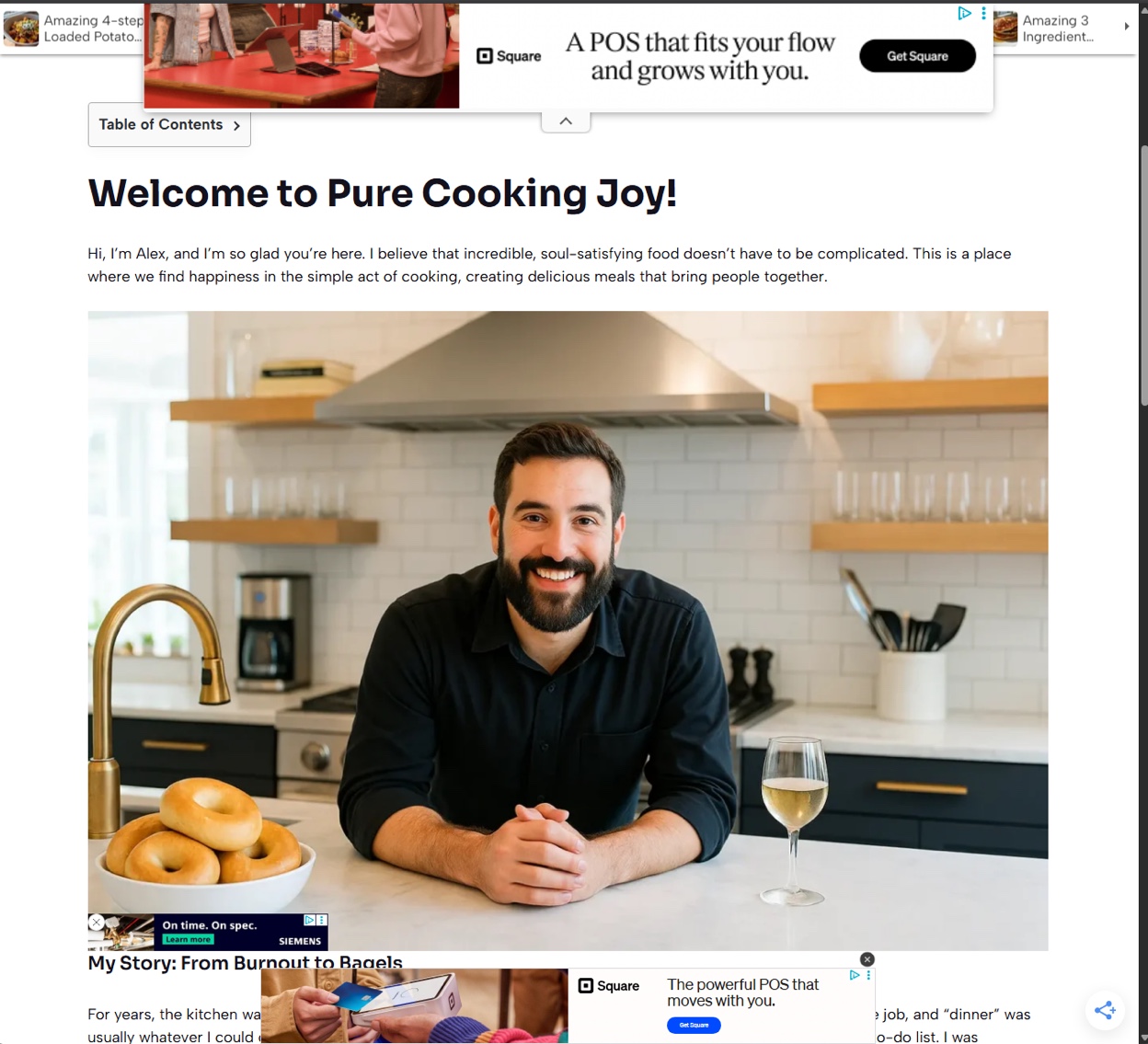
There are some male author photos that are also likely AI which have chaotic details in them, like the one below from “Pure Cooking” (purecookingjoy[.]com/about/) showing the owner with a glass of white wine and a bowl full of plain bagels. The breakfast of AI sommeliers, no doubt. In the image below, one can see ads from both Square and Siemens.
This site is connected to 21 other AI recipe websites through technical fingerprints, the ads.txt files are managed by hbagency[.]it.
“Marcela Recipes” (marcelarecipes[.]com/about-us/) has a photo of a man and a woman with the man holding what appears to be a piece of bread while petting it, like any wholesome pastry chef would.
Marcela Recipes is connected to eight other AI recipe websites through technical fingerprints, including valerierecipes[.]com further below, and the ads.txt files are managed by ezoic[.]ai.

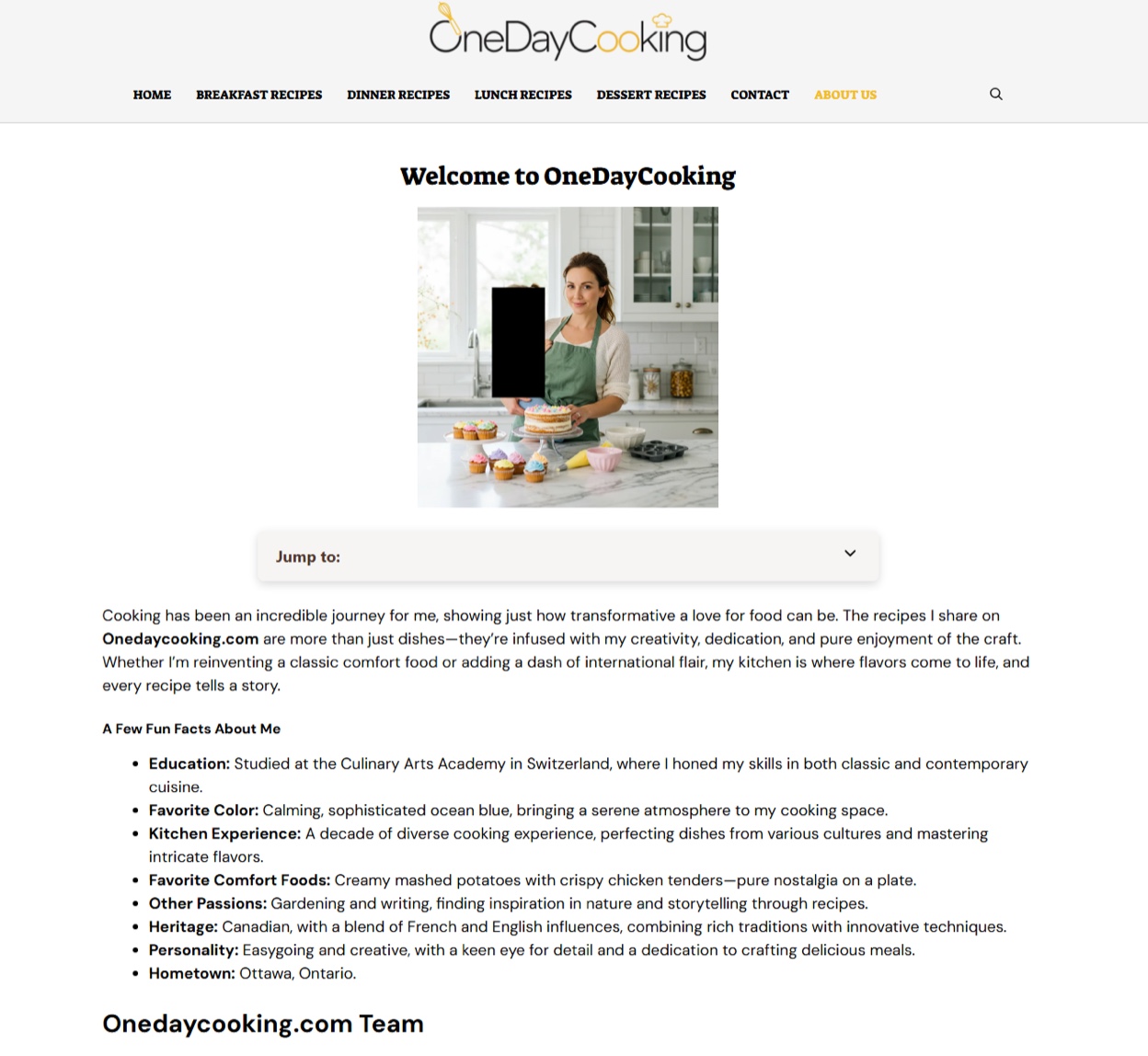
While more rare, some of the sites with likely AI photos of the owners include complex back stories, and in the example below, they included a child in the likely AI image. This example is from “OneDayCooking” (onedaycooking[.]com/about-me).
This site is part of the same cluster of 20 websites as masonrecipes[.]com and torecipes[.]com, with ads.txt managed by ezoic[.]ai.
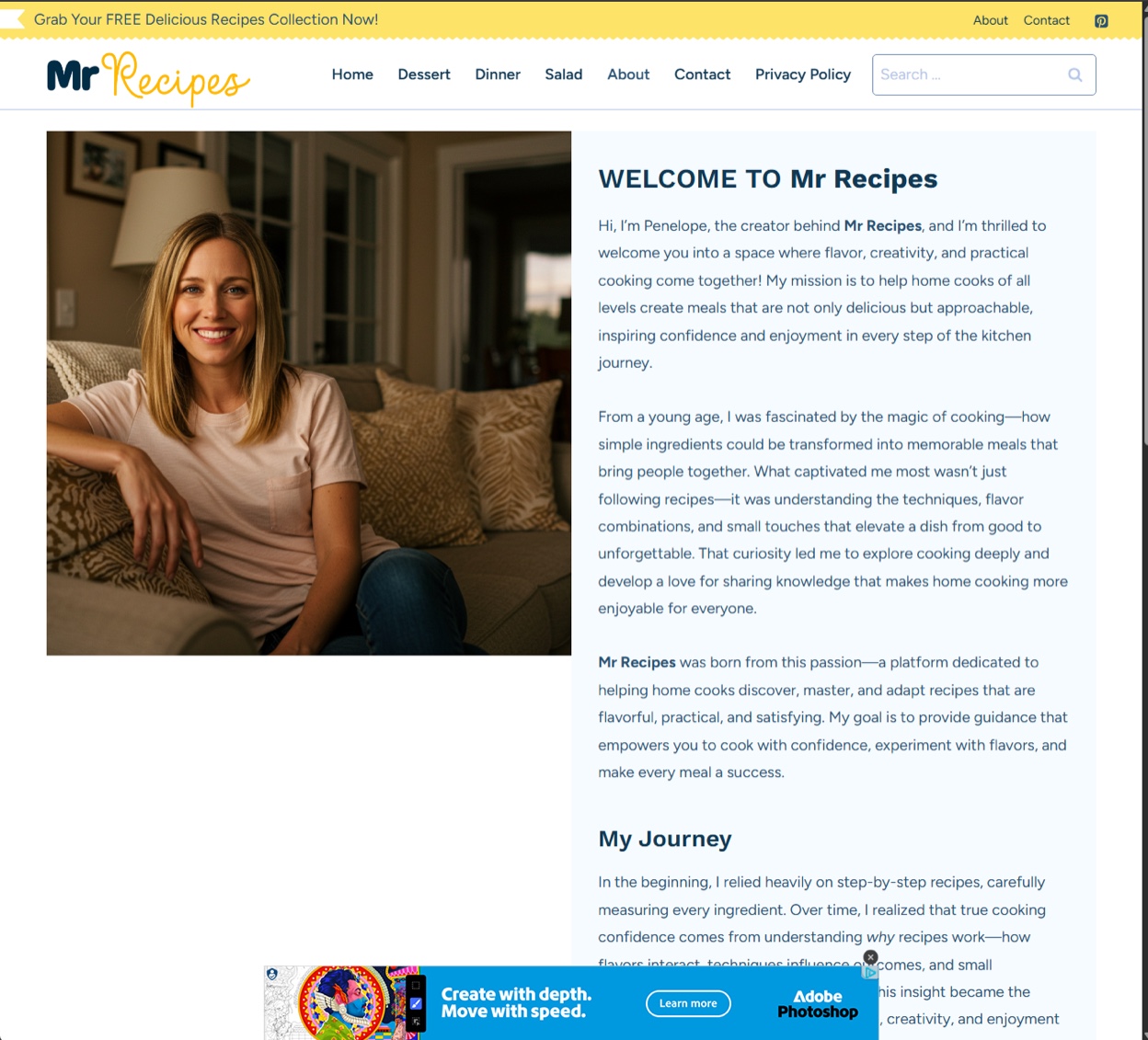
One particularly unusual example of an AI recipe website comes from “Mr Recipes” (mrrecipes[.]net/about), yet includes a likely AI generated photo of a woman named Penelope, which may have been due to the aforementioned automation simply not checking itself.
Mr Recipes is connected to 14 other AI recipe websites through technical fingerprints, the ads.txt files are managed by hbagency[.]it.
Social media accounts and their locations
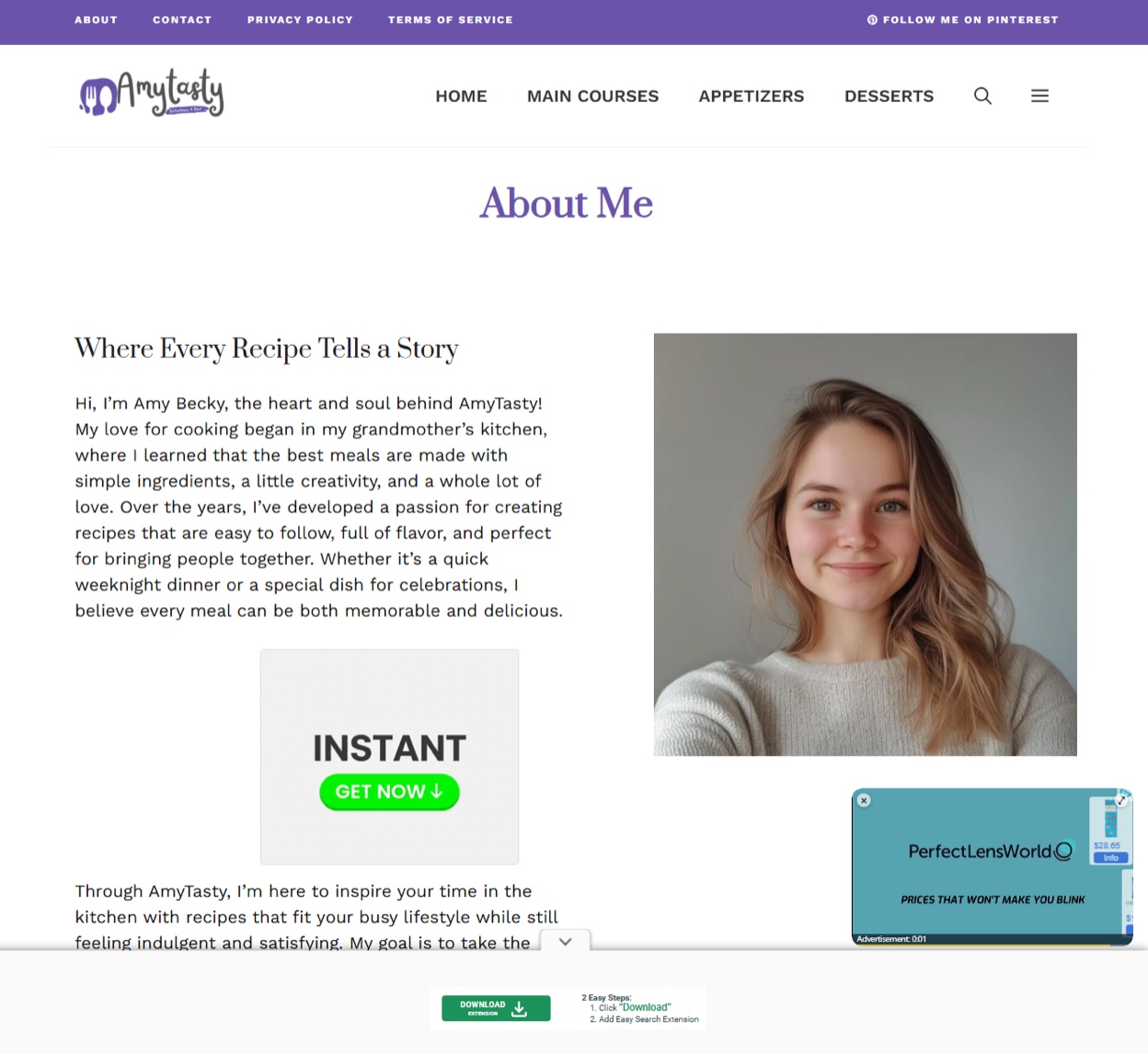
Some of the websites leak details about the likely owners of the websites through their social media sites. One example is “Amy Tasty” (amytasty[.]com/about/) which features an owner with a likely AI photo.
The site links to an X account (x[.]com/amytastyblog/) with an “Account based in Algeria” disclosure, as seen below.
Amy Tasty is connected to recipessmile[.]com and 59 other AI recipe websites through technical fingerprints, the ads.txt files are managed by ezoic[.]ai.
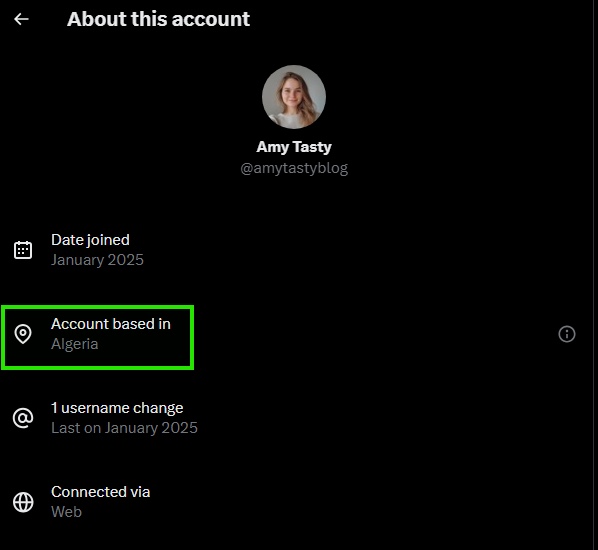
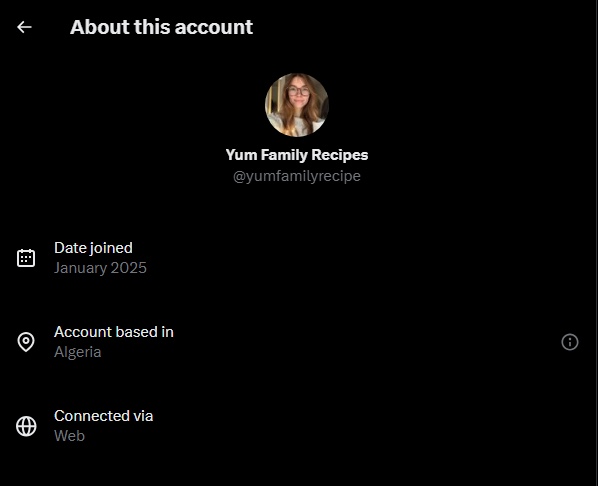
The site yumfamilyrecipes[.]com links to the X account @yumfamilyrecipe, which shows "Account based in Algeria" and joined in January 2025.
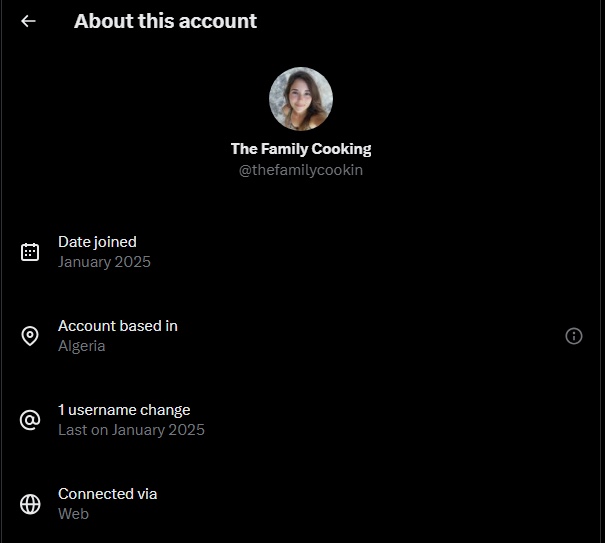
Thefamilycooking[.]com links to the X account @thefamilycookin, which shows "Account based in Algeria" and joined in January 2025.
This site is in the same recipessmile[.]com cluster of 60 websites, with ads.txt managed by ezoic[.]ai.
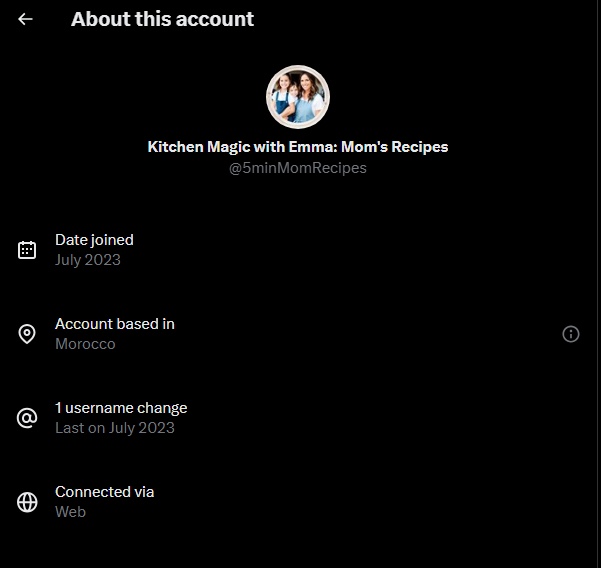
Tastydishy[.]com links to the X account @5minMomRecipes (named "Kitchen Magic with Emma: Mom's Recipes"), which shows "Account based in Morocco" and joined in July 2023.
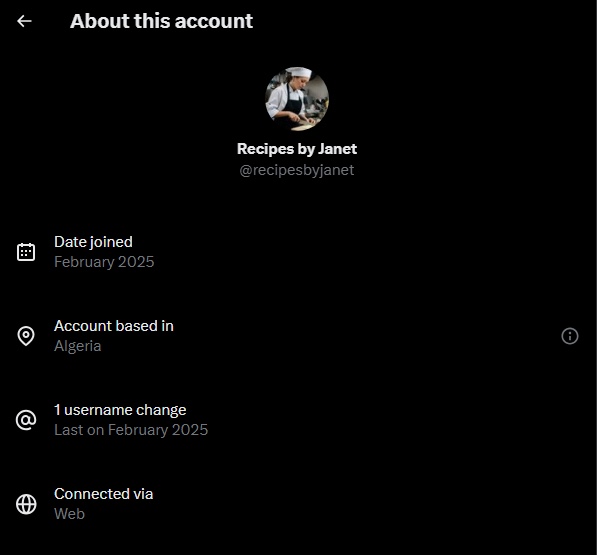
Recipesbyjanet[.]com links to the X account @recipesbyjanet, which shows "Account based in Algeria" and joined in February 2025.
This site is also part of the recipessmile[.]com cluster, with ads.txt managed by ezoic[.]ai.
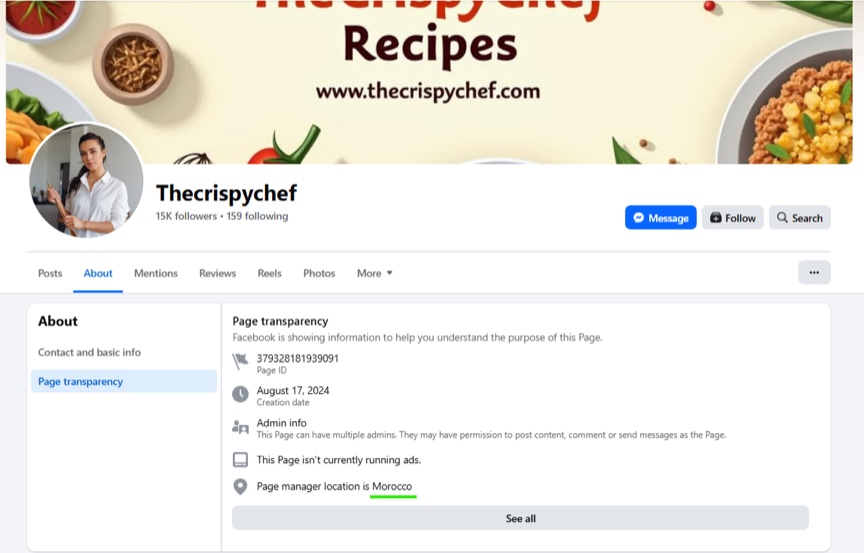
The site thecrispycheff[.]com links to a Facebook page named "Thecrispychef" (15K followers, created August 17, 2024) which lists a page manager location of Morocco.
Sites with high ad density
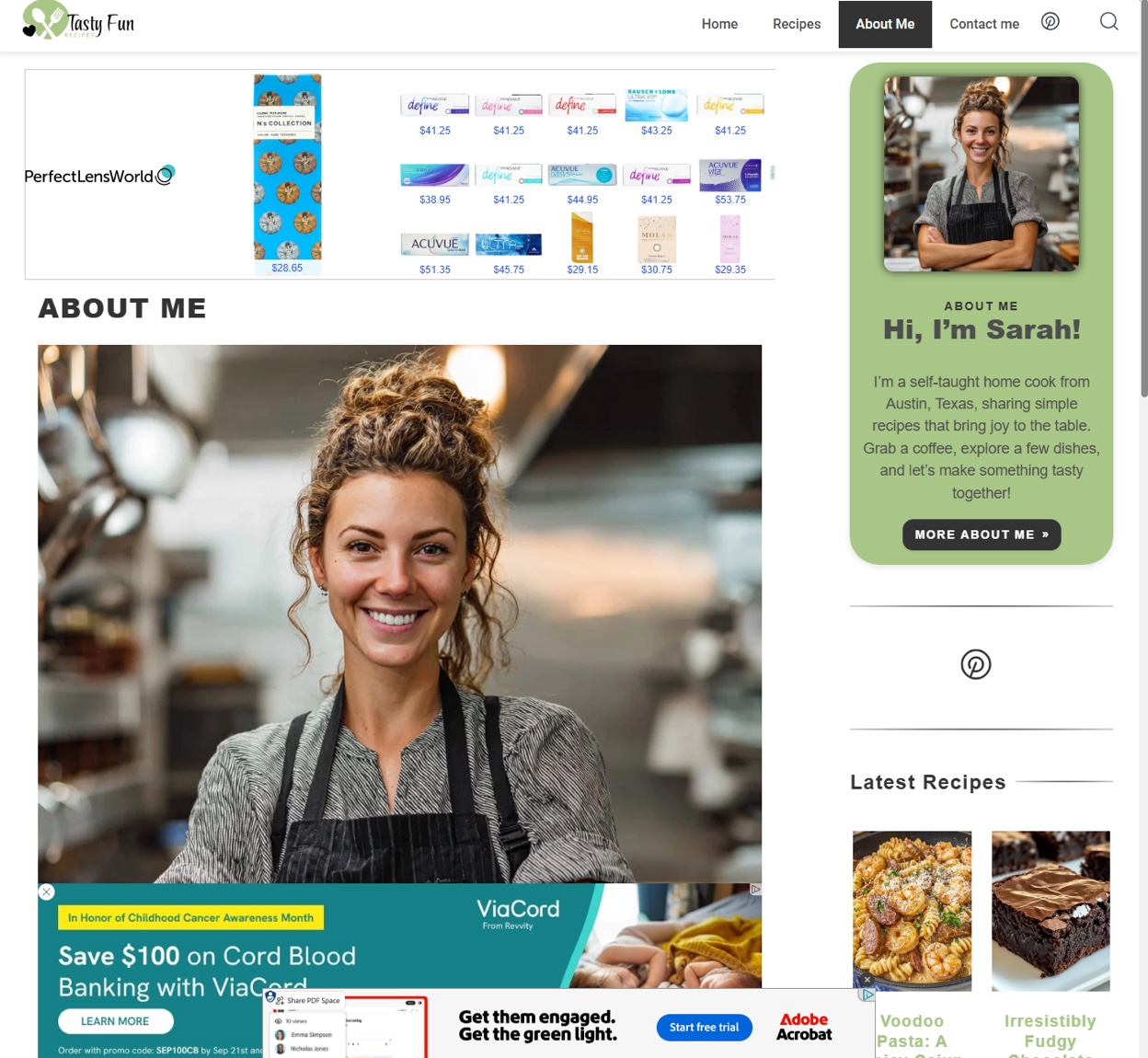
Many sites in the network our team investigated, like Tasty Fun Recipes (tastyfunrecipes[.]com), have so many ads on their about page, which also often features a likely-AI photo, that the ads overlap, as seen below with the ViaCord and Adobe ads.
The site is connected to three other recipe websites through a technical fingerprint, two of them German language sites, and has its ads.txt managed by hbagency[.]it.
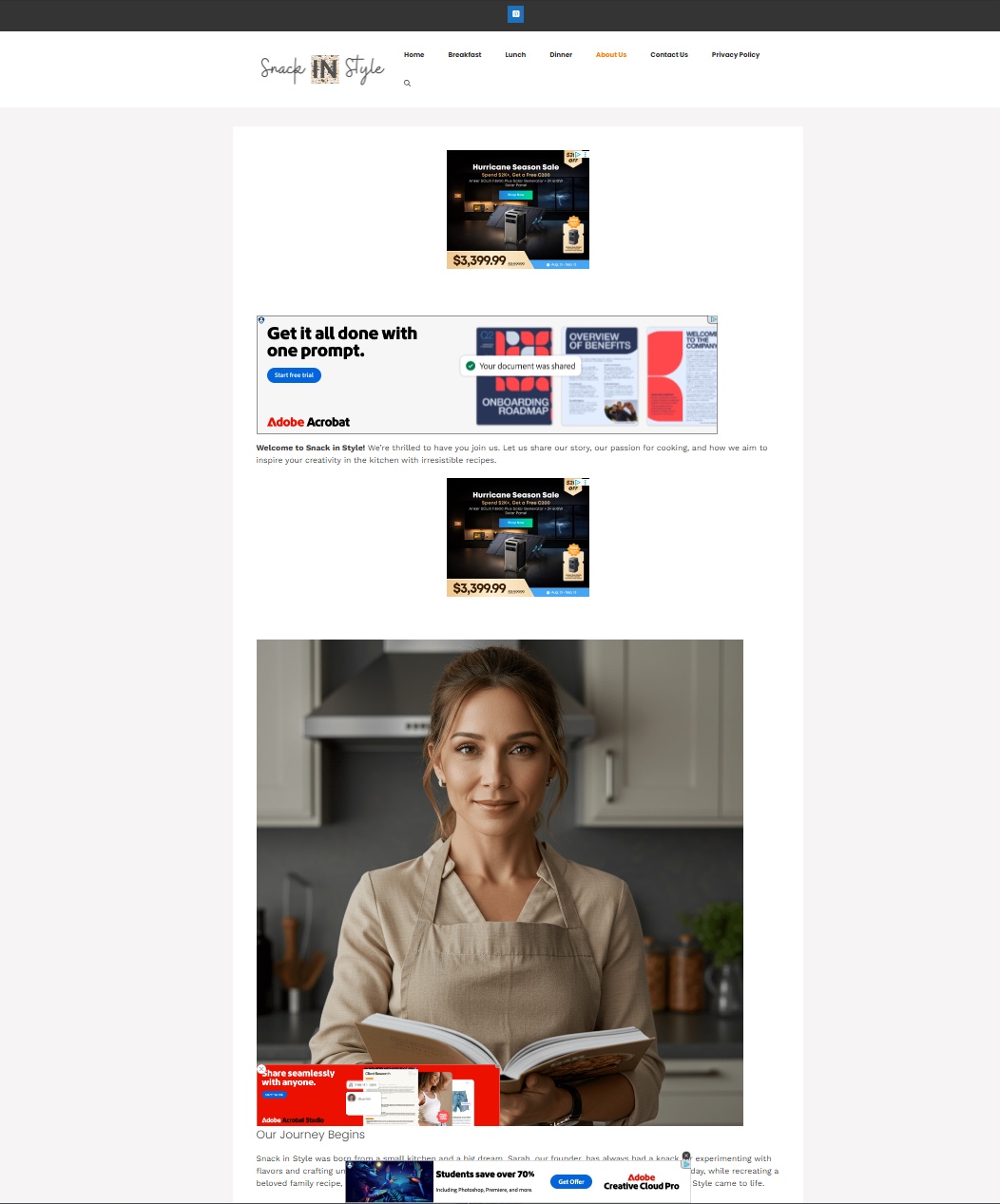
“Snack in Style” (snackinstyle[.]com/about/) has so many ads that its About page can barely be read, with banner ads between every paragraph, three unique Adobe ad creatives visible on one page, and two from Anker.
Snack in Style is connected to 24 other AI recipe websites through technical fingerprints, the ads.txt files are managed by hbagency[.]it.
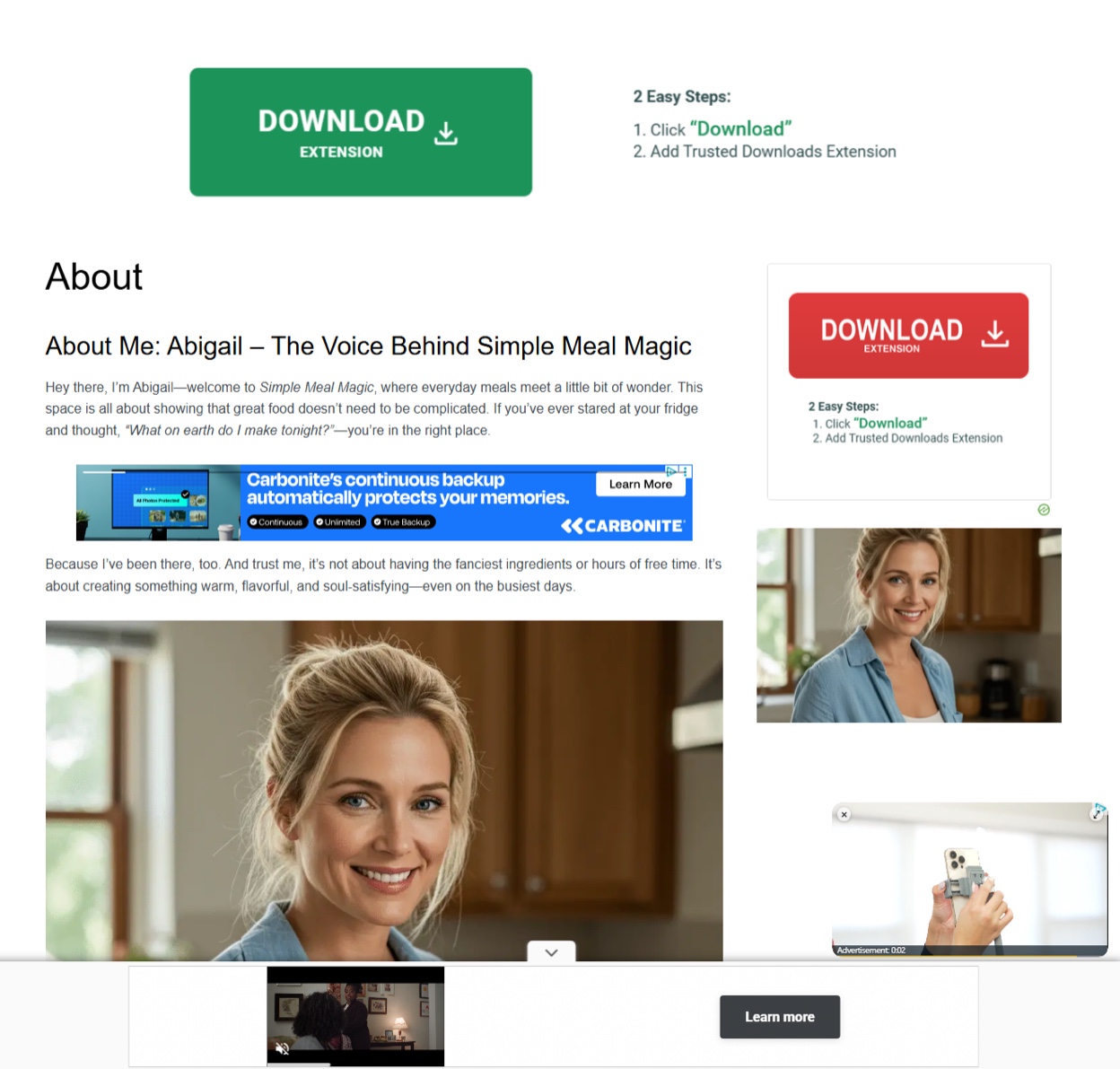
“Simple Meal Magic” (simplemealmagic[.]com) has high ad density, as in the example below with 3 banner ads and 2 video ads.
This site is connected to 46 other AI recipe websites through technical fingerprints and has its ads.txt managed by ezoic[.]ai.
On many of the sites there are ad banners setup to load over the top of the likely AI author / owner photos, like you can see on “Tasty Great” (tastygreat[.]com/about/).
Tasty Great is connected to 70 other websites through technical fingerprints, and the ads.txt files are managed by hbagency[.]it.
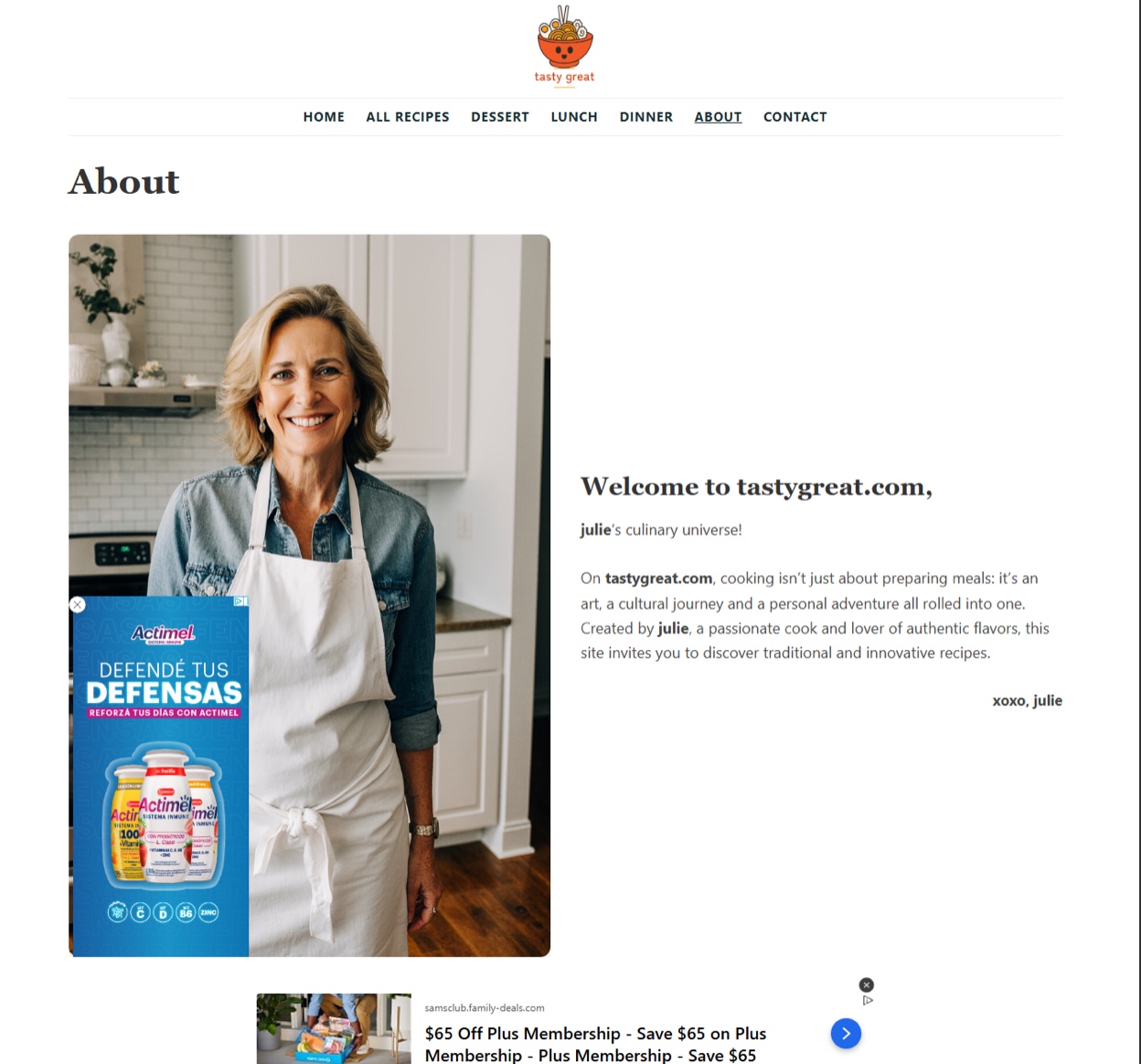
“Superb Recipe” (superbrecipe[.]com/about/) has banner ads integrated so that they overlap the author photo, as seen below in Figure 72.
Superb Recipe is connected to recipemaestro[.]com from earlier in this report and 17 other AI recipe websites through technical fingerprints, with ads.txt managed by ezoic[.]ai.
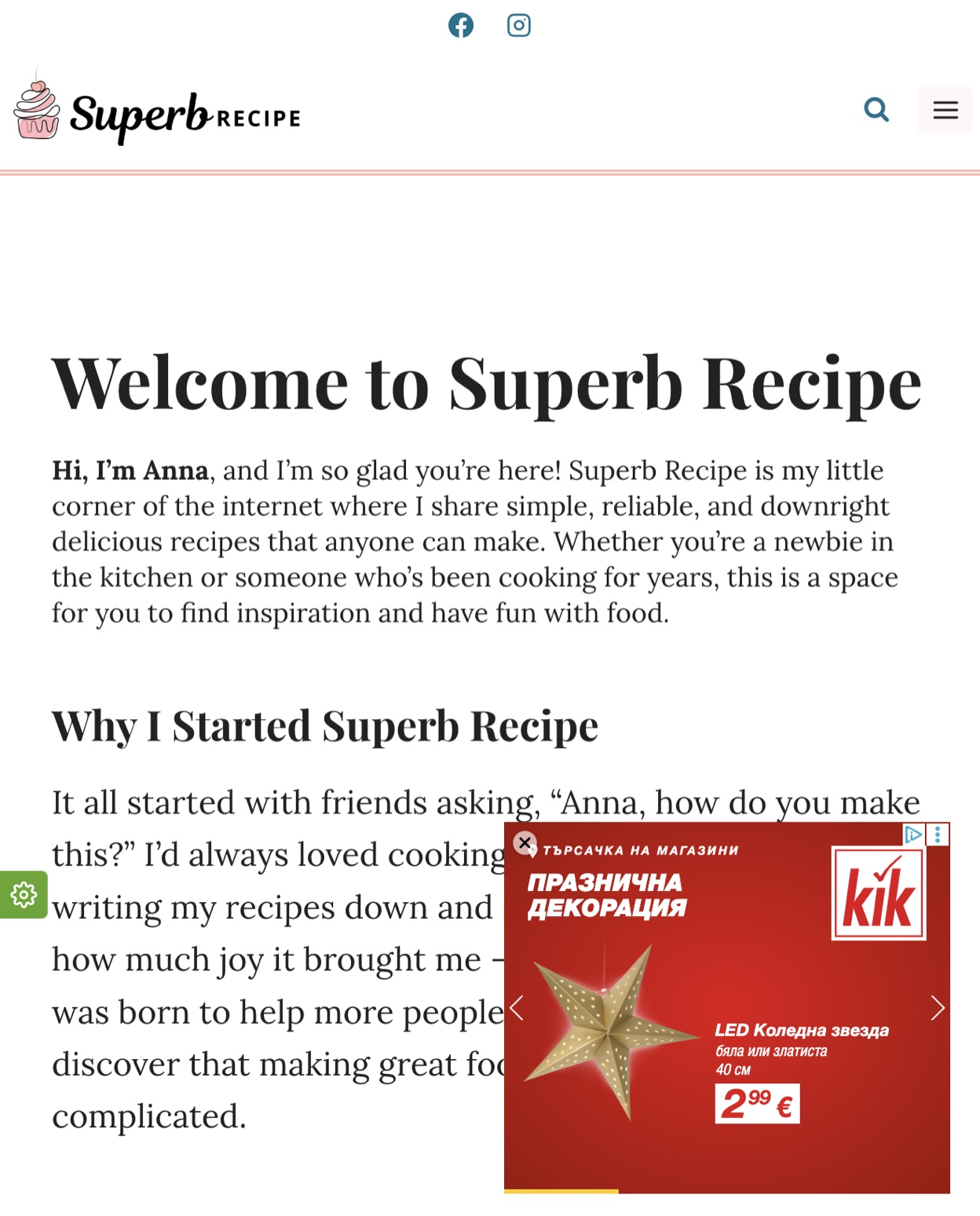
The site simplerecipes[.]me/about/, seen below, also has ads overlapping the content, including two from Siemens.
This site is connected to 54 other AI recipe websites through technical fingerprints, the ads.txt files are managed by hbagency[.]it.
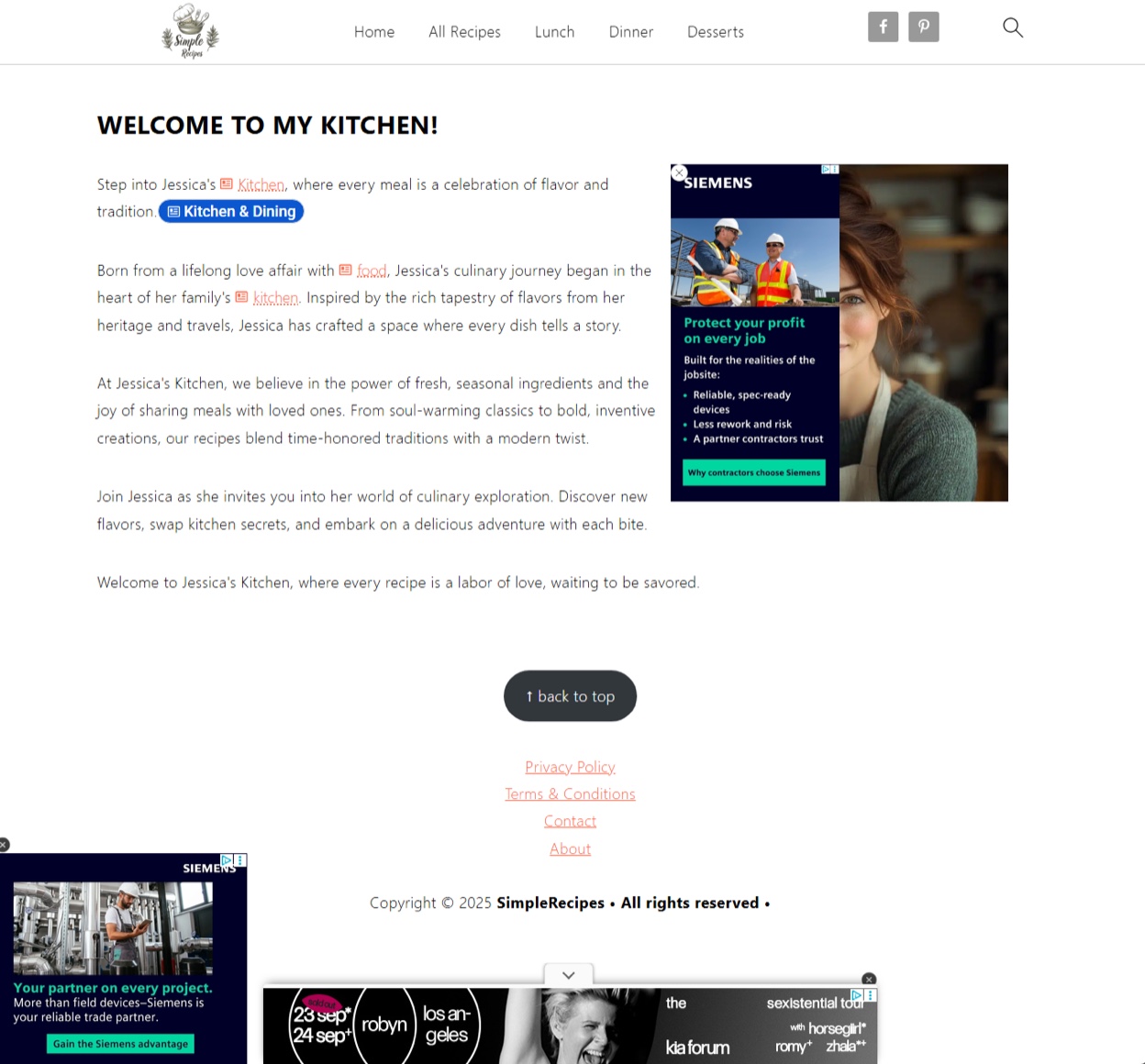
Some of the websites with likely AI authors like thechefrecipe[.]com/author/maestro/ also expand their content beyond just recipes and instead have content that is tangentially related to food, like in the examples below about Dolly Parton’s favorite snack and a “Flat Tire Trick” impacting shoppers.
The Chef Recipe is connected to 14 other AI recipe websites through technical fingerprints, with ads.txt managed by ezoic[.]ai.
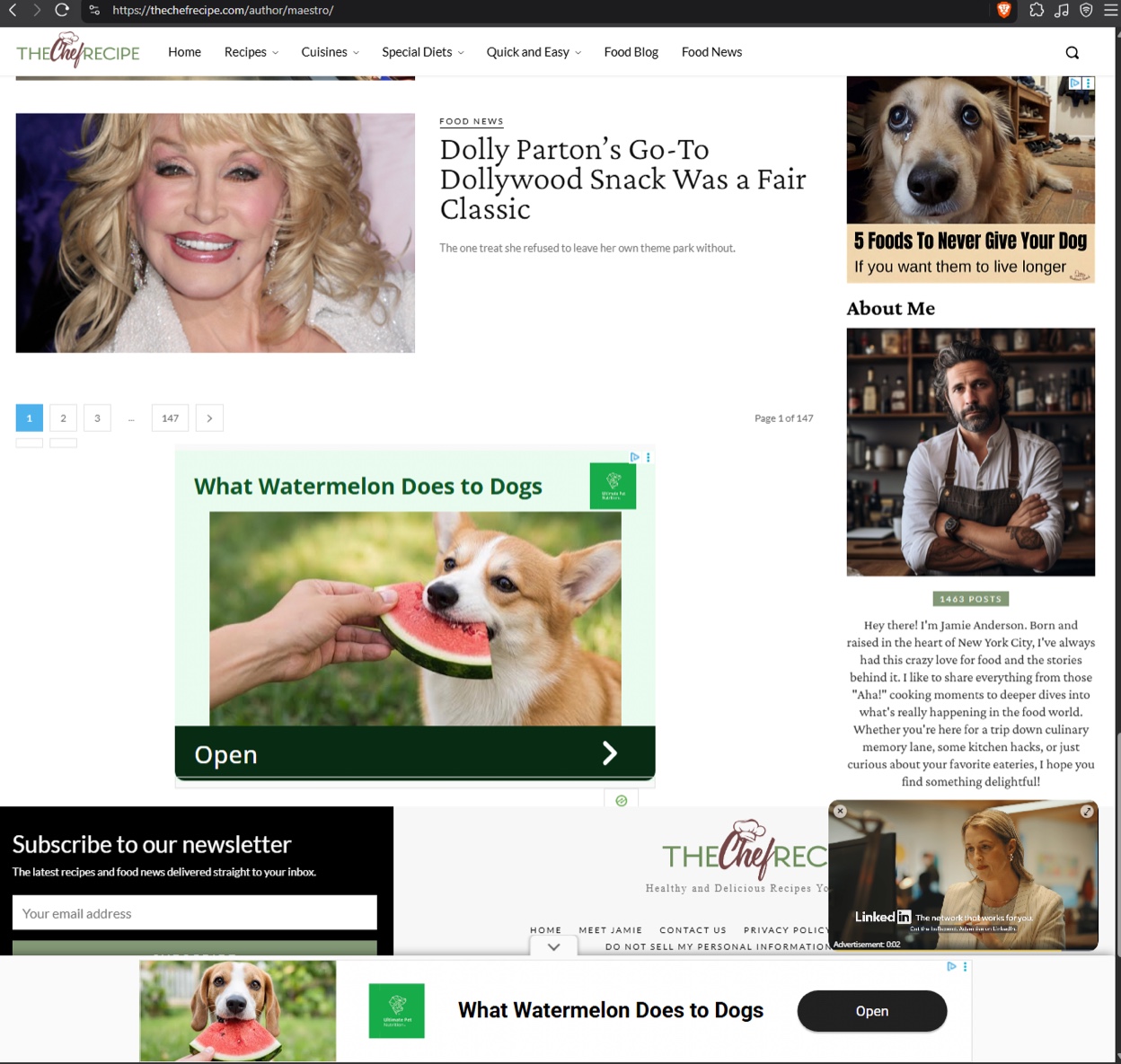
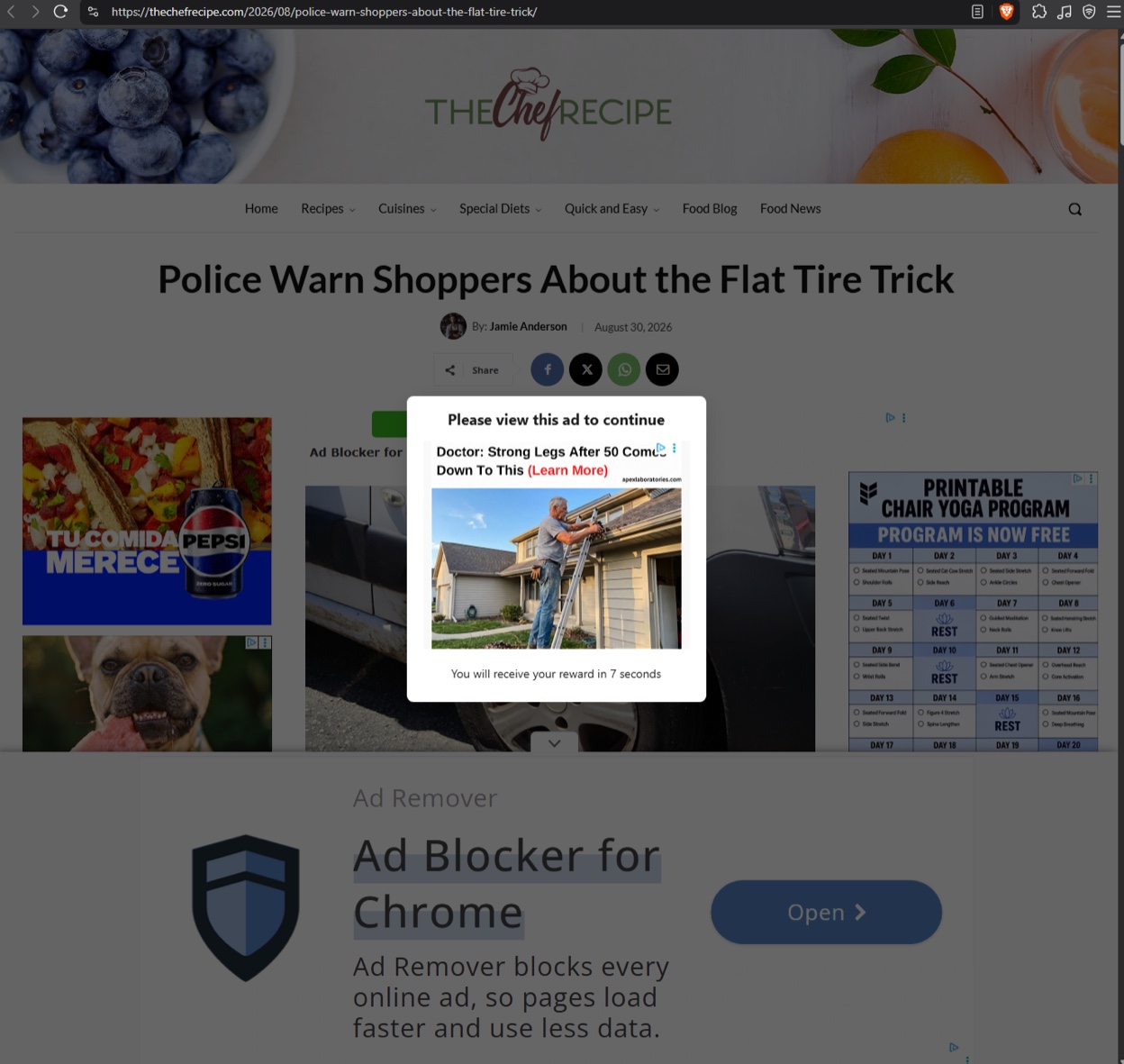
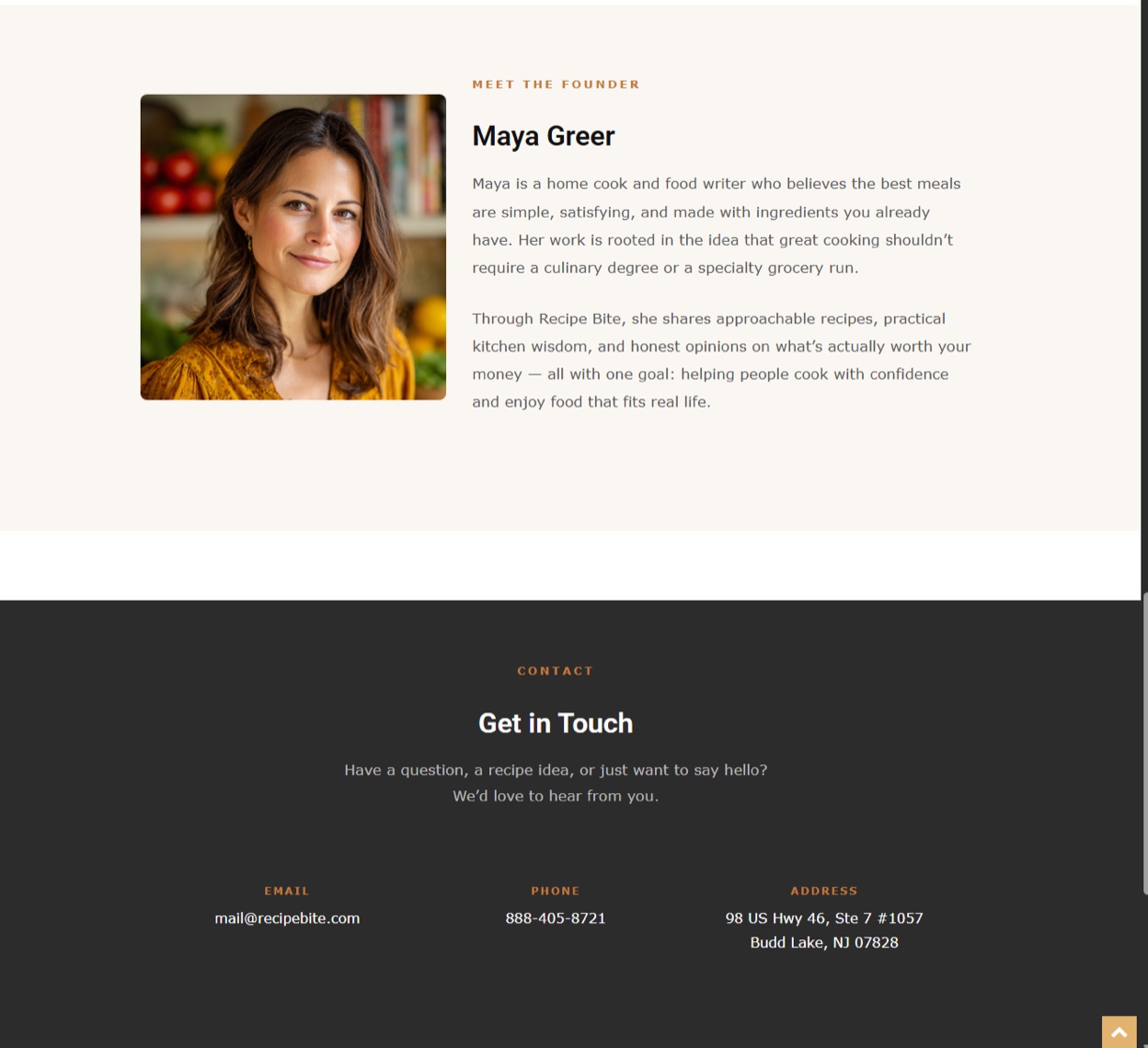
The Chef Recipe website also features a phone number of “888-405-8721” on their contact page (thechefrecipe[.]com/contact-us/) which is the same phone number found on “Recipe Bite” (recipebite[.]com/about-us/) which has its own likely AI author and owner.
Both sites are in the same cluster of 15 websites, with their ads.txt files managed by ezoic[.]ai.
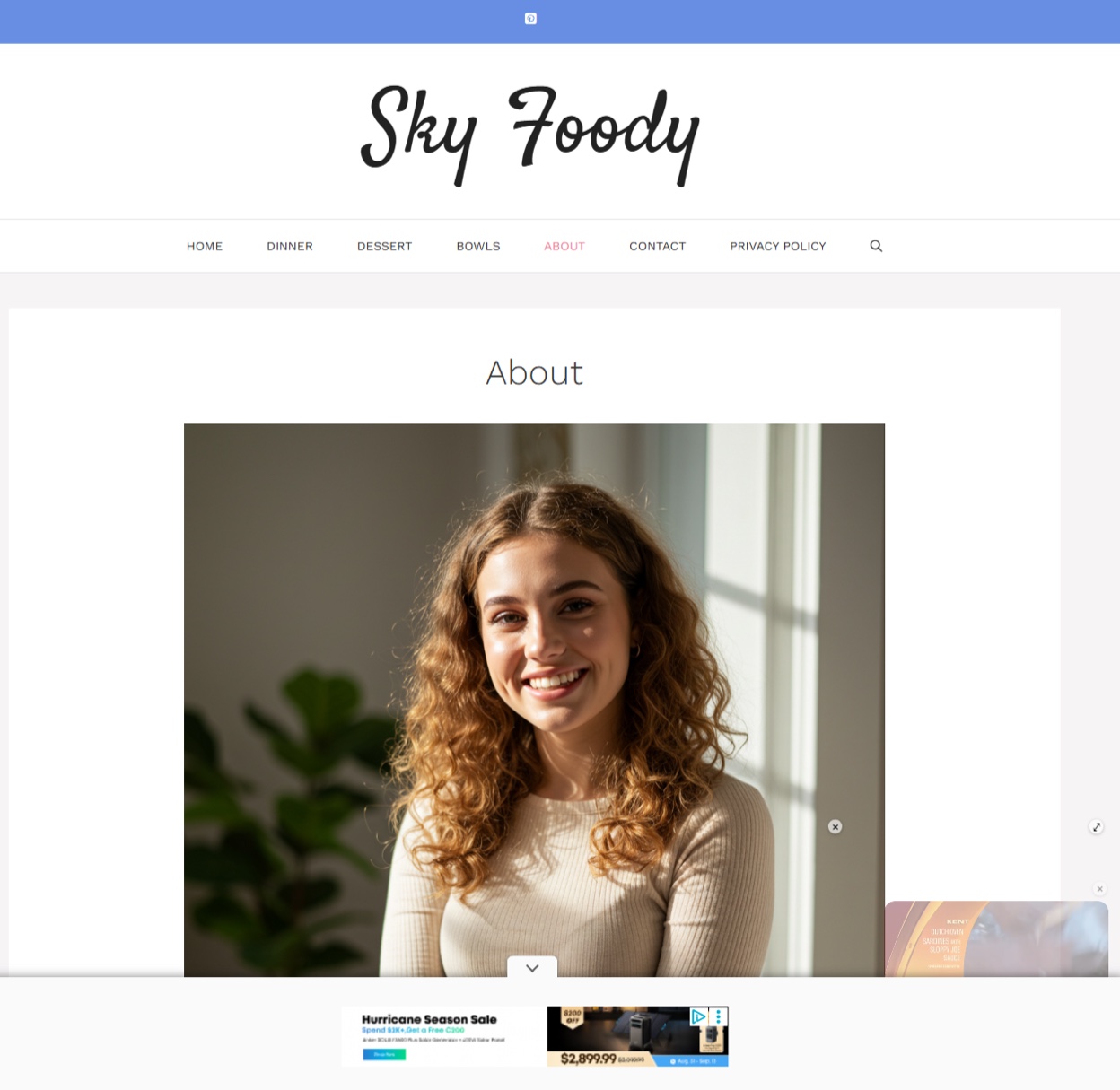
The author photo for “Sky Foody” (skyfoody[.]com/about/) can be seen below.
Sky Foody is connected to 20 other AI recipe websites through technical fingerprints and has its ads.txt managed by ezoic[.]ai.
Other sites we reviewed
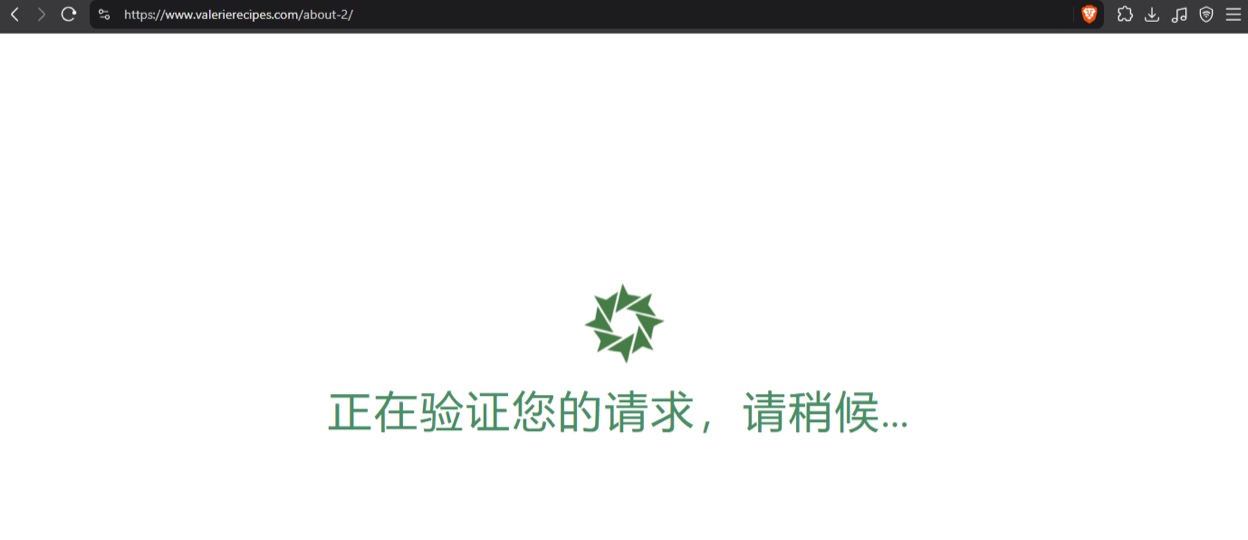
One cooking site, valerierecipes[.]com, loads the Chinese-language text “正在验证您的请求,请稍候…” which translates to “Verifying your request, please wait…” prior to showing a recipe website claimed to be owned by “Valerie Harper.”
The site is connected to eight other AI recipe websites through technical fingerprints, including marcelarecipes[.]com above, and has its ads.txt managed by ezoic[.]ai.

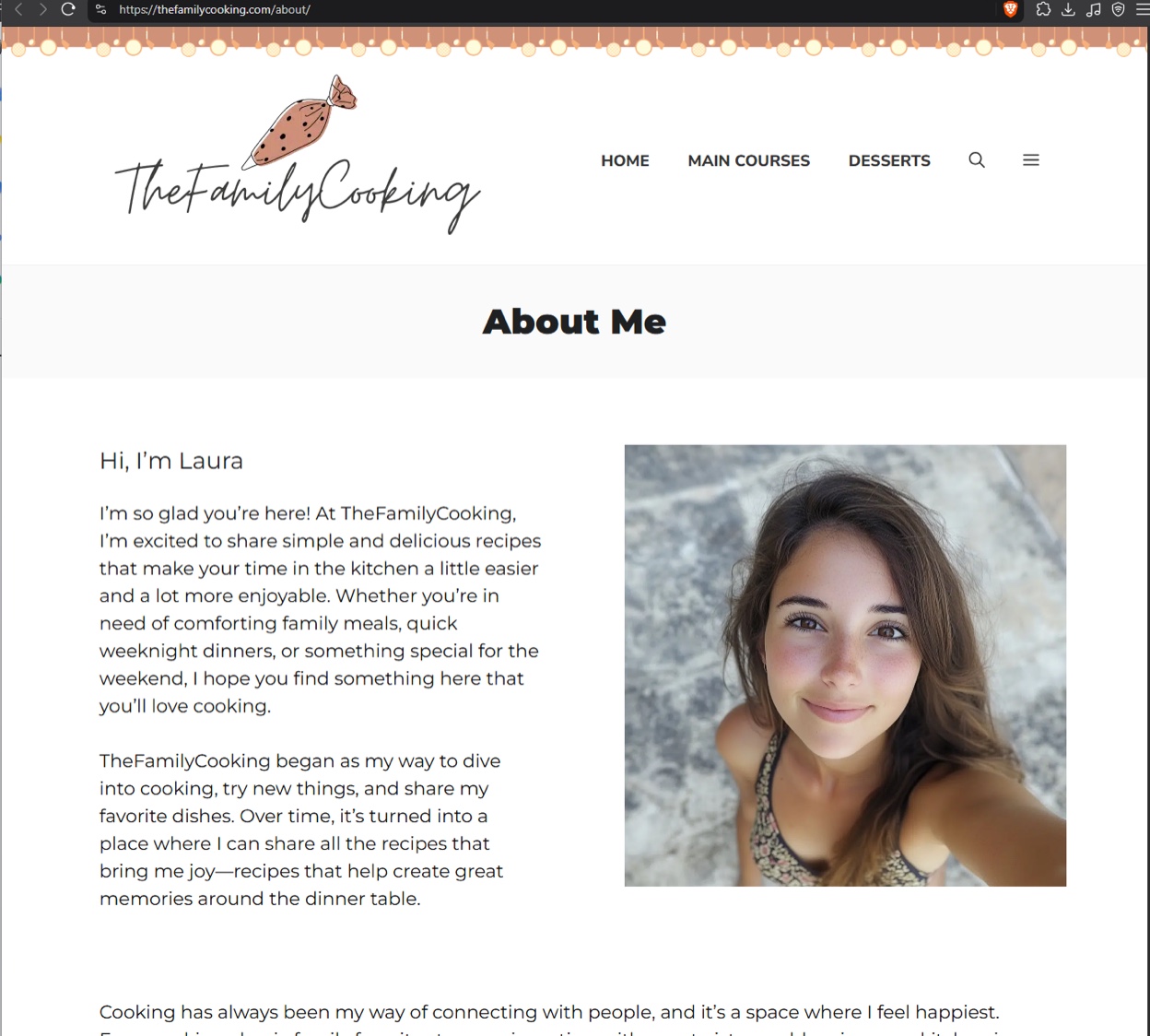
Thefamilycooking[.]com has a clear AI photo of an owner named “Laura”, seen below in Figure 80.
This site is part of the recipessmile[.]com cluster noted above.
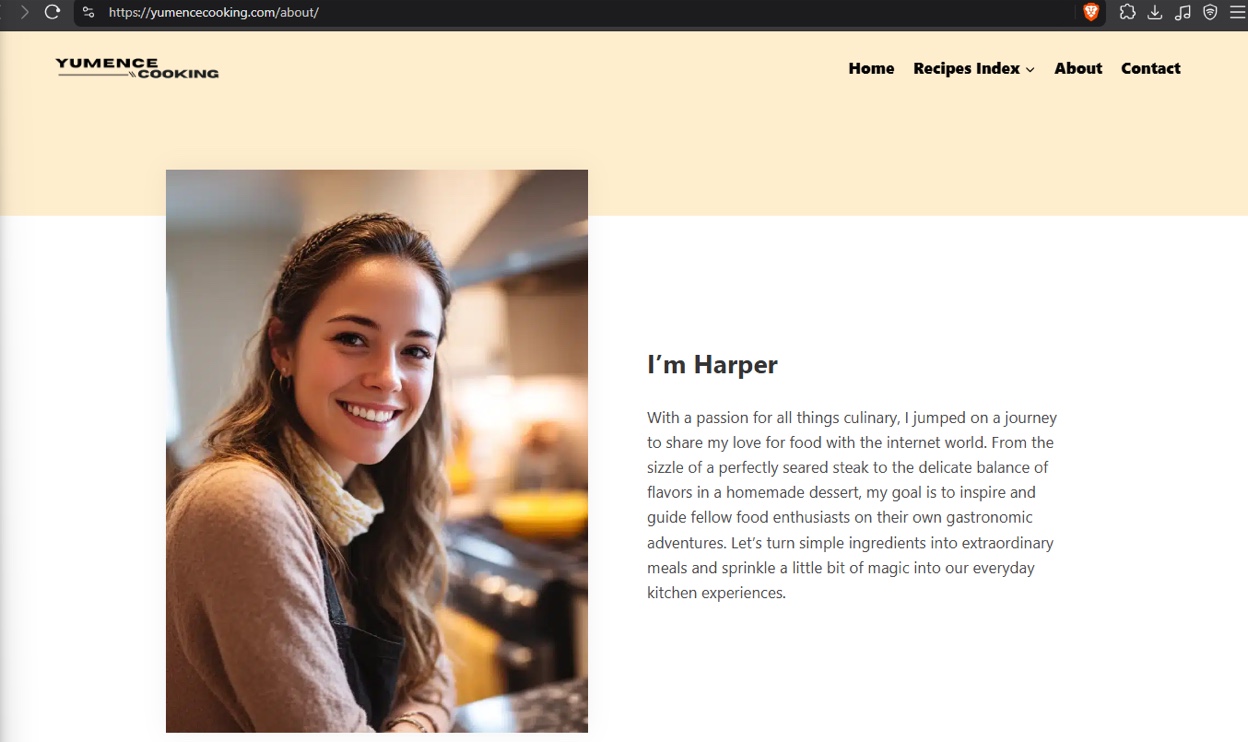
Many of the sites feature AI photos and generic details, like yumencecooking[.]com/about/.
This site is connected to 53 other recipe websites through technical fingerprints, the ads.txt files are managed by hbagency[.]it.
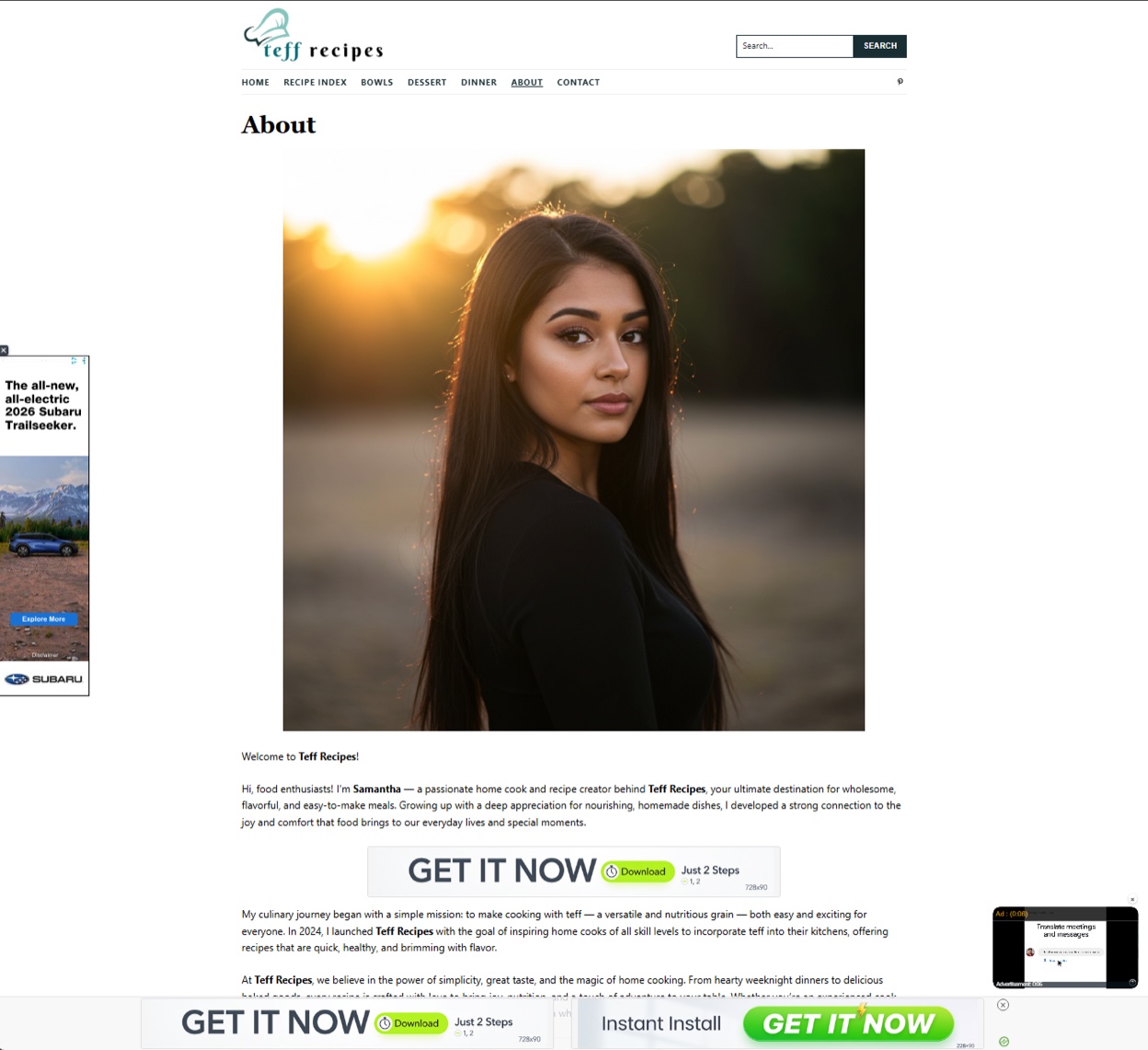
“Teff Recipes” (teffrecipes[.]com) uses an AI generated photo for allegedly a home cook named Samantha.
Teff Recipes is connected to 15 other AI recipe websites through technical fingerprints, including thedailycooking[.]com above, with ads.txt managed by ezoic[.]ai.
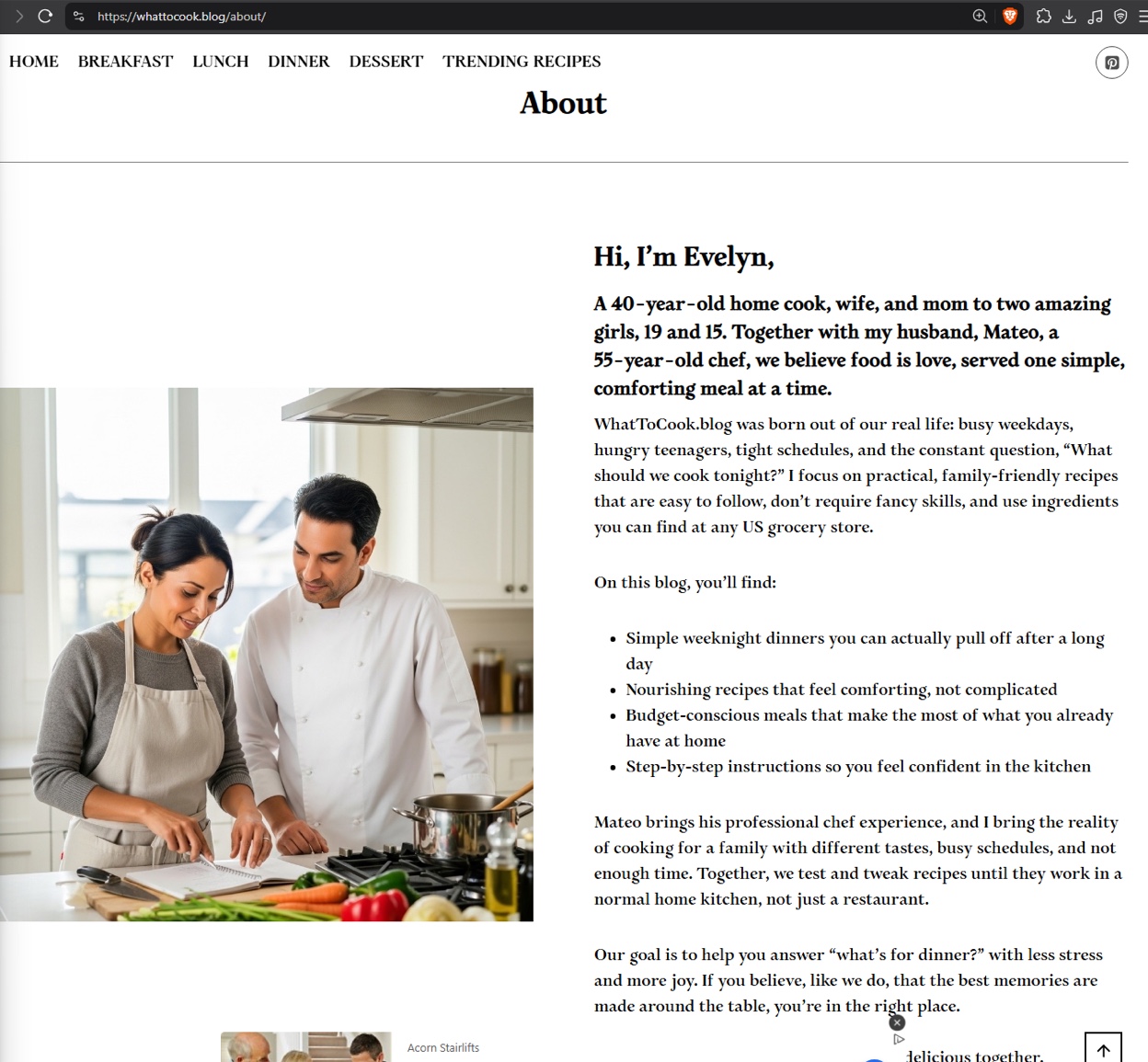
Some sites use somewhat obvious AI photos of couples and create backstories about their life together, like whattocook[.]blog/about/.
This site is connected to eight other recipe websites through technical fingerprints, the ads.txt files are managed by hbagency[.]it.
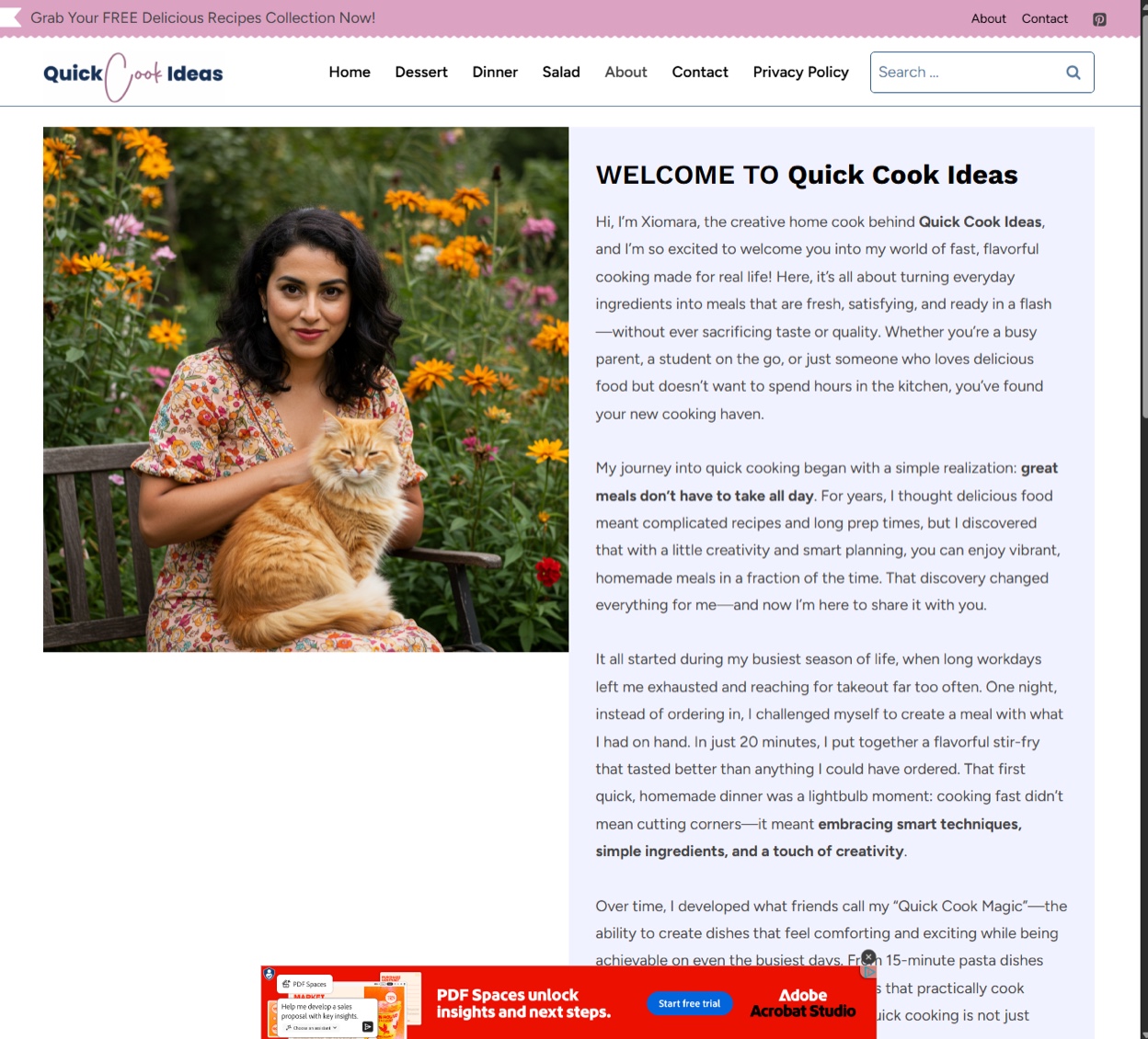
The site quickcookideas[.]com/about/ gets a little fancy, pairing what appears to be an AI author photo with an AI cat.
The site is connected to 14 other recipe websites through technical fingerprints, including mrrecipes[.]net above, with ads.txt managed by hbagency[.]it.
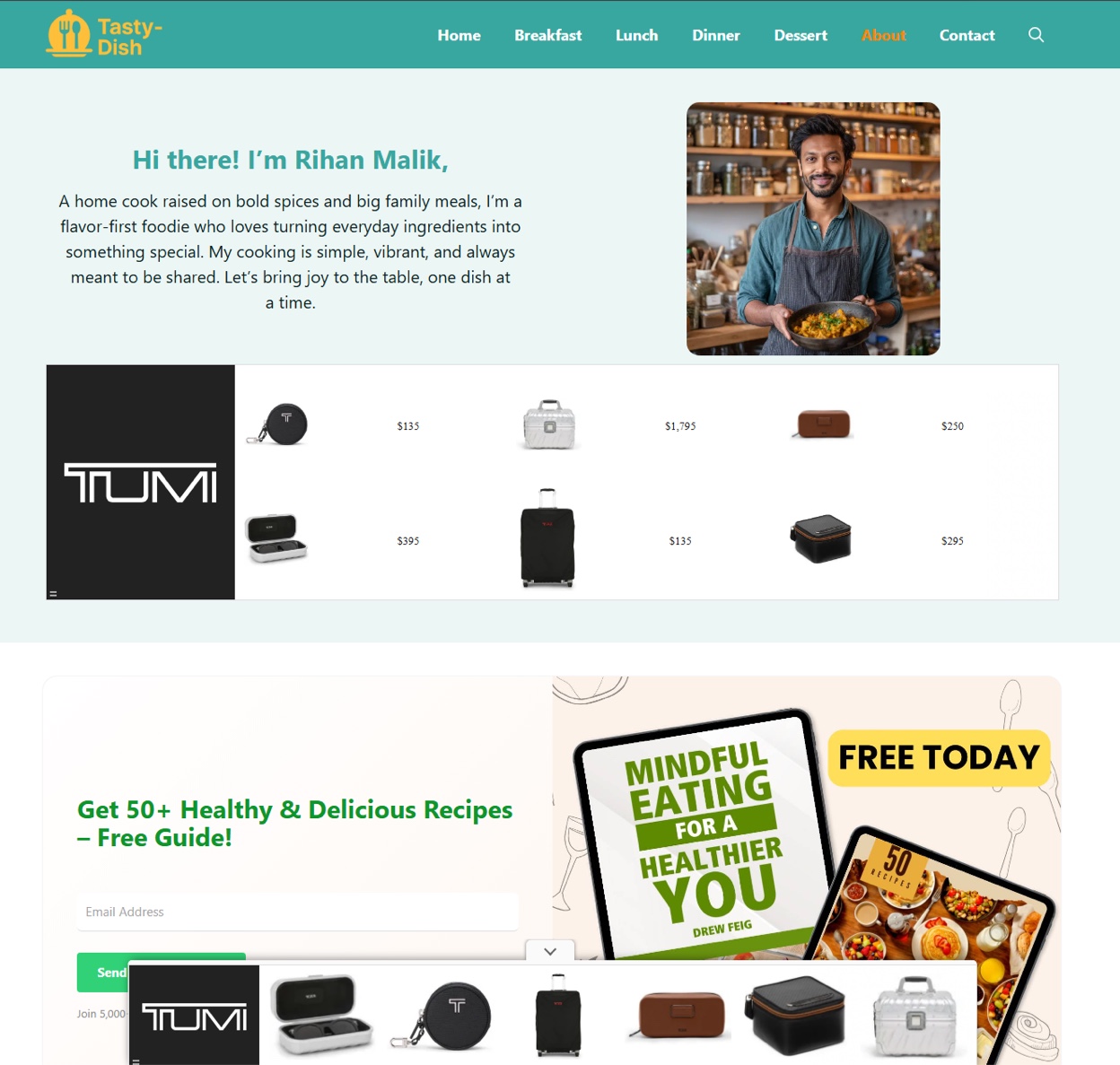
While it’s more rare, there are still some sites with likely AI photos of men, like this example “Tasty-Dish” (tasty-dish[.]com/about).
This site is connected to 68 other AI recipe websites through technical fingerprints, including thegreatrecipe[.]com and themagicrecipe[.]com above, and has its ads.txt managed by hbagency[.]it.
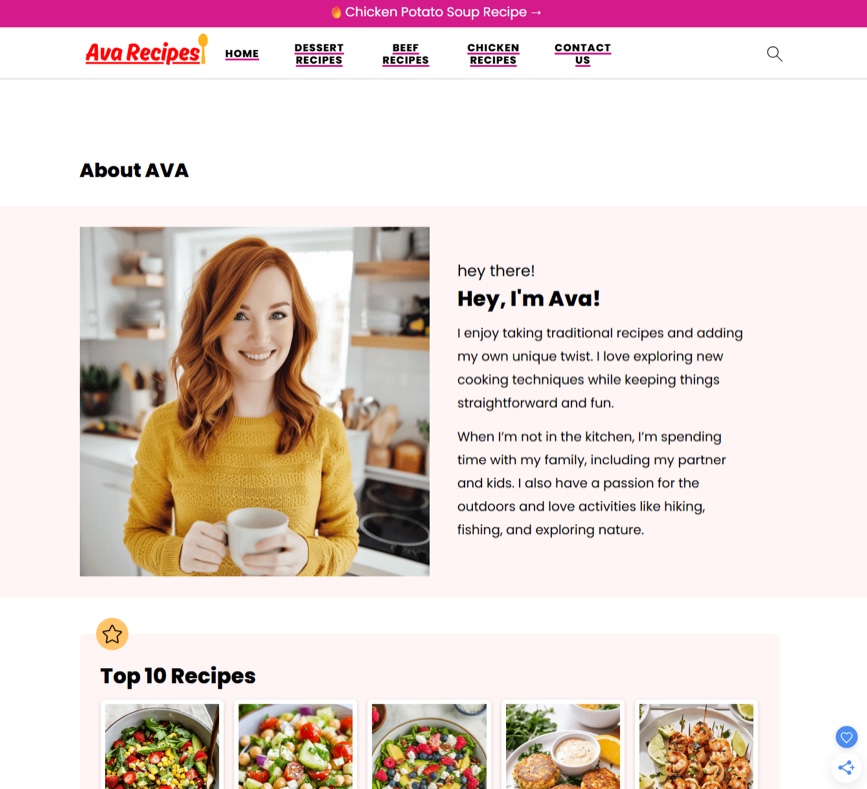
“Ava Recipes” (avarecipes[.]com/about-ava/) pairs its owner photo with a backstory about family and personal interests.
Ava Recipes is connected to two other recipe websites through a technical fingerprint, and unlike most sites in this report it doesn't declare a manager domain in its ads.txt file.
The owner photo on masterecipe[.]com/about-me/ is seen below.
This site is connected to 15 other AI recipe websites through technical fingerprints, the ads.txt files are managed by ezoic[.]ai.

“Simply Tasty Eats” (simplytastyeats[.]com/about-me/) features a detailed back story about the author's food journey.
Simply Tasty Eats is connected to 62 other AI recipe websites through technical fingerprints, with ads.txt managed by ezoic[.]ai.
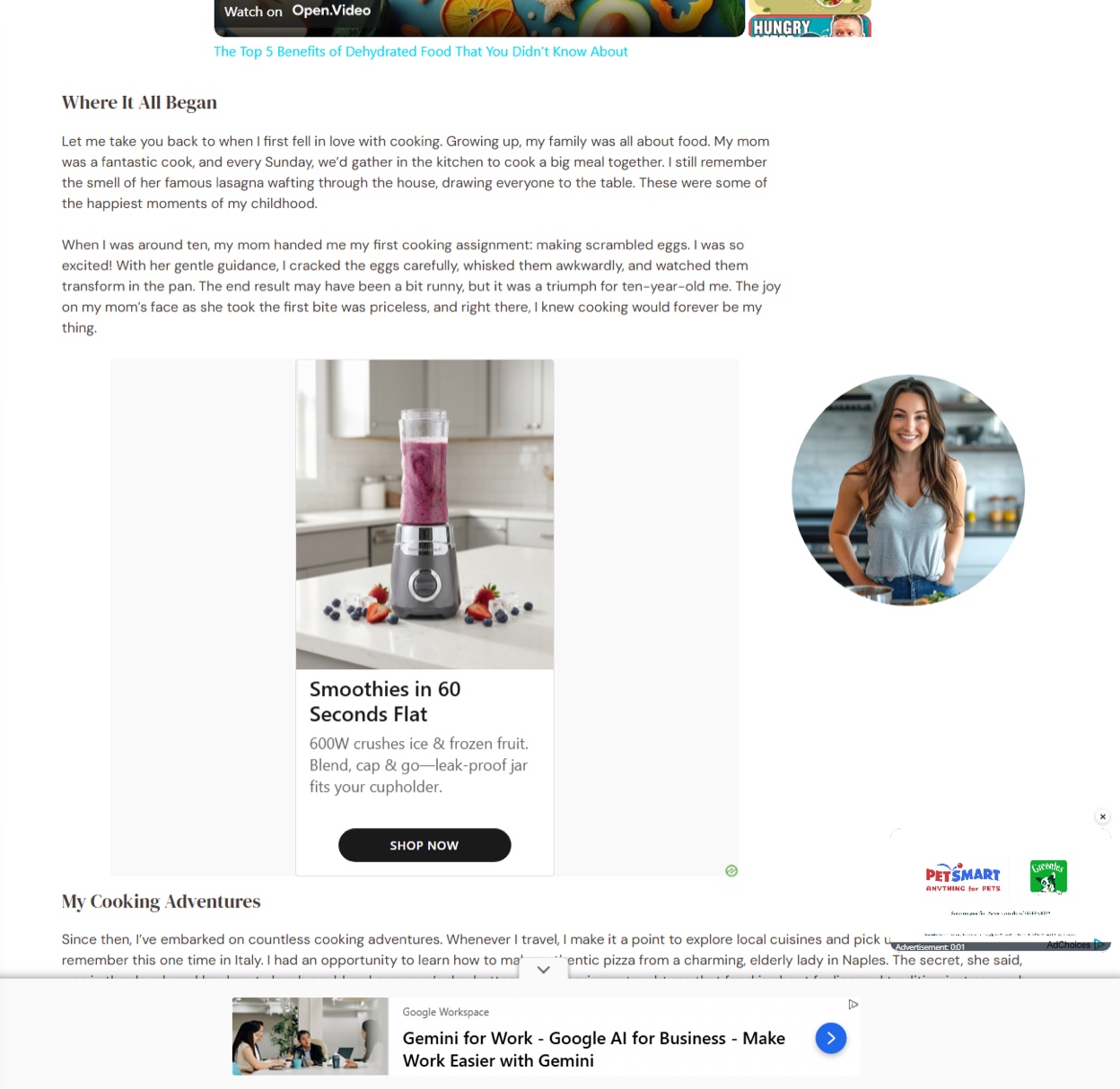
More examples of likely AI author photos include:

All five sites are part of a cluster of 48 AI recipe websites connected through technical fingerprints, with ads.txt files managed by ezoic[.]ai.

Four of these five sites are in that same cluster of 48 websites managed by ezoic[.]ai, while melanyrecipes[.]com is connected to 28 other sites in a separate cluster managed by hbagency[.]it, and nicolerecipe[.]com sits in both.
Where do we go from here?
Many questions remain unanswered when it comes to the AI recipe websites included in this report, particularly as relates to their ad tech partnerships.
It appears possible that the seemingly cheaply generated back stories that are created by many of these AI recipe and cooking publishers cross a line, and this practice also appears to be unsustainable. SSPs and sales houses who help to monetize these websites could potentially do more to require AI content disclosures here, by having more stringent rules for what a publisher is required to disclose and what they are allowed to claim.
We would also caution that SSPs and sales houses should be careful with the ad systems they partner with. Companies based in China and Russia are under unique legal obligations by their authoritarian governments, and user data being shared to these companies creates unique risks for unsuspecting or unaware end users. Any publisher authorizing Chinese or Russian ad tech systems within their ads.txt or app-ads.txt files is likely to get on the public's radar by doing so, and risks potential issues that could arise from such data sharing.
Our team at DecryptAds has thoroughly documented multiple significant networks of these AI recipe sites. Many seemingly operated by small groups or individuals, and many with unusually recurring connections to Morocco and Algeria for reasons we can’t yet ascertain.
For obvious operational security reasons, DecryptAds will not be publishing the various technical fingerprints used to group these sites by their operator(s). Nor will we be publishing what we’re using to track the clusters of AI recipe websites sharing data to Chinese and Russian ad tech companies. If those details are of interest to you or your organization, we encourage you to contact us @ contact@decryptads.com.
Disclaimers
Programmatic ad tech research is incredibly complex, as mentioned throughout this report, especially when it comes to parsing out AI websites. While our team has made every effort to ensure the highest accuracy possible, to err is human and we are undoubtedly such.
As such, and as stated earlier, if your website or business was referenced in this report and you have evidence to support an alternative claim or would like to provide a comment to be considered for inclusion in this publication, or even to request a revision, please reach out to us. Our team of researchers is always open to receiving and pivoting on new information.
If any of our exceptionally sharp readers catch any other mistakes, have suggestions for additions, or would like to pitch new / joint research topics you’d like us to cover (or cover with us!) in the future, we likewise encourage you to reach out @ contact@decryptads.com. Thank you for reading.